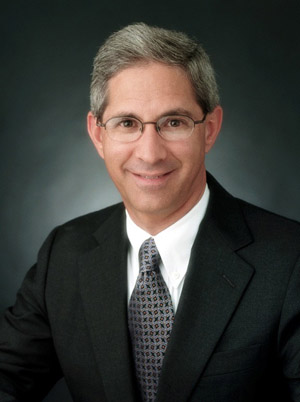
In May 2025, a small team in Sunnyvale quietly flipped on a chip that was not supposed to exist. The world's first L5-direct GNSS receiver ASIC - a device that pulls navigation signals directly from the L5 satellite band without any crutch from the older L1 system - powered up, acquired satellites, and worked. Steve Poizner, 68 years old and two decades past his last billion-dollar exit, was in the room.
This is where the story is now. Not with the political campaigns or the bestselling book or the White House situation room - though those are all real, and all part of one continuous, restless biography. Right now, Poizner is building a semiconductor company that is solving a problem the GPS industry has been ignoring for thirty years: the signal you trust for navigation is embarrassingly easy to jam.
That detail - the fragility of L1 GPS - is what keeps him moving. "GPS jamming could not be a bigger issue right now," he told an audience at Silicon Valley Space Week in October 2025. "Take L1 out and everything stops operating." He would know. When he co-founded SnapTrack in 1995, he pioneered the technology that put GPS receivers inside cell phones. Qualcomm bought that company in 2000 for $1 billion in stock. His GPS tech ended up in more than 200 million phones. He has been living inside the GPS ecosystem for three decades. He sees the cracks.
GPS jamming could not be a bigger issue right now. Take L1 out and everything stops operating.
- Steve Poizner, Silicon Valley Space Week, October 2025
oneNav's answer is L5-direct. The L5 band is newer, stronger, and harder to spoof - but acquiring its signals without L1 assistance was considered technically impossible when Poizner started the company. His team built it anyway. The result is 30 times more resistant to jamming than conventional GPS receivers. In May 2025, that chip flew on an Unmanned Aerial Vehicle through a simulated Electronic Warfare field and kept navigating. The U.S. Air Force noticed: AFWERX awarded oneNav a $1.25 million Direct-to-Phase II SBIR contract in June 2025.
oneNav has raised $50 million total, with a Series C led by MVP Ventures and backed by Google Ventures, GSR, and Norwest Venture Partners. The company employs 37 people - veterans from Qualcomm, Apple, Intel, SiRF, and Trimble spread across three continents. These are not generalists experimenting with GPS. They are the people who built the GPS receivers currently in your pocket, now building something better.
The company he built before this one, EmpoweredU, was also acquired by Qualcomm - in 2014. It was a mobile learning platform he co-founded with UCLA and Creative Artists Agency in 2011. Qualcomm has now acquired two of his companies. There is a pattern here, though Poizner would probably describe it as focused problem-solving rather than a habit.
Before EmpoweredU, he ran California's insurance department. He was elected as the state's 32nd Insurance Commissioner in 2006, winning by more than a million votes with endorsements from over 35 newspapers across the political spectrum. His tenure is remembered less for ideology than for competence under pressure: when the 2007 San Diego wildfires hit, he issued a Declaration of Insurance Emergency within days, personally recovered more than $27 million from insurers for policyholders, and instituted voluntary standards ensuring fire victims received at least 25 percent of their personal property coverage without having to itemize every lost possession.
He ran for governor in 2010, lost in the Republican primary to Meg Whitman, then drifted away from the party he had called home. By 2018, he ran for his old Insurance Commissioner seat as an independent, arguing that regulating an industry requires no partisan loyalty. He lost that race too - 47 to 53 - but left with his intellectual honesty intact. "I wish I had the 2010 campaign to do over again," he said later, referring to immigration positions he had since abandoned. Not many politicians say things like that.
There's no room for partisan politics when you're regulating an industry. The insurance commissioner needs to be fiercely independent.
- Steve Poizner
Between leaving the governor's race and returning to tech, he taught school. Not as a publicity stunt - as a genuine experiment. From September 2002 to June 2003, after his White House Fellowship ended, he showed up at Mount Pleasant High School in San Jose and taught 12th grade American Government and Economics. He ran Jeopardy games. He brought in guest speakers. He stayed through the year. Every one of his students graduated. The school named him Rookie Teacher of the Year.
That year became a book. "Mount Pleasant: My Journey from Creating a Billion-Dollar Company to Teaching at a Struggling Public High School" was published in 2010 and hit the New York Times bestseller list. It reads exactly like what it is: a genuinely curious person paying attention to something most people in his position would have driven past.
Poizner was born on January 4, 1957. He holds a B.S. in Electrical Engineering from the University of Texas at Austin, where he graduated in 1978 as the top male student in a class of 40,000 and ranked among the top ten engineering students in the nation. He went on to Stanford's Graduate School of Business, graduating in 1980 as an Arjay Miller Scholar - the designation given to the top 10 percent of each Stanford MBA class. He was inducted into the Silicon Valley Engineering Council Hall of Fame in 2014. In 2006, former Secretary of State George Shultz nominated him for lifetime membership in the Council on Foreign Relations.
The resume is extraordinary on paper. In person, the California Republican Party once described him as having "a very disarming demeanor" and being "refreshingly candid with people" - which, in the language of political operatives, is high praise. The Energizer Bunny, they called him. That was during the 2006 campaign. Twenty years later, he is still running.