mri
(13)
Philips Bet the Whole Company on Hospitals - Then a CPAP Recall Almost Broke It
It made light bulbs, then TVs, then the CT scanner in your local hospital. The story of how a Dutch electronics giant reinvented itself as a pure health-tech company - and nearly lost the bet.

Braid Health
Braid Health is a San Francisco health-tech company building an FDA-cleared, AI-powered diagnostic collaboration platform for medical imaging. Founded in 2018 by Apple and Twitter alumni Kevin Quennesson and Alessandro Sabatelli, Braid pairs AI imaging copilots with board-certified radiologists to deliver faster, lower-cost reads of MRI, CT, ultrasound and X-ray studies. It serves urgent care networks, health systems and retail clinics, and in 2026 launched a direct-to-patient second-opinion service that offers expert radiologist re-reads for $199.

Chipiron
Chipiron is a Paris-based medical-imaging startup building a compact, low-cost MRI scanner that runs at an ultra-low magnetic field (below ~30 millitesla, roughly 1,000x weaker than a hospital MRI). Its patented low-Tc SQUID quantum detection system plus AI noise cancellation and reconstruction are designed to recover clinical-grade image quality without a shielded room, without helium, and at a fraction of the cost, size, and infrastructure of conventional machines. The company's stated aim is to make MRI accessible everywhere, starting with breast imaging, and eventually reach patients, clinics, and remote settings that today's scanners can't serve.

Holobeam Technologies
Holobeam Technologies is a Bethpage, New York biotech developing Holographic Energy Teleportation (HET), a patented method of focusing energy to precise microscopic locations inside the body. Paired with antibody-guided AdvaNan nanoparticles, the approach - branded the Holothermia protocol - aims to both detect individual cancer cells earlier than conventional imaging and heat them to death while sparing surrounding tissue. Founded by prolific inventor Gene Dolgoff, the LCD-projector pioneer who says he conceived the Star Trek Holodeck, the company is building HET-based MRI and portable scanners for diagnosis and treatment.

NeuroAge Therapeutics
NeuroAge Therapeutics is a San Francisco tech-bio company that measures how old your brain actually is - and tries to make it younger. Founded in 2022 by physician-scientist Dr. Christin Glorioso, the company's flagship NeuroAge Test blends brain MRI, cognitive games, proprietary RNA blood biomarkers, and genetic screening into a single 'brain age' score that aims to flag dementia risk up to 30 years before symptoms appear. The longer-term goal is bolder: small-molecule drugs that reprogram aging neurons back toward a younger state.
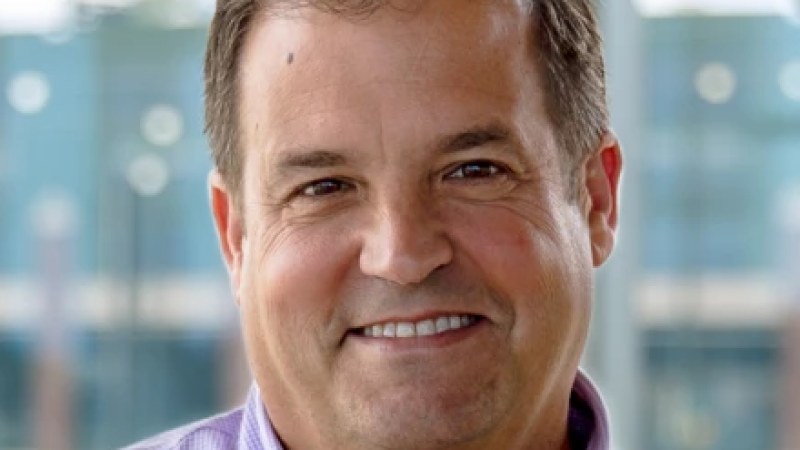
Scott Magargee
Scott Magargee is the CEO and co-founder of Springbok Analytics, a Charlottesville, Virginia company that turns ordinary MRI scans into FDA-cleared, AI-built 3D maps of every muscle in the human body. A former Princeton history major and Top 100 law firm litigator, he traded courtrooms for muscle health, joining the University of Virginia spinout in December 2019 and steering it through a $5M oversubscribed Series A in January 2025 backed by the NBA. Under his watch, Springbok has scanned elite athletes, pro basketball leagues, and clinical-trial patients, chasing a single idea: make muscle visible, measurable, and actionable.

PhenoMx, Inc.
PhenoMx, Inc. is a New York digital health company turning ordinary MRI scanners into a 'Personalized Digital Physical Exam.' Its software-first platform applies quantitative imaging and machine learning to non-invasive MRI scans, measuring organs, tissues, body composition, brain, heart and joints over time. Founded in 2017 by Mark Punyanitya and Girish Srinivasan, PhenoMx aims to make precision medicine accessible far beyond the wealthy - from concierge athletes to value-based care and clinical trials worldwide.

Mark Punyanitya
Mark Punyanitya is a New York biomedical engineer turned founder who spent more than fifteen years measuring the human body one MRI slice at a time, then set out to make that kind of imaging cheap and portable enough to put in the back of a truck. As Co-Founder, President and CEO of PhenoMx, Inc. and founder of the Image Reading Center, he turns advanced scanning into quantitative imaging biomarkers for global clinical trials and a 'digital physical exam' for precision medicine and longevity. With 44-plus published papers behind him, he is trying to liberate medical imaging from the basements of academic hospitals and disperse it anywhere, anytime.

RapidAI
RapidAI builds FDA-cleared clinical AI software that reads CT, CTA, CT perfusion and MRI scans to flag stroke, aneurysms and pulmonary embolisms in minutes - giving hospital teams a faster path to treatment. The platform began life as the Stanford spin-out iSchemaView and now runs in more than 2,000 hospitals across 100+ countries.

Promaxo
Promaxo builds the world's first single-sided, in-office MRI platform - a compact magnet, AI, and robotics stack that lets urologists run image-guided prostate biopsies and focal treatments in their own clinic, without a hospital scanner suite.

Subtle Medical
Subtle Medical is a Stanford-born AI company that makes regular MRI and PET scanners faster and sharper through deep learning denoising and image enhancement software. Its FDA-cleared, vendor-neutral products - including SubtlePET, SubtleMR/SubtleHD, SubtleSYNTH and AiMIFY - help radiology departments shorten scan times, reduce contrast dose, and increase patient throughput without buying new hardware.
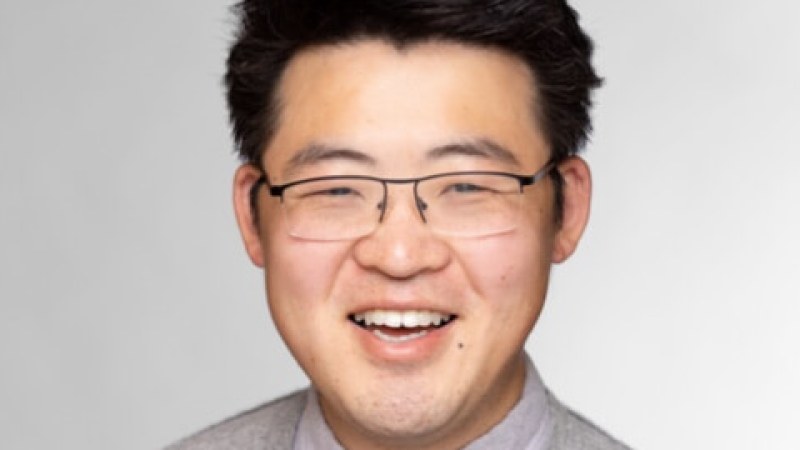
Enhao Gong
Enhao Gong is the CEO and co-founder of Subtle Medical, a Stanford-born AI healthcare company that has earned 9 FDA clearances for deep learning-powered medical imaging products. A PhD graduate from Stanford in Electrical Engineering, Gong co-founded Subtle Medical in 2017 alongside Stanford neuroradiologist Dr. Greg Zaharchuk, and has grown the company to serve 1,000+ scanner installations globally, touching 2.5 million patients annually. Before Subtle Medical, he co-founded Polarr, an AI photo-editing startup used by tens of millions. He has been recognized by Forbes 30 Under 30 (China/APAC, 2018), Fortune 40 Under 40, and Radiology Business 40 Under 40 (2024), and led Subtle Medical to TIME's World's Top HealthTech Companies list in 2025.
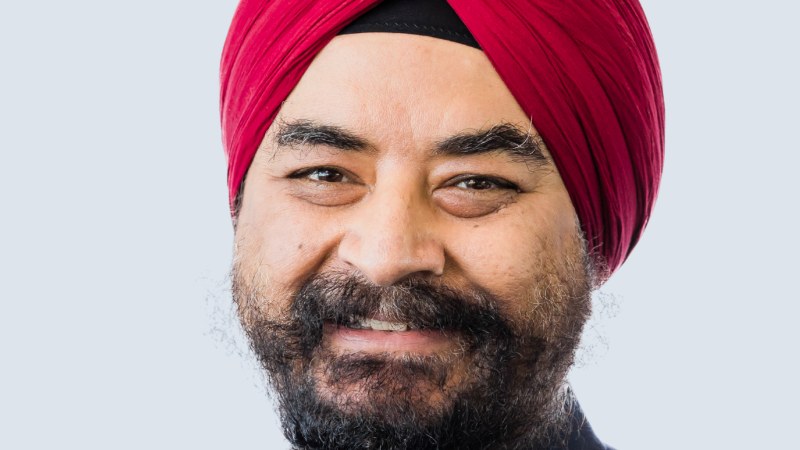
Prithipal Sethi
Dr. Prithipal S. Sethi is a board-certified urologist, founder and CEO of Golden State Urology, and Chief Medical Officer at Promaxo - the company pioneering in-office MRI technology for prostate cancer diagnosis and treatment. With over 25 years of clinical practice, 2,500+ enlarged prostate procedures performed, and a career rooted in bringing advanced imaging technology directly into the urologist's office, Sethi straddles the worlds of clinical medicine and medical device innovation. Trained at UC Berkeley, St. Louis University, and Medical College of Wisconsin, he built Golden State Urology from a single Stockton practice in 2004 into a multi-location Northern California institution, and now serves as a clinical voice for a technology that is reshaping how prostate cancer is caught and treated.