log-management
(13)
The Company That Put the Haystack on a Diet
Dash0 built an observability business around a heretical idea: keeping every scrap of machine data can make it harder to see what broke. Now its open-standard platform is stretching from incident response into the AI-written code that creates the next incident.

Mezmo and the Art of Keeping Less
The company that once made logs easier to find now asks a more awkward question: why keep so many in the first place?
NitroSecurity Taught the Alarm to Ask Why
The Portsmouth company turned security logs into a live ranking of danger. McAfee bought it in 2011 after three years as a partner - and after trying the technology on its own network.

Kimber Spradlin Learned Security by Auditing It - Then Taught Marketing to Speak Plainly
The Graylog CMO began with ledgers, controls and security audits. Three decades later, she is still doing the same essential job: turning complicated evidence into decisions people can act on.
Datadog Put the Cloud on One Screen. Then the Meter Started Running.
Datadog made a large business out of ending one old argument: developers blamed operations, operations blamed developers, and neither side saw the same evidence. Its unified screen now watches everything from Kubernetes clusters to AI agents - while asking customers to watch the meter, too.

Graylog Bet That Lean Security Teams Want Answers, Not Another Expensive Data Habit
Born when one engineer refused an absurd log-management quote, Graylog now sells the grown-up version of that refusal: searchable evidence, predictable costs and automated investigations for security teams that cannot hire an army.
DataBahn
DataBahn is an AI-powered, security-native data pipeline and fabric platform that helps enterprises collect, enrich, orchestrate and optimize telemetry across security, observability, application and IoT/OT systems. Its agentic products - Cruz, Reef and Phantom agents - automate data engineering work, cut noise and reduce SIEM/telemetry costs by more than 50% while preserving visibility for security and IT teams.
Radiant Security
Radiant Security builds an adaptive, agentic AI SOC platform that triages, investigates, and helps respond to every security alert a team receives - regardless of source, complexity, or novelty. Founded in 2021 by security veterans Shahar Ben-Hador and Barry Shteiman, the company aims to cut the alert noise that overwhelms security operations centers, escalating only real threats to human analysts and reducing analyst workload by up to 98%. It also folds in integrated log management to cut SIEM storage costs.
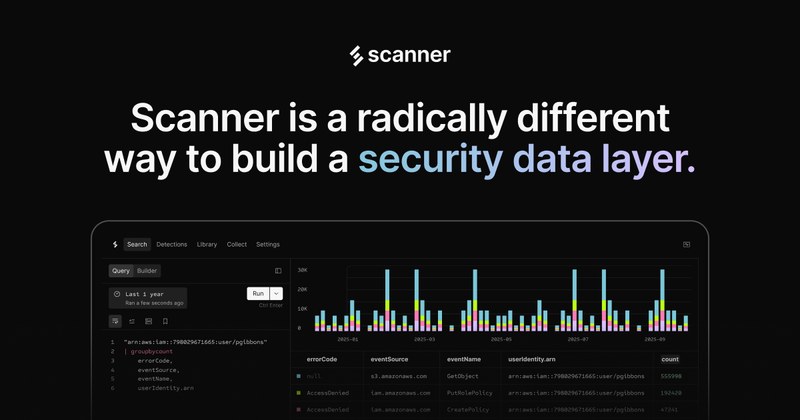
Scanner
Scanner is a San Francisco cybersecurity company that turns the log data companies already dump into Amazon S3 into a fast, searchable security data lake. Instead of paying traditional SIEM prices to keep only a few weeks of logs, security teams use Scanner to index petabytes of data directly in object storage, run continuous threat detections, and search years of history in seconds - now increasingly driven by AI agents. Founded by ex-Cisco and Dropbox engineers Cliff Crosland and Steven Wu, the company raised a $22M Series A led by Sequoia Capital in March 2026.
Auguria, Inc.
Auguria is a cybersecurity AI company that builds the Security Knowledge Layer (SKL), a vector-based platform that ingests the flood of logs, events, and telemetry that security teams collect, then denoises, classifies, and prioritizes it - filtering out roughly 99% of the noise so analysts can focus on the ~1% of events that actually matter. Founded in 2022 by Keith Palumbo and Chris Coulter and emerged from stealth in March 2024 with $6.5M in seed funding from SYN Ventures and SentinelOne's S Ventures, Auguria plugs into existing SIEM and data-lake infrastructure to cut security data costs and surface threats others miss.
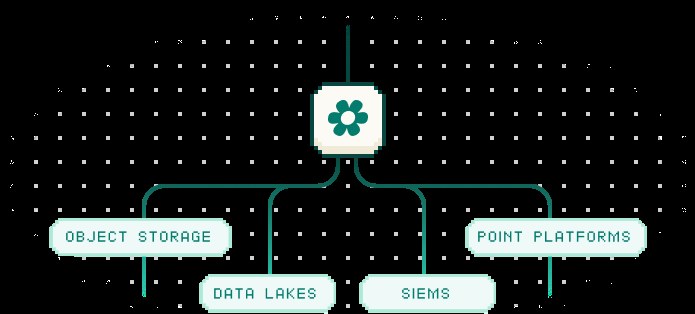
Vega
Vega is an AI-native cybersecurity company building a federated Security Analytics Mesh that lets security teams detect, search, and investigate threats directly where their data already lives - cloud platforms, data lakes, SIEMs, and cold storage - without forcing expensive centralized ingestion. Founded in 2024 by Unit 8200 and Intel Granulate veterans Shay Sandler and Eli Rozen, Vega raised $185M across three rounds in under two years and reached an ~$800M valuation, while signing multimillion-dollar contracts with global banks, healthcare giants, and Fortune 200 firms.

New Relic
New Relic is a San Francisco-based, AI-powered observability platform that gives engineering teams a single place to see everything running in their software - from application code and infrastructure to logs, user experience, and AI models. Founded in 2008 by Lew Cirne, it helped popularize application performance monitoring (APM) and later coined much of the modern 'observability' category. After going public in 2014 and being taken private in a $6.5 billion deal in 2023, New Relic now serves thousands of companies with usage-based, consumption pricing and a strong bet on AI and agentic observability.
Cribl
Cribl is a vendor-agnostic data engine for IT and security teams that routes, shapes, reduces, and enriches observability and security telemetry between any source and any destination - letting enterprises escape vendor lock-in and tame runaway data costs.