data-platform
(53)
TCG Digital makes AI do the shift work
From plasma pools to refinery floors, TCG Digital puts enterprise AI where decisions have consequences. Its mcube platform starts with the unglamorous job of getting the data to agree.
VAST Data wants AI to stop waiting
The company started by making stored data easier to reach. Now it wants storage, search and AI workloads to share the same foundation - and its customers offer a useful lesson in where to begin.

Numbers Station Makes the Data Warehouse Speak Human
The Stanford-born analytics platform turns plain-English questions into governed SQL, charts, and answers. Its cleverest move is remembering that company data has dialects, politics, and definitions of its own.

Palantir Wants to Run the Room Where Decisions Happen
Palantir turns an institution’s scattered data into a working model of the institution itself. For teams with expensive decisions and tangled systems, that can be useful - but this is a serious commitment, not a dashboard you buy on Friday.

Progress Software’s $1.3 Billion Bet: Boring Software Still Runs the World
Progress keeps buying the unglamorous tools companies cannot casually rip out. The result is a profitable software cabinet - and a live test of whether disciplined consolidation can outrun integration risk and the damage from one very public security failure.
Splunk Made Machine Data Searchable. Cisco Paid $28 Billion for What Comes Next.
The software started as a Google-like search box for baffling server logs. Two decades, 20,000 customers and one enormous acquisition later, Splunk is trying to make security and operations teams faster without making every byte take the expensive route through its index.

Ben Haynes Spent 22 Years Making the Database Feel Human
Before headless CMS had a name, a Brooklyn agency founder was tired of rebuilding the same back office. Two decades, five self-built versions and one beloved rabbit later, his workaround has become a lesson in patient software.
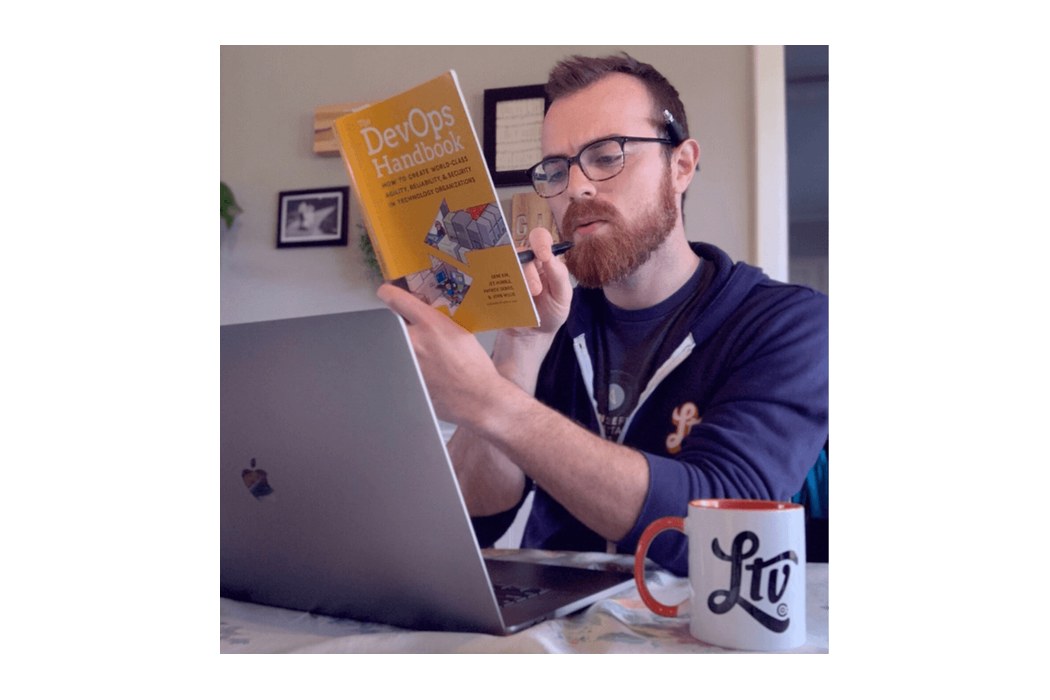
They Burned $550,000 Selling Trust. Then The Lifetime Value Co. Learned to Sell Curiosity
Josh Levy and Ross Cohen spent 11 months pitching an identity badge nobody would buy. Their pivot - from asking people to verify themselves to helping customers investigate the world around them - became a portfolio of data products used by millions.

Shruthi Rao
Shruthi Rao is the co-founder of Vendia, a San Francisco multi-cloud distributed data platform that helps enterprises share and reconcile data in real time across companies, clouds, and tech stacks. Before Vendia she founded the blockchain practice at AWS, launching Amazon Managed Blockchain and Amazon Quantum Ledger Database, and led business development for the AWS serverless portfolio including Lambda and API Gateway. She set up what she describes as India's first crypto mining operation in 2011 and has advised the Ethereum Project, Ripple, MOBI, the Linux Foundation, and the World Economic Forum.

Directus
Directus is an open-source data platform that wraps any SQL database with an instant REST and GraphQL API plus a no-code admin app, letting developers and non-technical users manage content and data without building a backend from scratch. Founded on a project Ben Haynes started in 2004 and incorporated as a company in 2020, Directus has surpassed 30 million downloads and is used by organizations including Adobe, Bose, Tripadvisor, AT&T and the U.S. Navy.

David Dokes
David Dokes is the co-founder and CEO of Polar Analytics, a first-party data and business intelligence platform built for Shopify and direct-to-consumer brands. Before Polar, he led growth at car-sharing marketplace Turo, where he ran a roughly $20M annual marketing budget. He teamed up with former Airbnb data scientist Charbel Seif in 2020 to give smaller retailers the kind of enterprise-grade data infrastructure that big companies take for granted, unifying scattered marketing, sales, and inventory data into one dashboard that installs in days rather than months. Under his leadership Polar has raised roughly $28.5M and now serves several thousand merchants across dozens of countries.
Keebo
Keebo is an AI company that autonomously lowers the cost of running cloud data warehouses on Snowflake and Databricks. Its patented Data Learning technology continuously monitors production workloads and applies real-time tuning - warehouse rightsizing, query routing and auto-scaling - while guarding performance with multi-layer SLAs. Customers report average verified savings around 27%, with some cutting Snowflake bills by 50% or more, and pricing is success-based so fees track the savings delivered.

Narrative I/O
Narrative I/O is a New York-based data infrastructure company that makes incompatible data work together. Its platform automatically normalizes disparate datasets, resolves identity, and lets companies securely buy, sell, enrich, and activate data - increasingly delivered natively inside a customer's own Snowflake environment so no data has to move. Founded in 2016 by Nick Jordan and led since 2023 by CEO Tim Mahlman, Narrative serves marketers, data scientists, and enterprises including Nielsen, TransUnion, Experian, and Fanatics.

Eric Shoemaker
Eric Shoemaker is the Chief Executive Officer of Keebo, a startup that uses patented Data Learning algorithms to autonomously optimize cloud data warehouse workloads on Snowflake and Databricks. Appointed CEO in March 2026, he brings a long track record of scaling enterprise SaaS companies through growth and acquisition, including growing CloudHealth from zero to roughly $100 million in ARR and serving as Chief Revenue Officer at Device42 before its $230 million sale to Freshworks. He is a go-to-market and revenue operator focused on turning cloud data cost reduction into measurable business impact for enterprise customers.

Snowflake
Snowflake is a cloud-based data platform that lets organizations store, analyze, and share data across Amazon Web Services, Microsoft Azure, and Google Cloud without managing infrastructure. Founded in 2012 by three former data architects, it separated compute from storage to make large-scale analytics elastic and pay-per-use. Now positioned as an 'AI Data Cloud,' the company adds managed AI services through Snowflake Cortex and governed agentic tools, serving more than 12,000 customers worldwide.
Crunchbase
Crunchbase is a San Francisco-based platform that catalogs the private markets - companies, funding rounds, investors and the people behind them - and increasingly tries to predict what will happen next. Born in 2007 as a companion database to TechCrunch, it now serves millions of entrepreneurs, investors and sales teams, layering AI-driven funding and exit predictions on top of a dataset covering more than four million companies, sold through subscriptions, an enterprise API and CRM integrations.
LigaData
LigaData is a Silicon Valley enterprise AI and data company that helps regulated industries - primarily telecom operators and financial-services firms - turn siloed operational data into trusted, AI-ready intelligence. Founded in 2014 by Bassel Ojjeh and Krishna Uppala, it builds carrier-grade data products such as the Telecom Data Fabric, AI Fabric, SubscriberIQ apps and the Time Machine data-protection platform, plus managed and professional services. LigaData says its software supports 35+ communications service providers and hundreds of millions of subscribers worldwide, helping telcos transform 'from Telcos into Techcos.'
Collate
Collate is the company behind OpenMetadata, the fast-growing open source project for unified data discovery, observability, and governance. Founded by Apache open source veterans Suresh Srinivas and Sriharsha Chintalapani, Collate layers AI agents, automation, and enterprise support on top of an open metadata 'context layer' so data teams - and the AI models they feed - can find, understand, trust, and govern their data. The company raised a $10M Series A led by Venrock in July 2025.

Foxglove
Foxglove is a San Francisco company building a data and observability platform for robotics and Physical AI. Its tools let engineers record, sync, search, and visualize the multimodal sensor data their robots produce - 3D point clouds, video, GNSS, and proprioceptive streams - so teams can debug and improve autonomous systems without building expensive in-house infrastructure. Founded in 2021 by two Cruise and Coinbase veterans, Foxglove maintains the open-source MCAP file format (now the default recording format in ROS 2) and counts NVIDIA, Amazon, Anduril, Wayve, and Waabi among its users.

Jerod Nelsen
Jerod Nelsen is a forward-deployed engineer and deployment strategist working out of the Office of the CEO at Peregrine, the San Francisco data platform that Sequoia valued at $2.5 billion for untangling the disparate systems public safety agencies rely on. A 6'7" former Princeton volleyball captain who studied Operations Research and Financial Engineering, he graduated summa cum laude in 2022, added a master's from Penn in 2024, and passed through EY-Parthenon and Audax before landing at one of the fastest-scaling govtech companies in the country. He sits where the code meets the customer: turning tangled agency data into something an analyst can actually search.

NationGraph
NationGraph is an AI-native intelligence platform that helps companies predict and win public sector contracts. By indexing more than 110,000 state, local, and education (SLED) agencies and reading millions of meeting minutes, budgets, RFPs, and purchase orders, NationGraph surfaces buying signals before opportunities are publicly posted - giving vendors a head start in the notoriously opaque world of government procurement.

MindsDB
MindsDB is an open-source AI data platform that lets developers connect, unify, and query structured and unstructured data across 200+ sources using SQL and natural language - turning any database into an AI-ready system without moving data.

Populus
Populus is a San Francisco-based mobility intelligence platform that helps over 100 cities digitize, manage, and monetize their streets, curbs, and shared mobility fleets - from scooters and e-bikes to delivery vans and ride-hail vehicles.

Accorded
Accorded is a San Francisco-based healthcare actuarial intelligence company that pairs actuarial expertise with software to simplify and scale value-based contracting. Its platform helps payers, providers, and digital-health companies forecast, contract around, and validate the financial value of care across the value-based contracting lifecycle. Founded in 2019 (originally as Cerebrae) by health actuary Frank Cheung and engineer Thomas Bedington, the company's flagship product, Acumen, turns raw claims, eligibility, and engagement data into standardized, actuarially rigorous, ready-to-use data assets so analytics teams can spend less time wrangling data and more time on strategy.
LatchBio
LatchBio is a San Francisco company building an AI-native data platform for biology. It lets scientists store, analyze, and visualize data from 40+ lab kits and instruments without writing code or managing cloud infrastructure - turning raw sequencing and experimental output into reproducible, publication-ready results. Founded in 2021 by three Berkeley dropouts, it now serves thousands of scientists at biopharmas and research labs and is positioning itself as 'the AI agent for biology data analysis.'

Viam
Viam is a New York-based software platform that lets engineers build, deploy, and manage AI, data, and automation in the physical world across any hardware - from a single prototype to a global fleet. Founded in 2020 by MongoDB co-founder and former CTO Eliot Horowitz, Viam treats robots, sensors, cameras, and machines as programmable building blocks, giving hardware and software teams a common, modular, largely open-source stack. It powers everything from arena concession lines to robotic kitchens, marine sonar, and industrial equipment, and has raised $117M to date.
Watershed Bio
Watershed Bio (legally Watershed Informatics) is a Cambridge, Massachusetts startup building a unified, cloud-based platform for biological data analysis. Its product, Omics Bench, lets biologists and bioinformaticians securely store, harmonize, and analyze multi-omic data - genomics, single-cell and spatial transcriptomics, epigenomics, proteomics, metabolomics, microbial sequencing and protein folding - using customizable and AI-assisted workflows backed by elastic supercomputing. The pitch: go from sample to therapeutic insight in a single day instead of weeks, closing the gap between high-code and no-code bioinformatics for drug-discovery teams.

Aqfer
Aqfer is a white-label marketing data platform - 'The Marketing Data Engine' - that gives adtech and martech companies the heavy data infrastructure they need without building it themselves. Founded in 2018 by ad tech veterans Dan Jaye and Raymie Stata, Aqfer handles data collection, enterprise identity resolution, audience enablement, and AI data enablement at massive scale, processing trillions of rows of marketing data inside a client's own cloud. The pitch is blunt: cut back-end data costs by 40-50% and ship new data products in weeks instead of years.
Imply
Imply is a San Francisco-based data analytics company that built its platform on Apache Druid - the open-source real-time analytics database that its co-founders helped create. The company offers Imply Polaris, a fully managed cloud database-as-a-service for real-time analytics, and Imply Lumi, billed as the industry's first Observability Warehouse. With $215M in total funding and unicorn status at a $1.1B valuation, Imply serves 100+ enterprise customers including Atlassian, Reddit, and Cisco ThousandEyes, enabling sub-second query performance across terabytes to petabytes of streaming and historical data.

Incorta
Incorta is an enterprise data and analytics platform built around its proprietary Direct Data Mapping technology, which eliminates the traditional ETL pipeline by connecting analytics directly to raw source-system data. Founded in 2013 by Oracle veterans in Foster City, California, Incorta enables Fortune 500 companies like Starbucks, Broadcom, and Comcast to query 100% of their operational data in real time - without the 18-24 month transformation projects that conventional data warehousing demands. Its Operational Lakehouse architecture supports 240+ pre-built connectors to ERP systems including SAP, Oracle, Workday, and Salesforce, and has expanded into Operational GenAI with built-in RAG and LLM integrations.