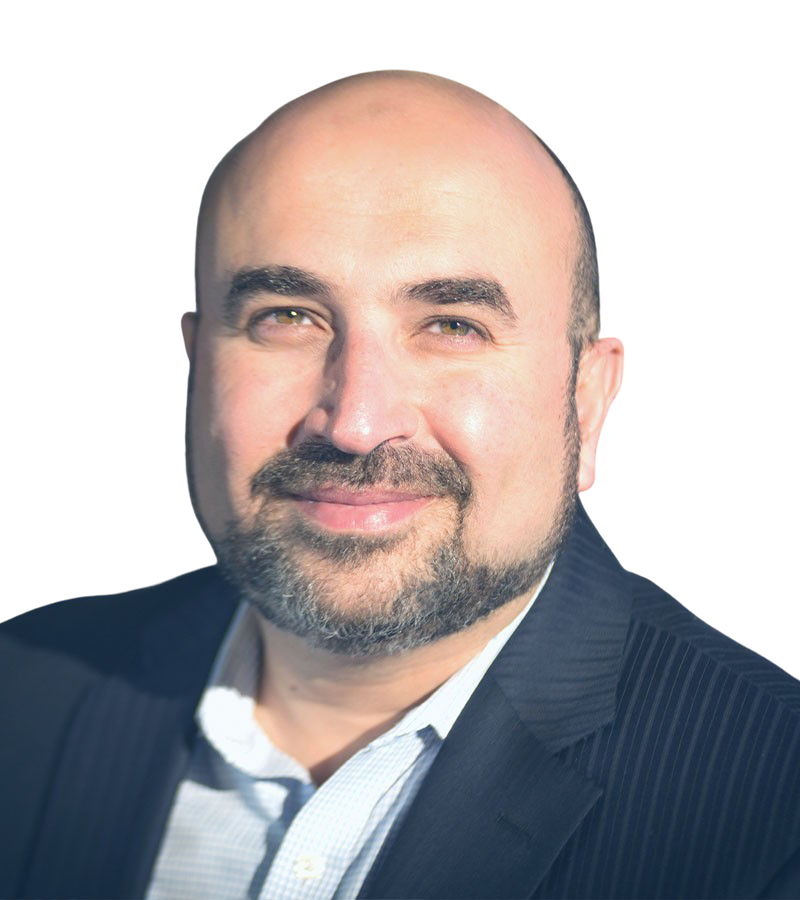
The Engineer Who Decided ETL Was the Wrong Answer
Walk into any large enterprise's data operation today and you'll find a cathedral of workarounds. Extract, Transform, Load - ETL - the scaffolding companies built over decades to move data from one system to another, reshape it, normalize it, and only then, finally, query it. Osama Elkady spent twenty years watching this from inside Oracle. His conclusion: the whole architecture is a detour.
Incorta, the company he co-founded in 2014, bets everything on that diagnosis. Instead of moving data to fit a warehouse schema, Incorta's Direct Data Mapping technology connects directly to systems of record and makes the data queryable in its original form - instantly. No transformation pipeline. No intermediate storage layer. Just the data, as it lives, answerable in real time.
Starbucks now refreshes data that used to take 24 hours in 10 minutes. Broadcom runs 450,000 reports daily for 17,000 users. Hormel Foods finished a project on Incorta in 2.5 months that had been stalled for two years before. These are not marketing claims - they are the kind of results that explain how a company founded with zero dollars attracted GV, Kleiner Perkins, M12 (Microsoft Ventures), Sorenson Capital, and Telstra Ventures, and has since raised $192.6 million total.
ETL is just a workaround. We built a new engine specifically for querying - not storing - enterprise data.- Osama Elkady, Co-Founder & CEO, Incorta
The mission has a name inside Incorta: "Think More, Code Less." Elkady's engineering philosophy holds that complexity is usually a failure of thinking, not a proof of sophistication. His most cited internal principle - "the best developer is the one who writes no code" - is deliberately provocative. It is not an argument against code. It is an argument for precision. Every line written should be necessary. Every architecture decision should be earned.
As of late 2025, Elkady was recognized by Knackforge as one of the "25 Top Data Voices to Follow on LinkedIn," selected in the Builders & Business Leaders category for his writing on "removing friction between data and decision." The award reflects something true about how he operates publicly: he favors practical lessons over thought-leadership spectacle.
What Incorta Actually Does
The world's largest coffee retailer uses Incorta to consolidate data from 28,000 stores into cloud infrastructure for advanced analytics. The numbers represent a shift that goes deeper than performance: when a business can ask a question and get an honest answer in real time, the kinds of questions it asks change.
Incorta's first major enterprise customer was Avago Technologies - which later became Broadcom. When Incorta closed that deal in 2014, Avago was an $11 billion company. It grew to $123 billion. Whether that growth was driven by Incorta is beside the point; what it signals is that Incorta landed in the right orbit early.
Twenty Years Inside the Machine
Osama Elkady grew up in Cairo. He studied computer science at Ain Shams University - one of Egypt's most prestigious institutions - and graduated in 1992 into a technology landscape that was still making up its mind about what personal computing meant. He encountered mainframes, early Macs, and original Windows machines. He learned to code on machines that demanded clarity of thought before clarity of syntax.
In 1993 he was in Bangalore, working with microsystems during the early years of India's software expansion. A recruiting firm found him and brought him to Oracle in 1994 - for what was billed as a three-month contract. Within four years he was a director, managing approximately 50 engineers. Within twenty years he was VP of Oracle Applications Development, overseeing the enterprise applications and business intelligence tools that thousands of corporations depended on, and working with customers across Japan, Asia, Europe, and the Middle East.
"You come to a point where your pace of innovation outgrows the company."
- Osama ElkadyAlong the way he invented XML Publisher - a reporting engine still embedded in Oracle's product stack today. He also accumulated multiple patents in data management and mobile strategy, some years before mobile-first became an industry obsession.
The reason he eventually left Oracle was not dissatisfaction - it was geometry. The innovation he was pursuing was structurally incompatible with Oracle's product direction. Pursuing it further inside the company risked his position. He chose the idea over the position.
Zero Dollars, One Idea, a Prototype
In 2014, Elkady left Oracle and co-founded Incorta with three colleagues: Hichem, Klaus, and Matthew. They started with zero external funding. No term sheets. No office. Just a shared conviction that the enterprise data market was solving the wrong problem.
His wife was instrumental in giving him the personal support to take the leap. That detail is not incidental - it surfaces in his public talks as the kind of grounding that makes audacious bets feel possible.
We build what our customers don't even know is possible - until they see it.- Osama Elkady
The early Incorta sales process was a prototype demonstration. Elkady would show a prospective customer what real-time data access looked like, without transformation overhead - and close the deal before the demo was finished. Within six months of founding, they had their first major enterprise contract. Before approaching VCs, they had already collected over $1 million from initial customer investments.
That early momentum attracted the right attention. GV, Kleiner Perkins, M12, Sorenson Capital, and Telstra Ventures backed the company in early rounds. Ron Wohl, a significant Oracle figure, became a major individual investor - a vote of confidence that read clearly in Silicon Valley.
In June 2021, Incorta closed a $120 million Series D led by Prysm Capital, bringing total funding to $192.6 million. By that point the company had grown from roughly 50 employees to over 300, with offices across the United States, London, the Middle East, India, and Japan.
Think More, Code Less
Elkady runs a high-trust, high-autonomy environment. He delegates challenging problems - not menial ones. He maintains an open-door policy and holds weekly Q&A sessions with the team. His preferred venue for candid conversation is informal: he calls it "kitchen talks," the kind of sidebar that happens when the hierarchy relaxes and real opinions surface.
He invests heavily in young engineers and interns. His instinct is that the people who have not yet been shaped by legacy thinking are the ones most likely to see the non-obvious path. At Oracle he learned that institutional momentum is its own kind of gravity - pulling teams toward what already works, away from what might work better. At Incorta, he builds against that.
"Surround yourself with people who have been successful before doing the same thing."
- Osama ElkadyHe also mentors entrepreneurs beyond Incorta's walls, and has offered workspace access to early-stage startups. In July 2024 he backed aiXplain, an AI infrastructure company, in a seed round - his first disclosed external investment. It was not a random pick. aiXplain operates in the same broad territory Incorta occupies: making complex data systems more accessible to the people who need to act on them.
What He Has Built
- Invented XML Publisher at Oracle - a core reporting engine still running in Oracle's global product stack today
- Holds multiple patents in data management and mobile strategy
- Co-founded Incorta with zero funding; raised $192.6M across seed through Series D rounds
- Led Incorta to 284% year-over-year revenue growth
- First enterprise customer (Avago/Broadcom) grew from $11B to $123B company
- Reduced Starbucks' data refresh cycle from 24 hours to 10 minutes
- Enabled Broadcom to run 450,000 reports daily for 17,000 users on one platform
- Helped Hormel Foods complete a 2-year-stalled project in 2.5 months
- Named one of "25 Top Data Voices to Follow on LinkedIn in 2025" (Knackforge, Builders & Business Leaders category)
- Generated over $1M in customer investment before approaching any VC firm
Incorta in Context
The Long Game
Five Things Worth Knowing
What He Says
The best developer is the one who writes no code.- Osama Elkady on engineering discipline
"Innovation has no limits - unless we accept them."
- Osama ElkadyJust keep hope and move forward, even in darkest moments.- Osama Elkady on perseverance
"Work as if this is my company. I am here to make a difference."
- Osama Elkady, on ownership mentality