The Day He Wrote Lambda
Tim Wagner walked into Amazon Web Services on his first day as a new General Manager and was handed a project: solve a pain point that S3 customers kept hitting. The question he kept asking himself was deceptively simple - "What is PUT, GET, LIST for compute?"
The answer was AWS Lambda. Launched publicly in 2014, Lambda let developers upload code and run it without provisioning or managing servers. No infrastructure. No overhead. Just code and an event. The serverless era had begun, and Wagner had started it with a blank document on day one at a new job.
For six years he ran the team - not just Lambda, but Amazon API Gateway and the Serverless Application Repository. He watched developers do things with his creation that he'd declared impossible. "No one's ever going to use this for video transcoding," he'd said early on. Developers proved him wrong before he could retract it.
The missing link for Serverless was a stateful data model that could work across different clouds and owners.
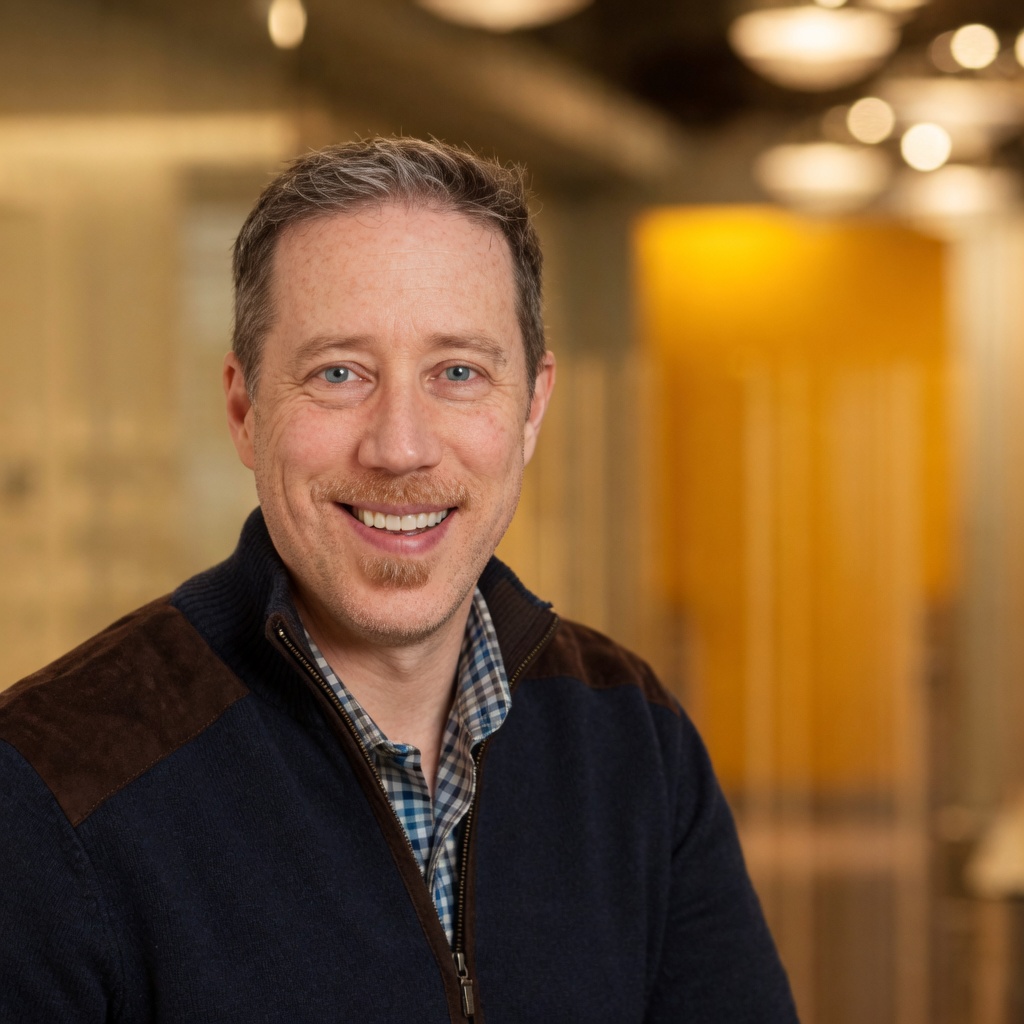
Tim Wagner, Co-founder & CEO, VendiaCoinbase and the Ledger Years
After AWS, Wagner went to Coinbase as VP of Engineering. While the rest of Silicon Valley was debating whether blockchain was real, he was running one of the largest regulated fleets of distributed ledgers on the planet. He saw up close what blockchain could do - and more importantly, where it fell short.
The peer-to-peer architecture that made early blockchains philosophically appealing made them operationally impractical at enterprise scale. The scalability ceiling was real. The tooling was inadequate. And the data couldn't easily cross cloud or organizational boundaries.
He was already thinking about what came next.
Wagner met his future co-founder Shruthi Rao during her interview process at AWS. Years later they would build a company together - Vendia - named after the Venn Diagram, because their combined expertise overlapped exactly where enterprise data needed help most.
Building Vendia: The Venn Diagram Company
Vendia launched on June 26, 2020. The pitch was precise: take what serverless infrastructure does for compute and apply it to data. Add what blockchain does for distributed trust and immutability. Remove what makes blockchain impractical - the slow consensus, the p2p limitations, the inability to operate across cloud providers.
The result was something new: a cloud-native distributed ledger that could let a company ingest data on Azure, process it on AWS, and store the result in Google Cloud - all in one transaction, with full lineage, auditability, and cryptographic security. "The combination of an API, a distributed ledger, and a series of databases in different clouds," Wagner has said, "is more than the sum of those parts."
The industries lining up to use it read like a broad survey of complex data relationships: financial services, healthcare, travel and hospitality, manufacturing and logistics. Any sector where multiple organizations need to act on the same data without fully trusting each other.
What Vendia Solves
Enterprises have data scattered across clouds, partners, and departments. Moving it creates compliance risk. Copying it creates inconsistency. Locking it to one cloud creates dependency.
Vendia gives companies a single source of truth that lives across all of them simultaneously - with built-in governance, lineage tracking, and access control.
By 2024: $13M in annual revenue, 500 enterprise customers.
Vendia by the Numbers
The AI Pivot That Wasn't a Pivot
By late 2025, Wagner was writing about Model Context Protocol gateways and new AI agent architectures. Vendia's positioning shifted toward "AI data platform" - but the core thesis hadn't changed. AI models need enterprise data. Enterprise data is siloed, ungoverned, and scattered. Vendia's infrastructure is the bridge.
In December 2025, Wagner published "From API Gateway to MCP Gateway: Bridging the Gap to the AI Era" - a characteristically precise reframing of how the infrastructure layer he understood better than almost anyone needed to evolve for AI agents. In January 2026, he followed with "The New LAMP Stack Architecture: A Recipe for Building AI Agents."
He was writing the business plan again. This time for AI.
The combination of an API, a distributed ledger, and a series of databases in different clouds is more than the sum of those parts.
Tim Wagner - on Vendia's architectureThe Pattern That Keeps Repeating
Princeton for undergrad. Berkeley for a PhD in Computer Science. Then years in industry across Microsoft, BEA, the Eclipse Foundation, and a handful of smaller companies - accumulating the specific combination of enterprise experience and infrastructure instinct that made Lambda possible.
Wagner built Vendia's own global infrastructure serverlessly - deploying to worldwide regions in approximately six minutes using AWS CDK. The irony was intentional and the point was clear: a company built on serverless principles uses serverless to build itself.
He calls himself a "Kind Human" in his professional bios, alongside "inventor of AWS Lambda." Both are load-bearing descriptions.
A Career That Kept Arriving Early
What He Actually Built
Invented AWS Lambda
Authored the original business plan on his first day at AWS. Lambda launched in 2014 and permanently changed how software is built - spawning an entire industry.
Led Serverless at AWS for 6 Years
As General Manager, he built not just Lambda but also Amazon API Gateway and the Serverless Application Repository - three foundational pieces of modern cloud infrastructure.
Raised $50.6M for Vendia
Led a $15.5M Series A and $30M Series B to build the next-generation data sharing platform, growing to 500 enterprise customers and $13M in annual revenue.
Fused Serverless + Blockchain
The first technologist to build a production enterprise platform combining serverless scalability with blockchain's distributed trust model - something most engineers declared impossible.
6-Minute Global Deployment
Deployed Vendia's entire global infrastructure to worldwide cloud regions in approximately six minutes using AWS CDK - proving serverless principles at company scale.
Prolific Technical Author
Writes for The New Stack, VentureBeat, and Vendia's own blog on serverless, MCP gateways, AI agent architectures - shaping industry thinking across multiple technology eras.
"It has to be simple."
Tim Wagner's foundational principle when designing AWS Lambda - a philosophy that turned a blank page on day one into the global serverless movement. He brought the same philosophy to Vendia: complex data sharing, made simple enough to deploy in minutes.
Key Moments
The Quotes Worth Keeping
"What is PUT, GET, LIST for compute?"
The question that led to AWS Lambda - inspired by S3's elegant simplicity"It has to be simple."
Foundational philosophy when designing AWS Lambda"The missing link for Serverless was a stateful data model that could work across different clouds and owners."
On the genesis of Vendia"The combination of an API, a distributed ledger, and a series of databases in different clouds is more than the sum of those parts."
On Vendia's architectural differentiation"Our challenge was could we go build a ledger data model and cross-cloud experience for serverless that would let you ingest data on Azure, process it on AWS and then store the result in Google."
On Vendia's technical mission"No one's ever going to use this for video transcoding... we'll never get that with Lambda."
A prediction developers proved wrong almost immediately