Prukalpa Sankar / Atlan
Person · Founder · Executive
Co-founder & Co-CEO · Atlan
She started with a $600 Kickstarter campaign and a broken streetlight. Now she runs a $750M company helping Mastercard, JP Morgan, and General Motors understand their own data. The journey from midnight hackathon to data governance infrastructure involved building the UN's SDG tracker, India's national data platform, and discovering that the world's hardest data problems are actually people problems.
Who She Is
Prukalpa Sankar is the co-founder and co-CEO of Atlan, the platform that data teams at Mastercard, JP Morgan, Zoom, Dropbox, Autodesk, and Nasdaq use to understand, trust, and govern their data. Put simply: Atlan is to data what GitHub is to code, or Figma to design. It's the context layer - the place where metadata lives, lineage gets traced, and data finally stops being a black box.
Before Atlan, Prukalpa co-founded SocialCops with Varun Banka - a data-for-good company that built India's national data platform (the world's largest data lake at the time) and the United Nations' Sustainable Development Goals tracker, deployed across 50+ countries and touching data for a billion people. That wasn't the plan. It was a midnight brainstorm in a university dorm in Singapore about crowdsourcing data on broken streetlights.
She studied chemical engineering and entrepreneurship at Nanyang Technological University (NTU), Singapore - on a scholarship, far from home. The Goldman Sachs internship showed her that ambition alone doesn't make people happy. The Singapore Entrepreneurship Challenge, which she organized and ran, showed her 200 entrepreneurs who'd found something better. She chose the harder option.
Atlan didn't start as a company. It started as a crisis: when SocialCops' team scaled from analyzing data for 2 million people to 500 million, it took four people eight hours to figure out why a single dashboard number was wrong. That was the moment Prukalpa realized that data problems aren't technical puzzles - they're human coordination failures. The tool they built internally to fix this made the team six times more agile. Three years later, it became Atlan.
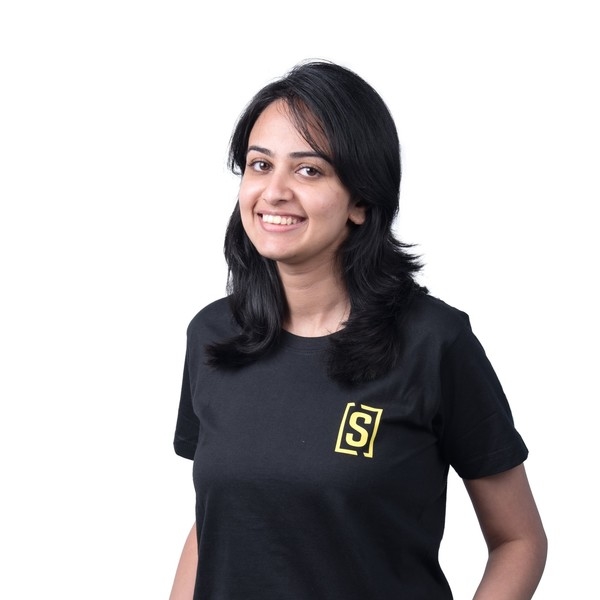
"Data team problems are human collaboration problems, not technology problems."
- Prukalpa Sankar, Co-founder, Atlan
The Story
When Prukalpa and Varun launched SocialCops, they had no money. They filed a Kickstarter campaign and raised $600. Then they entered every business plan competition they could find worldwide, eventually collecting $25,000-$30,000 in prize money. This wasn't humility - it was resourcefulness under constraint, a muscle that would define how both SocialCops and Atlan were built.
SocialCops started as a civic tech experiment - what if you could crowdsource data about broken infrastructure and redirect city budgets toward real problems? The idea evolved quickly. The United Nations came calling. The Indian government wanted a national data platform. The Gates Foundation wanted SDG tracking. An 8-person team - four of whom had never deployed production code - built India's National Data Platform in 12 months. The World Economic Forum called them a Tech Pioneer. The New York Times named them a Global Visionary.
The insight that changed everything came buried in operational chaos. When SocialCops analyzed data at the scale of half a billion people, something broke - and nobody knew what. Eight hours. Four senior people. One wrong dashboard number. When they finally traced the problem, Prukalpa understood that no amount of better databases or faster pipelines would fix the underlying issue: data teams didn't have a shared language, shared context, or shared source of truth. They were technically sophisticated and organizationally blind.
The internal tool they built to fix this - something like a "GitHub for data" - made their team six times more agile. When they showed it to other data teams, everyone wanted it. That's how Atlan was born: not from a market gap analysis, but from a genuine internal pain point, validated by talking to 150+ data scientists before writing a line of product code.
Prukalpa's theory of data governance is deliberately contrarian. Most organizations treat governance as a defense mechanism - a compliance layer, a set of restrictions, a necessary bureaucracy. She argues it should be an offensive strategy: the thing that makes data teams faster, not slower. Rebranding governance as "data enablement" is not marketing spin. It's a structural reframing that changes what gets built and how teams adopt it.
The numbers back her up. Atlan wins 75% of competitive trials. Revenue grew 7x in two years. Enterprise sales grew 400% in Q1 2024. The Series C, led by GIC (Singapore's sovereign wealth fund) and Meritech Capital, raised $105M and pushed the company's valuation to $750M - bringing total funding past $206M from investors including Insight Partners, Sequoia, Salesforce Ventures, and the founding teams of Snowflake, Looker, and Datadog.
Company building at Atlan runs on a framework that Prukalpa describes as "customer greater than company, greater than team, greater than me." Culture is tested with a "Mars exercise" - which values would you keep if you had to start a completely different company on another planet? The hiring process has no resume screening. There are "challenge statements" - real problems that show how candidates actually think. High performers who don't share values get asked to leave.
She also invented a "founder track" for early employees who thrive on zero-to-one building but don't want to become operators at scale. It's a retention strategy that treats people like SaaS products - attract them, help them grow exponentially, maintain the relationship when they leave, and build a referral flywheel. It's a model she borrowed from McKinsey and repackaged for the startup world.
By the Numbers
Career Arc
In Her Own Words
"Context is King."
"80% of time goes to finding and understanding data rather than analysis itself. That's not a technology failure - that's a collaboration failure."
"Fundraising is a necessary evil. Not the goal. Build companies to solve problems, not to raise money."
"Culture isn't static. It's about evolving rituals while keeping values constant."
"Customer greater than company, greater than team, greater than me."
"Governance should be an offensive strategy, not a defense strategy. The thing that makes you faster, not slower."
"Realized early that fiction wasn't my thing, so trying to do cool stuff with my life that becomes book-worthy."- Prukalpa Sankar
Recognition
How She Thinks
Mission-driven. Built a business around data for social impact before "impact investing" was a pitch deck staple.
Contrarian framer. Reframes governance as offense, not defense. Reframes data quality as collaboration, not tooling.
Customer-obsessed. Spoke to 150+ data scientists before building Atlan. Doesn't trust the plan without the research.
People-first leader. Created a "founder track" for builders who don't want to become operators. Treats employees like SaaS products - in the good way.
Unsentimental about recognition. "If you do good work, recognition happens to you." Does not mistake the award for the point.
Resourceful under constraint. Built a global platform on Kickstarter money and competition prizes before ever meeting a VC.
Community builder. Publishes Metadata Weekly. Runs Humans of Data. Views content as "what we enjoy doing, not strategy."
Stage-aware strategist. Prioritizes "the most critical issue for the company at its current stage" - not the loudest one.
On Her Bookshelf
Watch
In December 2017, Prukalpa took the stage at TED Talks India Nayi Soch to show how data analytics can transform rural development - and how the gap between data collection and decision-making is one of the most solvable problems in social impact. The talk draws on SocialCops' work across India, the UN, and dozens of governments globally.
▶ Watch on TED.comFind Her Online