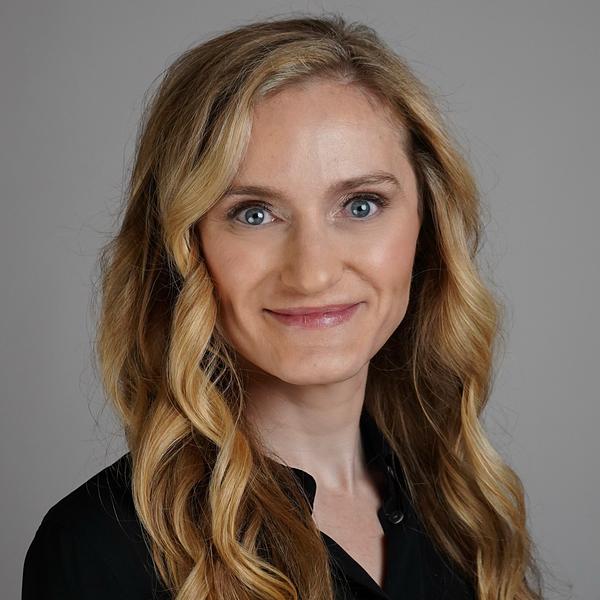
Astasia Myers led Felicis' $10 million seed into Letta in September 2024. The Berkeley AI startup hit a $70 million valuation before most people understood what persistent memory for AI agents meant. That's the pattern - she's always one infrastructure wave ahead.
The Chroma bet tells the story better than any trophy case. While everyone else obsessed over foundational models in 2023, Myers wrote the check for an embedding database. Not sexy. Not obvious. Just necessary. Within a month, 35,000 downloads. The third wave of ML infrastructure was arriving exactly when she said it would - when software engineers became ML creators, when foundational models dropped adoption barriers low enough that proprietary data became the moat.
She didn't invent this philosophy reading management books. She built it watching her mother, a semiconductor industry glass-ceiling-breaker, turn dinnertime into product strategy sessions. Portola Valley, California in the 1990s - where garage startups weren't folklore, they were next door. Myers grew up debugging business models between bites.
Stanford gave her dual degrees with Phi Beta Kappa honors. Cambridge gave her a master's. But Baird's equity research desk gave her the pattern recognition - covering public networking and security companies, learning what winners looked like in their S-1s before reverse-engineering how they looked at Series A.
The Infrastructure Whisperer
Cisco Investments came next. Cloud infrastructure M&A when cloud infrastructure was still a bet, not a category. Then Redpoint Ventures from 2017 to 2021, where she led the rounds that became case studies: LaunchDarkly, the feature flag company that redefined deployment. Dremio, turning data lakes into something engineers actually wanted to use. Solo.io for service mesh. Semgrep for code analysis. Hex for collaborative analytics. Airbyte and Supabase for the open-source data stack.
Each one followed the thesis: extreme individual value first, enterprise expansion second. Single-player mode before multiplayer. The developer as customer zero.
But Quiet Capital is where the legend crystallizes. She joined as founding enterprise partner, which is consultant-speak for "build the practice from scratch." Modal, Chroma, Langchain - the holy trinity of AI infrastructure's current moment. Serverless compute, vector embeddings, LLM orchestration. She didn't just pick winners, she identified the category before categories existed.
By the Numbers
- 📊 Over 10 years in enterprise software
- 🎯 Pre-seed to Series A focus
- 🚀 Led investments across three ML waves
- 💼 24/7 support model for founders
- ✍️ 2.7K followers on Medium's "Memory Leak"
- 🎤 Speaker at CNCF, PyTorch Conference
Felicis Era
January 23, 2024. Myers joins Felicis as General Partner. Within months she's reshaping how Silicon Valley thinks about AI agents. Her portfolio at Felicis reads like a shopping list for anyone building the next decade: Arena for benchmarking model progress, Browser Use for reliable web interaction, Eventual for multimodal AI data infrastructure, Letta for persistent agent memory, Datology, Wordware, Yutori.
Eighty percent of Felicis' recent investments land in AI. That's not following the market - that's making the market follow you. Myers appeared on The Tech Trek podcast in October 2025 explaining why: "We're betting on the infrastructure layer." Not the models themselves, but the picks and shovels. The unsexy middle layer that every AI application will need but nobody wants to build themselves.
The "Memory Leak" Philosophy
Myers writes a technical blog on Medium called "Memory Leak" - a playful nod to programming bugs. It's where she publishes her real-time thinking on ML infrastructure, developer tools, open source strategy, and security. The name says everything: she spots the leaks before they crash the system. Her Chroma investment thesis appeared there first, complete with the data on embedding database adoption and the gap in retrieval-augmented generation tooling.
Winning ML solutions, she wrote, "will focus on optimizing the end user experience with ease of use, ergonomics, and performance in mind." Translation: stop building for CTOs, start building for the engineer at 2am trying to ship a feature.
Portfolio as Proof
How She Works
Ask founders what it's like working with Myers and the word "extension" comes up. She views herself as an extension of the founding team, not a board seat with quarterly check-ins. The support runs 24/7 - business strategy, customer acquisition, financial planning, key hires. She's closed unicorn founders as angels before they became unicorns. She's facilitated early hires that became executives.
At a PyTorch Conference AI Engineer Happy Hour in October 2025, she posed for photos with the Browser Use founders - tall guys, all of them. She posted it on X with the caption about standing among "open source giants" both "literally and figuratively." The self-deprecating humor masks the real joke: they're standing next to someone who spotted their company's value before they had revenue.
The Three Waves
Myers tracks ML infrastructure evolution in waves. First wave (2010-2015): TensorFlow, specialized ML teams, data scientists as priests. Second wave (2016-2020): democratization begins, PyTorch, model-as-a-service. Third wave (now): software engineers as ML creators, foundational models, infrastructure that assumes AI is ambient.
She's invested across all three. That's institutional memory most VCs fake with pitch deck research. Myers lived it, backed it, learned what breaks at scale.
Speaking Circuit
Available as keynote speaker on venture capital, business growth, leadership, and women in business. Recent appearances include a panel on "The $100B Opportunity for the Cloud-Native Ecosystem: A VC Perspective" at CNCF's November 2024 event. Translation: she's explaining to enterprise buyers why their next decade of infrastructure spend goes to startups they've never heard of yet.
The Origin Story Nobody Tells
Before venture capital, before equity research, before Cambridge, Myers worked product and customer engagement at two early-stage enterprise software companies. The jobs that don't make the bio but make the investor. She saw what customers actually cared about versus what founders thought they cared about. She learned the gap between roadmap and reality, between feature velocity and product-market fit.
That's why her thesis on single-player mode sounds simple but lands different. It's not theory. It's scar tissue from watching companies build team features before individual value, collaboration tools before the thing worth collaborating on, enterprise sales before anyone wanted to use the product alone at their desk.
Career Arc
What She Sees Next
The aspirations section of a profile usually reads like corporate mission statements. Myers' is more specific: continue democratizing AI development by backing founders building the infrastructure layer for the next generation of AI applications. Developer tools that start with extreme individual value before enterprise-wide adoption.
In practice, that means she's looking for the gap between what foundational models can theoretically do and what developers can actually build with them. The Chroma thesis - embeddings let developers add state and memory to AI apps - is the template. What's missing? What's friction? What tool would a solo engineer at a startup pay for immediately, not in six months after convincing procurement?
She's also watching data infrastructure for multimodal AI. Text was wave one. Vision plus text is wave two. Eventual Computing, one of her recent bets, builds purpose-built data infrastructure for that world. When AI needs to process video, audio, images, and text simultaneously, the data layer can't look like 2020's stack.
The Mother Influence
Myers' mother worked in semiconductors and startups when both industries actively discouraged women. Those dinnertime conversations weren't just about emerging tech - they were about seeing markets before they formed, building categories before they had names, breaking ceilings when everyone said the ceiling was structural.
Myers inherited the pattern recognition but also the work ethic. "24/7 support" for founders isn't marketing copy when your childhood model was someone who helped build Silicon Valley's semiconductor backbone while everyone told her she didn't belong.
Recognition & Reality
Ten times on Forbes' Midas List. Four times in the New York Times' Top 20 VCs. These aren't participation trophies - they're backward-looking confirmations that her forward-looking bets paid off. But the recognition lags the reality by years. When she backed Chroma, nobody was writing breathless profiles. When she led LaunchDarkly's round, feature flags were niche.
The awards measure what already happened. Myers operates in what's about to happen. That gap - between market recognition and market reality - is where she works. It's why her Twitter bio doesn't list accomplishments, why her Medium blog focuses on emerging patterns instead of past wins, why she judges the Felicis Fellows program instead of just collecting board seats.
The Data Obsession
Ask about her personality and "data-driven" appears immediately. But it's not the buzzword version - dashboards and metrics theater. Myers "delights in the practice of collecting and analyzing data to test the validity of hypotheses." That's a direct quote from her background, and it sounds like what it is: someone who genuinely enjoys the scientific method applied to markets.
The Chroma investment memo probably had download projections, developer survey data, GitHub star velocity, Stack Overflow question trends. Not because Quiet Capital required it, but because Myers wouldn't write a check without testing the hypothesis. Embedding databases would explode because X, Y, Z. Here's the data. Here's the counter-evidence. Here's why the data wins.
Author & Thought Leader
Published on TechCrunch and Medium. Her "Memory Leak" publication has 2.7K followers who want real-time takes on ML infrastructure, not recycled press releases. She writes like an engineer who learned to explain things, not a marketer who learned to code.
Education Path
Stanford: Dual bachelor's in Political Science and International Relations, Phi Beta Kappa. Cambridge: Master's degree. The poly-sci background shows in how she thinks about markets - incentives, game theory, why people adopt tools.
Portfolio Support
Doesn't just write checks and attend board meetings. Facilitates key hires. Closes unicorn founders as angels. Provides business strategy, customer acquisition, and financial planning guidance. The role she plays is closer to interim executive than passive investor.
Latest Moves
October 2025: Appeared on The Tech Trek podcast explaining why 80% of Felicis' recent investments target AI. Hosted an AI Engineer Happy Hour at PyTorch Conference with Arena, connecting builders and researchers driving the next wave.
September 2024: Led Letta's $10 million seed at a $70 million post-money valuation. The Berkeley AI startup focuses on persistent memory for AI agents - exactly the infrastructure gap Myers identified in her thesis on making conversational chatbots effective.
The pattern holds: identify the infrastructure gap, find the technical founders solving it, write the check before everyone else sees the category. Repeat for a decade. Become unavoidable.
Fun Facts & Quirks
- Her blog title "Memory Leak" is programmer humor - the bug that crashes systems slowly, which is exactly what she helps founders avoid
- Serves as a judge for the Felicis Fellows program, evaluating the next generation of technical talent
- Specializes in backing technical founders with deep domain expertise - not MBAs who hired CTOs, but engineers who became CEOs
- Her "single-player mode first" philosophy has influenced how dozens of startups approach product development
- Grew up in Portola Valley when it was already the heart of Silicon Valley's entrepreneurial culture
- Her Chroma investment validated within 30 days via 35,000+ downloads - faster than most VCs validate in 30 months
The Synthesis
Astasia Myers doesn't fit the venture capital archetype because she didn't follow the venture capital path. Product and customer engagement taught her what users want. Equity research taught her what public markets value. Cisco M&A taught her what acquirers pay for. Redpoint taught her how to spot category leaders. Quiet Capital taught her how to build a practice from scratch.
Each role stacked. Each role informed the next. By the time she joined Felicis, she'd built pattern recognition across the full lifecycle - startup to IPO to acquisition. She knows what works at product-market fit, what breaks at scale, what survives public markets, what gets acquired for strategic value versus financial returns.
That's the real edge. Not just picking winners, but understanding the full game. Not just knowing AI infrastructure matters, but knowing which piece of infrastructure solves which friction for which customer at which stage. Not just investing in developer tools, but understanding that developers adopt tools individually before teams adopt them organizationally.
The awards will keep coming - they lag reality by design. The portfolio companies will keep succeeding - she spots them before they're obvious. The infrastructure waves will keep rolling - she's already positioning for the fourth wave while most investors are still figuring out the third.
Astasia Myers sees tomorrow's infrastructure today. Ten unicorns and nine IPOs aren't the end of the story. They're evidence she's been right about infrastructure for a decade. The next decade starts with whatever gap she's spotted that nobody else sees yet.