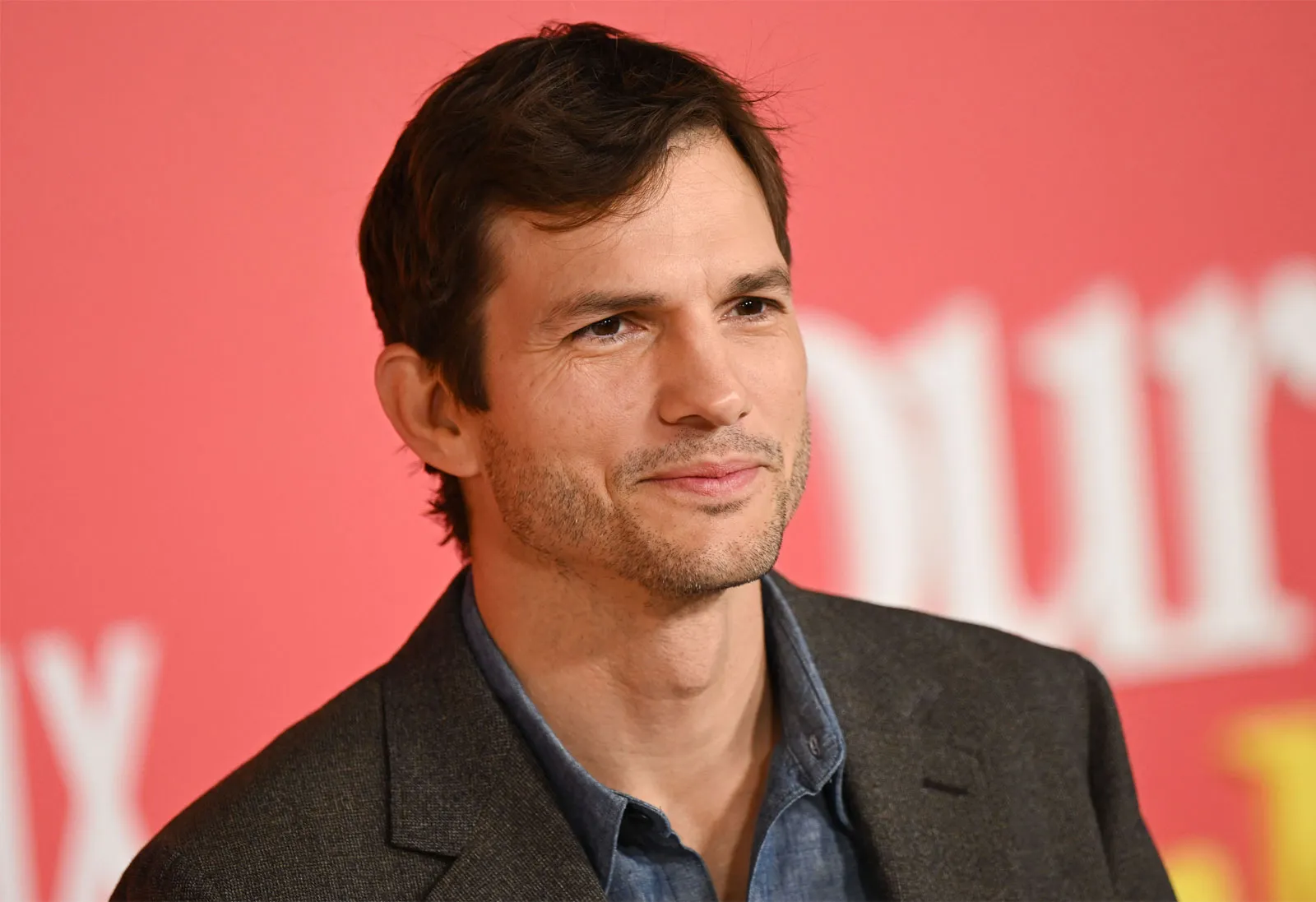
The General Mills cereal plant in Cedar Rapids paid $8 an hour. The blood plasma center paid $50 per donation, twice a week if you needed it badly enough. Ashton Kutcher needed it. He was studying biochemical engineering at the University of Iowa, determined to cure his twin brother Michael's heart condition. The money wasn't the point. The mission was.
Then a model scout walked into The Airliner bar in Iowa City. Kutcher won the Fresh Faces of Iowa competition. Three weeks later, he was in Los Angeles. The engineering degree never happened. The heart condition got fixed by doctors with better tools than an undergraduate's ambition. But the pattern stuck: see the problem, commit completely, pivot when the data changes.
Hollywood knew him as Michael Kelso, the beautiful idiot from That '70s Show. What they didn't see was the Iowa kid who'd studied markets while memorizing scripts, who understood that attention was the new oil and platforms were the new real estate. By 2010, while most celebrities were licensing their names to vodka brands, Kutcher co-founded A-Grade Investments with Guy Oseary and Ron Burkle. Their thesis was simple: technology would reshape every industry, and they'd rather be early than safe.
The Uncomfortable Bet
Kutcher's investment philosophy centers on one uncomfortable truth: comfort is the enemy of growth. "I'm continually trying to make choices that put me against my own comfort zone," he's said. "As long as you're uncomfortable, it means you're growing." It's why he backed Airbnb when hotels seemed unbeatable. Why he bet on Uber when the taxi medallion system had survived a century. Why he joined Spotify's Series A when music piracy was supposedly killing the industry.
Sound Ventures, launched in 2015 with Oseary, manages over $1 billion now. The portfolio reads like a list of the last decade's infrastructure: Robinhood democratizing trading, Airtable rebuilding databases, Flexport reinventing logistics, Brex reimagining corporate cards. Not moonshots. Inevitabilities that most people called crazy until they became obvious.
The fund's 35 exits include Spotify, Airbnb, Casper, Nest (acquired by Google), Pinterest, Shazam (bought by Apple), Uber, and Warby Parker. Seven unicorns sit in the portfolio: MoonPay, Airtable, and five others they haven't announced yet. The $240 million AI fund closed in 2025, backing OpenAI, Anthropic, and StabilityAI before the rest of Hollywood figured out that artificial intelligence wasn't a sci-fi plot device.
The Other Ledger
But Kutcher keeps two portfolios. The one Wall Street tracks and the one that tracks predators.
In 2009, Demi Moore was watching an MSNBC documentary about child trafficking in Cambodia. She learned it was happening in the United States too. She and Kutcher founded what became Thorn, building technology to defend children from sexual abuse. While Sound Ventures was picking unicorns, Thorn was building Spotlight, a tool that scans the internet for trafficking victims.
The numbers: 31,197 trafficking victims identified, including 9,380 children. Over 2 million child sexual abuse files removed from the web. In 2017, Kutcher testified before the U.S. Senate Foreign Relations Committee, explaining how technology could do what police departments couldn't - search at scale, spot patterns, save kids before the crime became a statistic.
The Brother Who Changed Everything
Michael Kutcher was born with cerebral palsy. As kids, when Ashton got invited to sleepovers, he refused to go if Michael wasn't invited. When bullies teased Michael for his thick glasses, Ashton fought them. When Michael needed a heart transplant as a teenager, Ashton offered his own.
In 2003, Ashton publicly revealed Michael's condition on national television. Michael was furious - he'd spent his life trying not to be defined by cerebral palsy. But the disclosure changed Michael's trajectory. He became a spokesperson for the Cerebral Palsy Foundation. "Chris did me the biggest favor he's ever done," Michael said later, "because he allowed me to be myself."
The Thorn chapter got complicated in 2023 when Kutcher resigned as chairman after controversy over character letters he and wife Mila Kunis wrote supporting Danny Masterson during his rape trial. The resignation statement cited "listening, personal reflection, learning, and conversations with survivors." The work continues without him at the helm, which may be its own kind of success metric.
The Return to Screen
By 2026, Kutcher is back in front of cameras. FX's "The Beauty" premiered January 21 - a body horror sci-fi series where international supermodels die mysteriously and FBI agents uncover a conspiracy that threatens humanity. Kutcher plays the head of The Corporation, the shadowy entity at the center of it all. It's a comeback narrative, but the actual comeback happened years ago in the cap tables of startups nobody'd heard of yet.
He's 48 now. Married to Mila Kunis, whom he met when she was 14 and he was 19 on the set of That '70s Show. They didn't date until 2012, after each had lived full separate lives. Two kids. A house that doesn't look like a house celebrities live in because Kutcher still thinks like someone who sold plasma for textbook money.
The investment strategy hasn't changed: $100K to $10M per deal, sweet spot around $1M, targeting seed and Series A rounds where the biggest returns hide. Not growth equity. Not late-stage tourist rounds. The uncomfortable territory where founders are still figuring out if their idea is genius or delusion. Kutcher bets on the ones who can't sit still.
What Nobody Sees
Here's what the trades don't print: Kutcher was the first celebrity to hit 1 million Twitter followers, racing CNN to the milestone in 2009 when most actors thought social media was for teenagers. He co-founded A Plus, a digital media company focused on positive news, years before "content creator" was a job title. He hosted Punk'd, turning pranks into appointment television and pioneering the hidden-camera format that now dominates YouTube.
He played Steve Jobs in the biopic "Jobs," studying the man's walk and posture and reality distortion field. Critics hated it. Tech people who knew Jobs said Kutcher nailed the obsession, the intensity, the refusal to accept limits. That's the through-line: whether it's acting, investing, or building anti-trafficking tools, Kutcher doesn't do surface-level.
His philosophy on intelligence is the tell: "The sexiest thing in the entire world is being really smart. And being thoughtful. And being generous." Not rich. Not famous. Smart, thoughtful, generous. The rest follows.
The Scoreboard
Sound Ventures keeps deploying capital. The AI fund is active. Kutcher still takes partner meetings, still reads pitch decks, still asks the questions that separate founders building businesses from founders building PowerPoints. Net worth estimates hover around $200 million, but that's backward-looking. The real number is in what the current portfolio becomes when the exits happen.
He's filming projects selectively now. The Long Home wrapped in 2025 with Giancarlo Esposito, James Franco, and Josh Hartnett. More will come, but not to stay relevant. To stay uncomfortable. Because the kid who sold blood plasma and worked the cereal plant graveyard shift learned early: motion beats meditation. Action beats anxiety. The people who win aren't the smartest in the room - they're the ones who can't sit still.
Michael Kelso was the role that made him famous. But Christopher Ashton Kutcher built the scoreboard everyone else measures celebrity investors against. Thirty-five exits. Seven unicorns. Thirty-one thousand trafficking victims found. A brother who can now speak publicly about cerebral palsy without shame. A portfolio that proves Hollywood can play Silicon Valley's game and win.
The biochemical engineering degree never got finished. The mission to cure his brother's heart condition got outsourced to actual doctors. But the pattern that started in that Iowa cereal plant still runs: see the problem, commit completely, stay uncomfortable, don't sit still. Everything else is just scorekeeping.