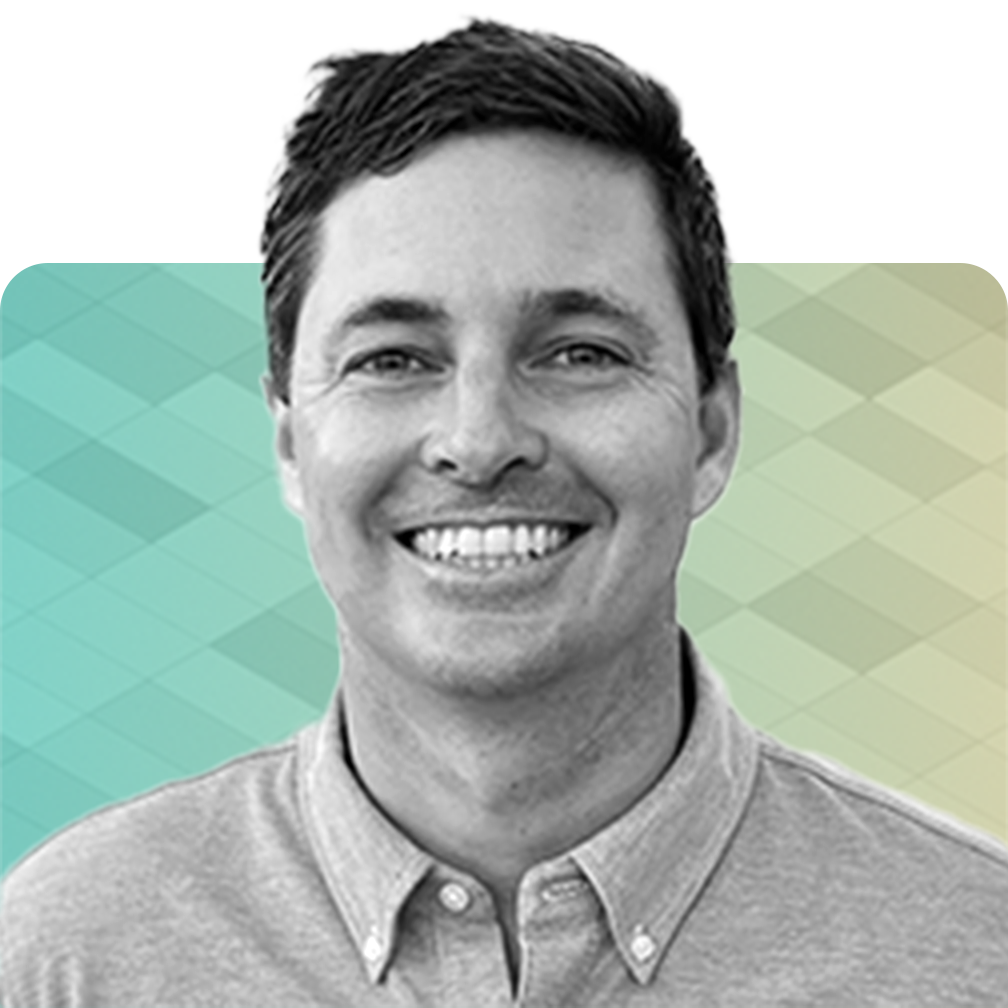
From the Grid's Edge to the Grid's Brain
A civil engineer who left Ireland with a master's degree and landed at Berkeley for an MBA does not usually end up as one of the more consequential people in American energy. Ryan Hanley did. And the path was direct, if not obvious: every stop along the way was a different layer of the same broken machine.
He came to the power industry through infrastructure, not ideology. After Hopkins for his BS in civil engineering, he pursued graduate work at Trinity College Dublin, returned to the States, and pointed himself at the one sector where physical systems and software hadn't yet collided the way people expected. He was right about the timing by about a decade. The collision is happening now.
At PG&E, he led smart grid technology - deep in utility territory, where change moves like sediment. SolarCity brought him into the distributed side, the rooftop-solar-meets-grid edge that was rewriting the load profile of California. Then Tesla acquired SolarCity in 2016, and Hanley was already in the building. He moved to director of grid services, working on battery integration and wholesale market operations - the commercial layer that sits between raw electrons and real money.
"Built for Power people, by Power people."
- Equilibrium Energy Company TaglineThe sequence mattered. Each transition took him closer to the systemic problem: the power industry runs its most important decisions across 30-year-old tools, Excel spreadsheets, and systems that don't talk to each other. At Advanced Microgrid Solutions, where he served as Chief Product Officer, Hanley saw what it looked like to try to bolt software onto the grid's edge. At Shell, where he spent three years as a General Manager building a digital and AI platform for global power operations, he saw it from the oil-major perspective - the scale, the complexity, and the organizational inertia.
He left Shell in 2021 to start Equilibrium Energy. Not because the moment felt right, but because he'd run out of positions inside existing institutions that could address what he'd identified. The problem wasn't any single company's problem. It was the industry's.
The company he built operates on two tracks simultaneously - and the dual nature is not accidental. Equilibrium is a software company building PowerOS, an agentic AI platform for enterprise power portfolios. It is also an energy asset operator, running batteries in ERCOT and California that generate real revenue in wholesale markets. The batteries aren't a side business. They're a proving ground: Equilibrium eats its own cooking. In 2024, their 1-hour battery in Texas earned more revenue per MW than any comparable asset in ERCOT. The platform they built to manage it is the same platform they sell.
PowerOS tackles what Hanley calls "connective intelligence" - unifying the data, models, and workflows that a power company actually uses into a single coherent AI layer. Forecasting. Optimization. Risk analysis. Trader copilots. Portfolio management. The first major enterprise deployment was NRG Energy - one of the largest power companies in the US - which came in as both a production customer and an investor in the Series B2 round in March 2025. The vote of confidence had skin in it.
The funding trajectory tells its own story: $30M Series A from Breakthrough Energy Ventures in 2022, $39M Series B led by DCVC in October 2024, $28M Series B2 led by GS Energy in March 2025. Over $100M raised. A strategic partnership with a leading global commodities trading house announced in April 2026. The company now has 140 people and is operating across ERCOT and California with eyes on broader expansion.
Hanley has taken the thesis to high-visibility stages - CERAWeek, Aspen Ideas Climate, Climate Week NYC alongside DCVC and J.P. Morgan. The argument is consistent: the power system is under unprecedented demand stress, the tools to manage it haven't kept pace, and agentic AI is the mechanism that can actually close the gap. Not eventually. Now.
His specific credibility is unusual. Most AI founders in energy are coming from software. Hanley came from the grid. He knows the models - physical modeling, power system analytics, enterprise risk - that operators actually trust. He knows why they don't share data across business units. He knows what a trader copilot needs to do to be useful on a Monday morning. PowerOS was designed from that knowledge inward, not from a demo outward.
The equilibrium the company name references is a technical term: the real-time balance between supply and demand that keeps the lights on. Hanley chose it deliberately. That balance is always being negotiated, always imperfect, always under new pressure. The company's bet is that AI can negotiate it better - and that the power industry is ready to let it try.