language-learning
(29)
Duolingo Built a Billion-Dollar Habit Out of Five-Minute Lessons
The green owl did not win by promising fluency overnight. It won by making tomorrow's five-minute lesson feel harder to skip than today's - then built subscriptions, testing and AI conversation on top of that habit.

Akshay Sanghai Is Building an English Classroom That Talks Back
The MySivi co-founder left large-company engineering for a harder systems problem: giving millions of learners a patient place to practise, make mistakes and speak again.
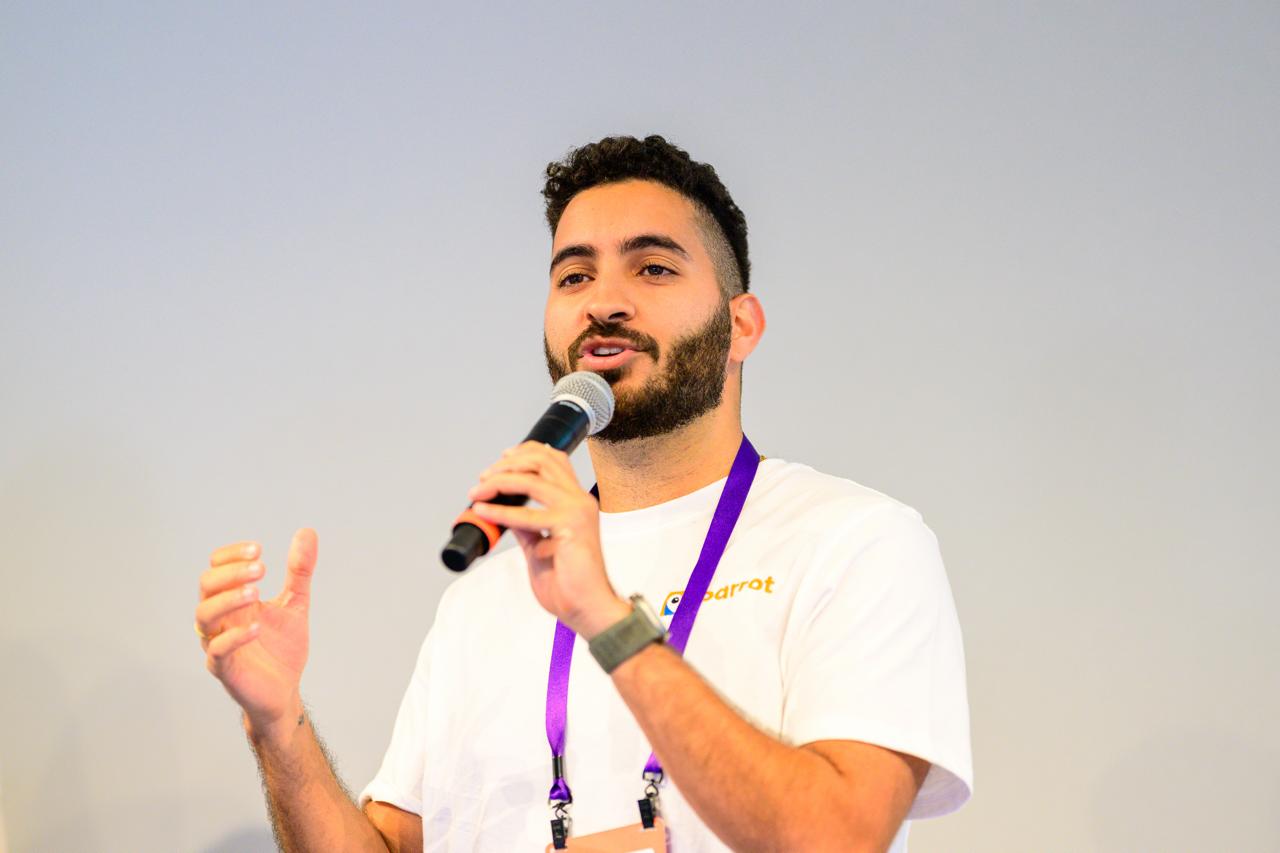
Amir Hanna Posted 627 Videos to Build a Better Scroll
The Parrot CEO went from a C-plus French student and Shell engineer to a founder betting that the internet's most compulsive behavior can teach people to understand one another.
Cakap Is Turning Indonesia's Language Gap Into a Skills Business
The Jakarta company started with live language lessons. Now it sells a broader promise: skills that travel from the classroom to the workplace.
The Caracas Startup That Turned English Into a Subscription
It started with $700, a sofa in San Francisco, and a bet that people learning English still want a human on the other end of the line. Two million students later, Open English is the accent Latin America practices in.
ISSEN
ISSEN is an AI voice tutor for language learning. Built by Y Combinator Fall 2024 founders Mariano Sorgente and Anton Apostolatos, the app holds free-flowing spoken conversations in 50+ languages, adapts to a learner's level and interests, and lets users tune the tutor's speaking speed, patience, and accent. It targets intermediate-to-advanced self-study learners who want real conversation practice without booking a human teacher, and runs on a B2C subscription across web, iOS, and Android.
MySivi
MySivi is a Bengaluru-based, AI-powered English-speaking practice app (Y Combinator W22) that helps Indian and global learners build spoken fluency through conversation with an AI teacher named Arya, real-time feedback on grammar and pronunciation, gamified lessons, and a peer-learning community. Originally launched as Speakify AI, it operates on a freemium model and has grown to millions of Android downloads.
Parrot
Parrot is a San Francisco-based, Y Combinator (Fall 2025) language-learning app that works like TikTok for Spanish. Learners swipe through short, native-speaker videos with tappable subtitles and an AI tutor, absorbing the language through comprehensible input rather than flashcard drills. The company positions itself as the app that actually produces speakers, aiming to turn idle scrolling into real conversational fluency.

ELSA, Corp
ELSA (English Language Speech Assistant) is an AI-powered English pronunciation and speaking coach built on proprietary speech-recognition technology trained on non-native accents. Founded in 2015 by Vu Van and speech scientist Xavier Anguera, the app gives learners real-time, phoneme-level feedback on how they actually sound - not just what they type. It has grown to tens of millions of users across 100+ countries and expanded from a consumer app into ELSA Business, ELSA Schools, an API, and a generative-AI conversation tool called ELSA AI Tutor.

LinguaTrip
LinguaTrip is a Silicon Valley-based edtech company that helps people around the world learn English and study abroad. What began in 2015 as a marketplace for booking language-immersion trips grew into an online platform for English courses, TOEFL and IELTS exam prep, university enrollment help, and visa support. Co-founded by YouTube creator Marina Mogilko - whose linguamarina channel has millions of subscribers - LinguaTrip pairs its courses with a massive free content engine, and says it has served 160,000+ students across 25+ countries.
Pingo AI
Pingo AI is a San Francisco language-learning startup building an AI companion that teaches people to speak new languages through real, spoken conversations rather than flashcards and drills. Launched in January 2025 and backed by Y Combinator (S25), the app pairs learners with an AI tutor that sounds like a native speaker, guides them through everyday scenarios, gives real-time corrections, and remembers their progress. It grew from zero to hundreds of thousands of paying users and millions in annual recurring revenue within its first year and was named a Google Play Best of 2025 winner.

Toko
Toko is an AI-powered English speaking tutor that lets learners hold short, realistic conversations with an AI and get instant feedback on grammar and pronunciation. Founded in 2021 by MIT engineers Jen Liu and Erica Du and backed by Y Combinator (W22), the New York-based app is especially popular across East Asia, with more than 1 million downloads and tens of thousands of five-star reviews.
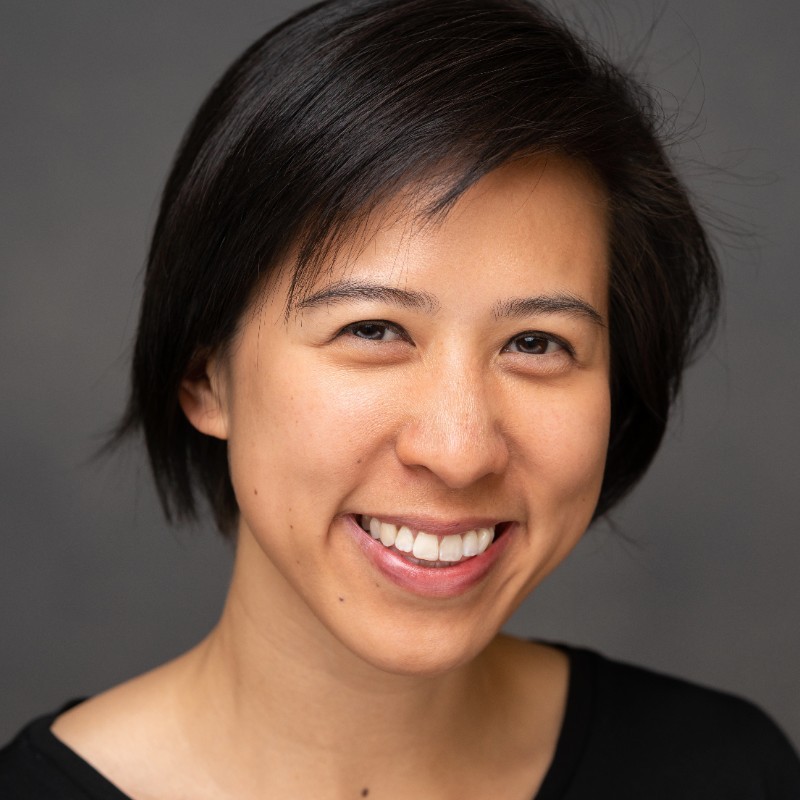
Jennifer Liu
Jennifer Liu is the cofounder and CEO of Toko, an AI English tutor that got its start when a pandemic-era hack called GPT 奶奶 (an AI grandma built to help her practice Mandarin) revealed a far bigger hunger for spoken English across East Asia. An MIT computer science grad and early Quizlet engineer-turned-PM, Liu turned that side project into a Y Combinator (W22) company that now ranks among the top education apps in Taiwan, Hong Kong, Vietnam and Thailand, with 4.9 stars from 20,000-plus reviewers.
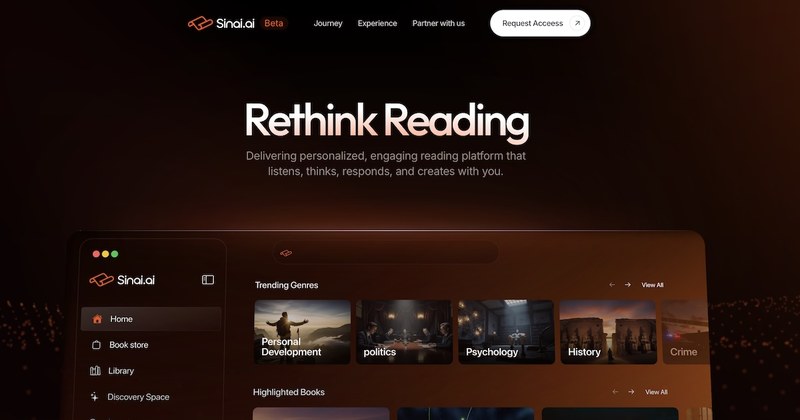
Sinai.ai
Sinai.ai is an AI-native reading platform turning books into interactive, multimodal experiences through its trademarked aiBook format. Readers can converse with the text, generate study guides and quizzes, translate into dozens of languages, and switch between reading and listening - all on fully licensed publisher content. Founded in 2024 and headquartered in San Francisco, the company closed a $1.45M pre-seed round in April 2026.

Dmitrii Pistolyako
Dmitrii Pistolyako is the co-founder and CEO of LinguaTrip, a San Francisco-based booking platform for language courses and study-abroad programs that has served more than 100,000 students from over 100 countries. A math-and-economics graduate from Saint Petersburg, he turned a free study-abroad consulting side hustle into a venture-backed company, surviving more than 50 investor rejections before becoming the only Russian startup in his 500 Startups batch. He also leads Fluent.Express and shares his playbook for building a company in the US through his Russian-language YouTube channel and online courses.

Michael Xing
Michael Xing is the co-founder and CEO of Pingo AI (YC S25), a language-learning app that builds fluency by letting people talk with an AI tutor in real-life conversations. The idea grew out of weekly Chinese practice sessions with his freshman-year college roommate Morrie Schonfeld. After launching in January 2025, Pingo scaled from zero to hundreds of thousands of users and millions in ARR in under a year, becoming one of Y Combinator's fastest-growing consumer companies and a Google Play Best of 2025 winner. Before Pingo, Xing spent roughly three years at AI startups and built a Chrome extension with 150,000+ downloads.

Diego Villegas
Diego Villegas is the co-founder and CEO of Slang, an MIT-born edtech startup that uses machine learning and NLP to teach industry-specific professional English to the global workforce. A serial entrepreneur, he first built MASA, a Colombian oil-and-gas technical-services firm that grew to roughly $200M in revenue and 5,000+ employees before its acquisition by Stork. The pain of watching capable employees stall - and get laid off - for lack of business English became the seed of Slang, which now offers 150+ career-focused courses to companies including Nestle, Banco Santander, and Hyatt across more than a dozen countries.
Babbel
Babbel is a Berlin-based language learning company that teaches 14 languages through short, expert-designed lessons built for real-life conversation. Founded in 2007 and operated under the legal name Lesson Nine GmbH, it pioneered the paid subscription model for language apps and has sold tens of millions of subscriptions worldwide. Its lessons - typically 10 to 15 minutes - are written by linguists rather than crowdsourced or generated, and the company has layered in speech recognition and AI speaking practice while keeping human-designed pedagogy at the center.
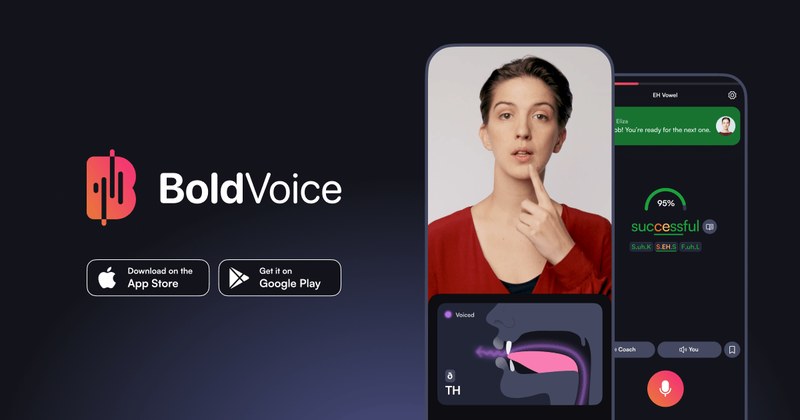
BoldVoice
BoldVoice is a New York-based AI speech and accent coaching app that helps non-native English speakers communicate more clearly and confidently. It pairs proprietary speech AI that gives instant, phoneme-level pronunciation feedback with video lessons taught by Hollywood dialect coaches. Founded in 2021 by Anada Lakra and Ilya Usorov, the app has passed five million downloads across 150+ countries and crossed $10M in annual recurring revenue with a small team.

Anada Lakra
Anada Lakra is the co-founder and CEO of BoldVoice, an AI-powered accent and speech coaching app for non-native English speakers. Born and raised in Albania, she studied English for a decade before arriving at Yale, where being asked to repeat herself sparked the idea that became BoldVoice. After Yale and an MBA from Harvard Business School, with product stints at Peloton and consulting work along the way, she and co-founder Ilya Usorov built a Y Combinator-backed app that pairs Hollywood dialect coaches with real-time AI feedback. BoldVoice has crossed 5 million downloads, serves professionals in 150+ countries, reached $10M+ in ARR with a team of seven, and raised a $21M Series A in January 2026 led by Matrix.

Julie Hansen
Julie Hansen is Chief Revenue Officer and US CEO of Babbel, the language-learning company. She joined in 2017 and turned the US into Babbel's largest market, crossing one million US subscriptions in the first half of 2022. Before Babbel she was the fifth employee at Business Insider, where as President and COO she helped grow it into the most-visited business news site online. Her earlier career spans CBS Interactive, Conde Nast, Time Inc., and Penguin Books. She keeps German vocabulary notebooks, rows on the water at dawn, and was named to the 2025 ASU+GSV Power of Women honor list.
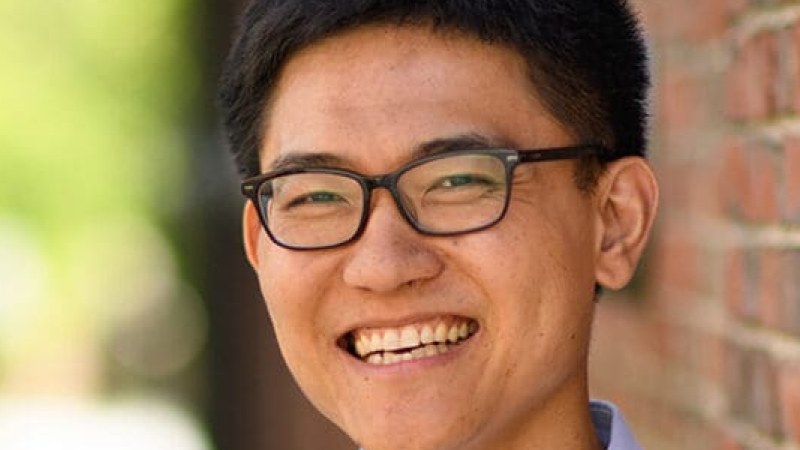
Yi Wang
Yi Wang is the co-founder and CEO of Liulishuo (LingoChamp / LAIX), the Shanghai-based company that built one of the world's first AI-powered English teachers. A Princeton PhD and ex-Google product manager, he returned to China in 2011 and shipped an app that climbed to the top of China's App Store within months, eventually serving tens of millions of learners and taking the company public on the NYSE in 2018.
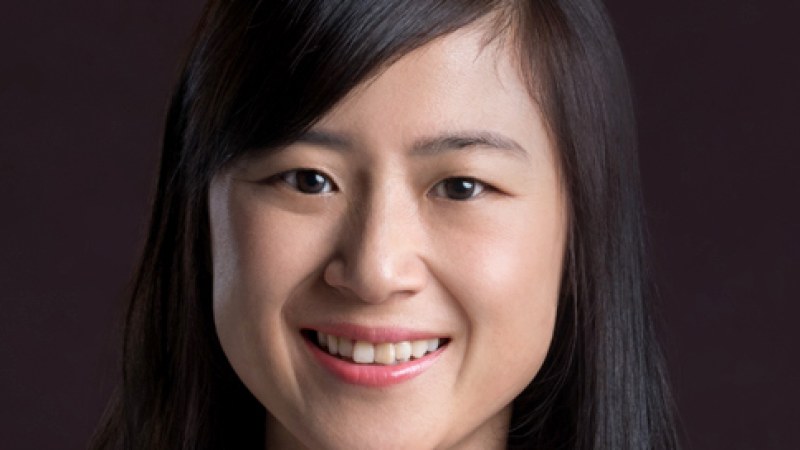
Cindy Mi
Cindy Mi is the founder and CEO of VIPKid, a Beijing-based edtech unicorn that connects Chinese children aged 4-12 with North American English teachers through live one-on-one video lessons. A high-school dropout turned billionaire builder, she started tutoring English peers at age 15, co-founded an English academy chain at 17, and by 2020 had grown VIPKid to over 800,000 students, 100,000 teachers, and a $4 billion-plus valuation - backed by Tencent, Sequoia, and the late Kobe Bryant.

Vicky Wang
Vicky Wang is the founder and CEO of WuKong Education, a Silicon Valley-based online learning platform serving 300,000+ families across 118 countries. She built the company from Auckland, New Zealand in 2016 into a Series B-backed edtech brand with 4,000 employees, offering Chinese language, math, and English programs for students aged 3-18. Recognized by Fortune China as one of the Most Influential Business Women in 2021 and 2022, named among HolonIQ's 144 global EdTech Women Leaders, and awarded the 2024 Cognia School of Distinction, Wang is redefining how the world's children learn Mandarin and mathematics.

Cambly Inc.
Cambly is an on-demand English tutoring platform that connects learners in 190+ countries with native English-speaking tutors available 24/7 via live video chat. Founded in 2012 by two former Google engineers, Cambly makes immersive English learning accessible and affordable - bringing the language-learning breakthrough of traveling abroad directly to any phone or laptop. With AI-powered personalization layered over millions of data points from a decade of real lessons, Cambly sits at the intersection of human connection and technology in the $60B+ global English education market.

Nathaniel Drew
Nathaniel Drew is an American content creator, polyglot, and filmmaker based in Paris, France, with over 1.79 million YouTube subscribers. Born in Los Angeles to Argentine-immigrant parents and raised in Portland, Oregon, he skipped college to teach himself filmmaking and launched his YouTube channel in 2015. Known for his cinematic vlogs exploring travel, language learning, identity, and existential questions, he speaks five or more languages and went viral with 'Speaking 5+ Languages with my Polyglot Grandma.' He also hosts the 'No Backup Plan' podcast, runs a Substack newsletter, creates music, and teaches filmmaking through his 'Frame by Frame' masterclass course.
Speak
Speak is an AI-powered language learning app that gets users speaking out loud from day one. Backed by OpenAI's Startup Fund, Accel, Khosla Ventures and Y Combinator, the San Francisco company reached unicorn status in December 2024 after raising a $78M Series C at a $1B valuation. Its AI tutor offers unlimited conversational practice and instant feedback to over 10 million learners.
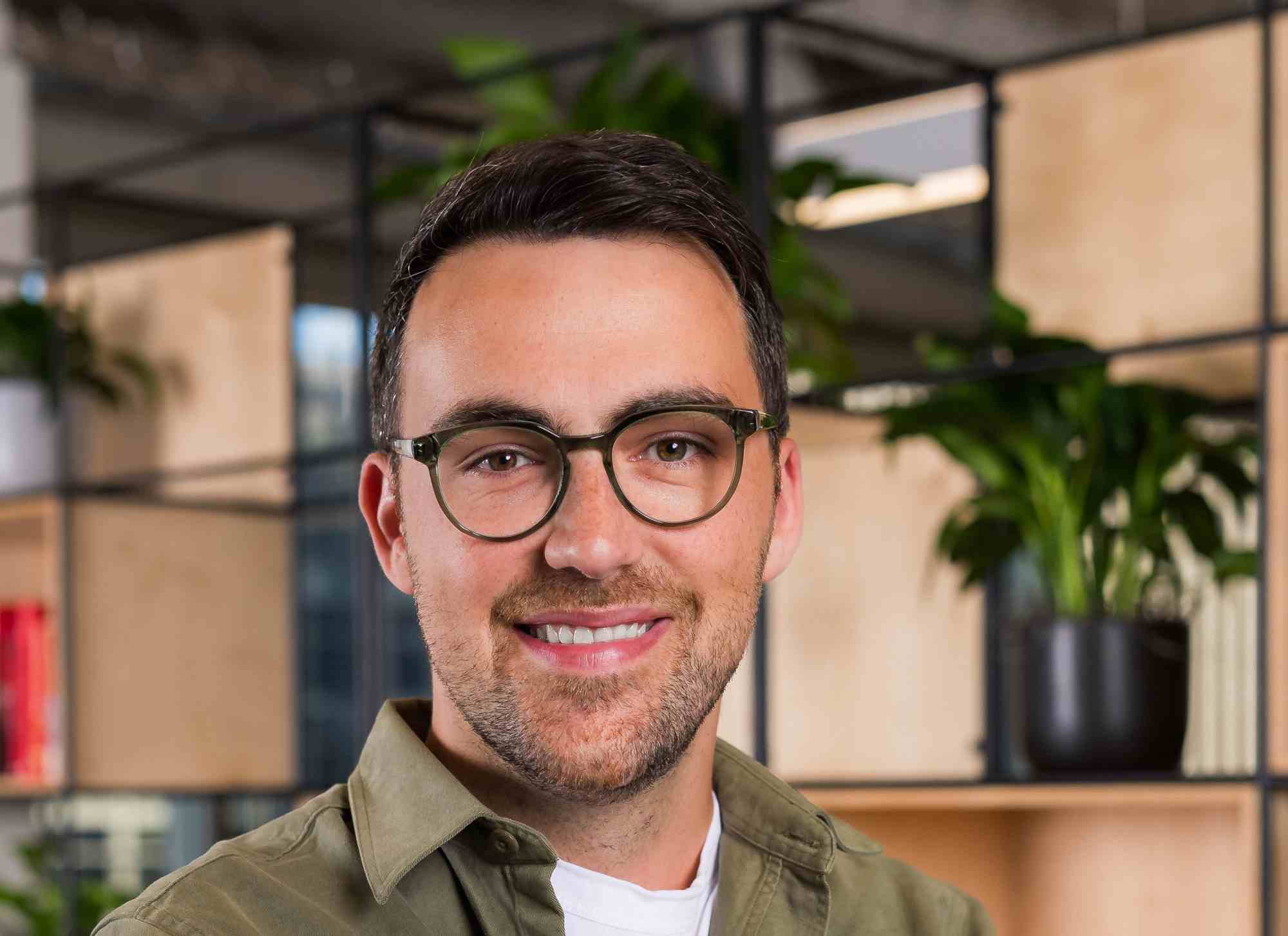
Connor Zwick
Connor Zwick is the CEO and co-founder of Speak, an AI-powered language learning platform that crossed $1 billion in valuation and $100 million in annualized revenue in 2024. A Thiel Fellow who dropped out of Harvard, Zwick built his first app at age 13 and sold Flashcards+ to Chegg as a teenager. He founded Speak in 2016 with Andrew Hsu, and spent years living between San Francisco and Seoul to perfect AI conversation technology for English learners. Today Speak counts over 15 million downloads, backing from OpenAI and Accel, and enterprise customers including KPMG and HD Hyundai.

Sameer Shariff
Sameer Shariff is the co-founder and CEO of Cambly, a San Francisco-based edtech platform that connects English learners worldwide with native-speaking tutors via on-demand video chat. A Princeton and Stanford-educated engineer who spent five years at Google, Shariff co-founded Cambly in 2012 after a trip to Argentina revealed how dramatically conversation practice accelerates language fluency. After a failed Series A attempt, he drove Cambly to cash-flow positivity without touching raised capital - then raised $60M from Benchmark, Bessemer, and others once the company no longer needed it. Cambly has ranked #1 in app stores across 150 countries and reaches an addressable market of 1.5 billion people seeking English fluency.