Speak raises $78M Series C at $1B valuation Forbes AI 50 - 2025 $100M+ annualized revenue 15 million downloads and counting Backed by OpenAI, Accel, Khosla Ventures 1 billion spoken sentences processed per year Thiel Fellow - 2012 cohort Sold first startup to Chegg as a teenager 500+ enterprise clients including KPMG Teaching languages in 40+ countries Speak raises $78M Series C at $1B valuation Forbes AI 50 - 2025 $100M+ annualized revenue 15 million downloads and counting Backed by OpenAI, Accel, Khosla Ventures 1 billion spoken sentences processed per year Thiel Fellow - 2012 cohort Sold first startup to Chegg as a teenager 500+ enterprise clients including KPMG Teaching languages in 40+ countries
YesPress Profile  /  Founders

ConnorZwick

The Kid Who Taught a Billion People to Speak

He started coding at 13, anonymously. Dropped out of Harvard before finishing freshman year. Sold a startup as a teenager. Then spent a decade betting that AI would eventually make every person on Earth fluent in any language - and built a billion-dollar company to prove it.

CEO - Speak Thiel Fellow $1B Valuation Forbes AI 50 YC Alumni
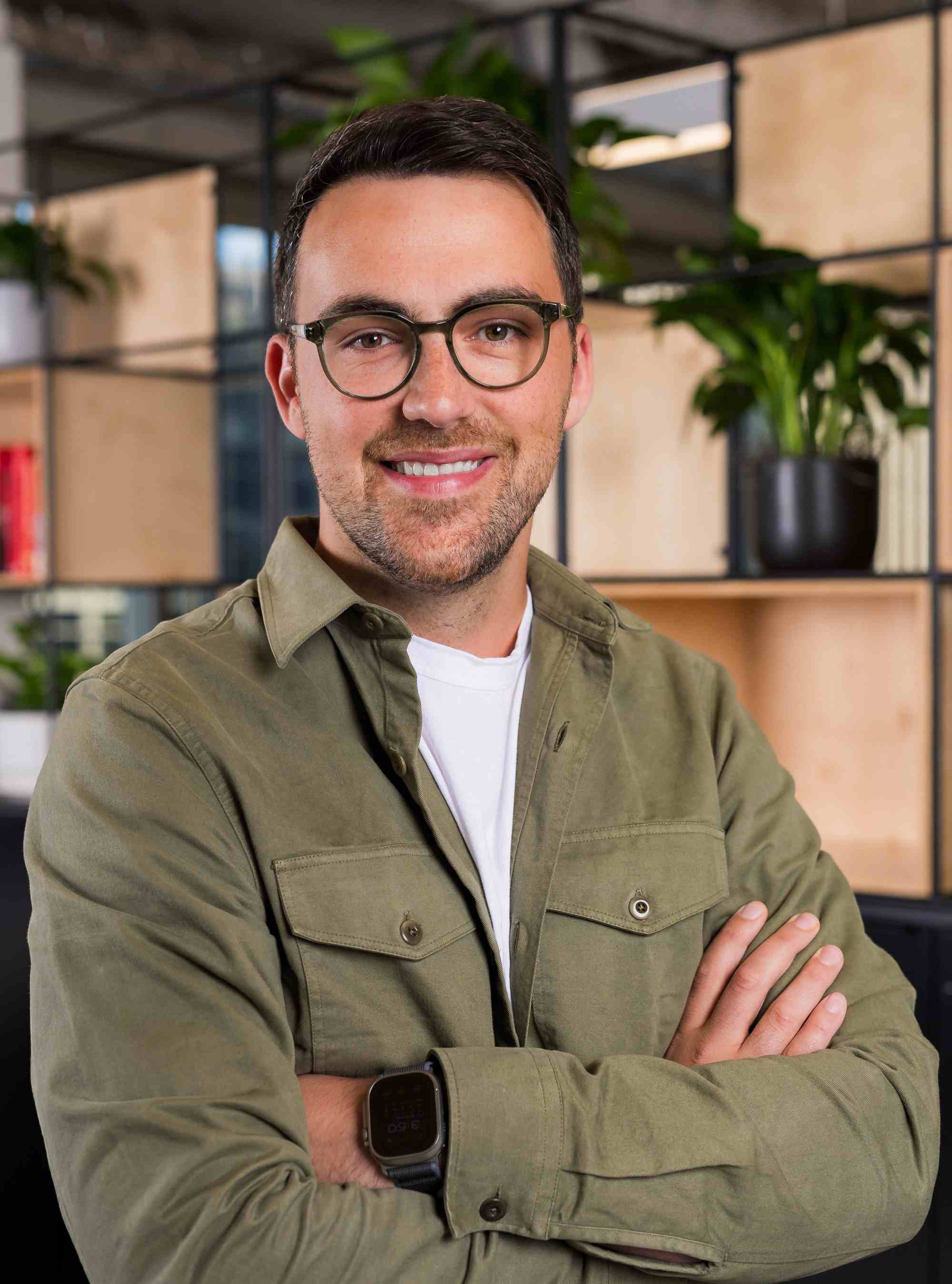
Connor Zwick, CEO and co-founder of Speak
Connor Zwick — Speak / Dec 2024
$1B
Valuation
$100M+
ARR
15M+
Downloads
1B+
Spoken Sentences/yr
40+
Countries
$162M
Total Raised

Ten Years with a Single Thesis

Around 2015, Connor Zwick wrote a thesis to himself: AI would eventually replace the need for a human language tutor. He was wrong about the timing - but not by much. Eight years later, Speak processes over a billion spoken sentences a year, counts OpenAI as both investor and technology partner, and carries a $1 billion valuation. Zwick is mid-stride, and the finish line keeps moving.

This is not a rags-to-riches story. It's weirder than that. Zwick grew up in Waukesha, Wisconsin, and by age 13 was writing code well enough that an Australian tech publication called Nettuts.com tried to hire him as a writer - without realizing he was in middle school. They found out. They tried to hire him anyway.

In high school, he built Flashcards+, a study app that hit nearly a million downloads before he graduated. The app did well enough that both Harvard and Y Combinator accepted him in the same year - two institutions that have never been known to overlap. He chose both, briefly, then chose neither: he took a Thiel Fellowship in 2012, one of about 20 spots given annually to people under 20 who agree to pursue entrepreneurship instead of college.

He left Cambridge with a leave-of-absence letter in his pocket - his exact words: it was "like a safety net." He would later say he probably learned more after leaving than he ever did inside the classroom.

"When there's a tug of war between gamification and engagement and efficacy, we will pick efficacy 100% of the time."
Connor Zwick, CEO - Speak

His first post-Harvard venture was the Coco Controller - a $35 gaming device that slid over smartphones, interfacing through the audio jack. It was thoughtful, technically interesting, and went nowhere. He sold Flashcards+, by then at 5 million users, to Chegg for an undisclosed sum in 2013 and became an advisor to the company.

Then he started learning. Literally. He audited machine learning courses at UC Berkeley and Stanford - sitting in on classes no one expected him to take, building the mental models that would eventually become Speak's core technology. This is worth pausing on: a teenager who'd already sold a startup was sitting in lecture halls, taking notes, not because anyone asked him to.

Seoul Has a Problem. Zwick Has a Company.

Speak was founded in 2016 with Andrew Hsu, a neuroscientist and fellow Thiel Fellow Zwick had met through the fellowship network. The two shared something unusual: both had been interested in artificial intelligence from the start, back when that interest made you look like a science fiction fan rather than a venture capitalist.

The launch strategy was deliberately counterintuitive. Instead of entering saturated Western markets, Zwick moved to Seoul. He spent years shuttling between San Francisco and South Korea, learning a market that was unlike anything he'd seen in the US. Korean students studied English for 15-plus years, typically. They could read it. They could pass tests. But they couldn't speak it. The gap between instruction and ability was vast and painful - a national frustration Zwick later called "the silent English problem."

The solution wasn't a better flashcard app. It was a different philosophy entirely. Speak uses AI to simulate real conversation - not grammar drills, not multiple-choice vocab tests, but the closest thing to sitting across from a native speaker that technology has yet produced. The platform processes voice, provides instant feedback, and adapts to each learner's specific gaps and patterns. Zwick's three-step model: immersive listening and speaking, targeted repetition, and real-world contextual application.

"Most people have good startup ideas; it's conviction that matters."
Connor Zwick, CEO - Speak

Speak launched in Korea in 2019. The traction was immediate. OpenAI's Startup Fund led a $27M Series B in 2022 - an unusual arrangement in which the company powering your AI is also your investor, and would later become a customer. By December 2024, Accel led a $78M Series C at a $1 billion valuation. Total raise: $162 million. Speak had become a unicorn by doing something unglamorous: actually teaching people to talk.

The Billion-Sentence Engine

The numbers are instructive. Speak processes over 1 billion spoken sentences per year - roughly 32 sentences every second, day and night, across 40+ countries. Average daily usage runs 10 to 20 minutes per session, which is long for a consumer app. The company has crossed $100 million in annualized revenue and was named to Forbes' AI 50 list in 2025.

Enterprise came later but grew fast. Speak now serves more than 500 companies - including KPMG and HD Hyundai - through a B2B product that provides employee language training at scale. The platform teaches English, Spanish, Japanese, French, Italian, and Korean. A US consumer market launch was planned for mid-2025.

Zwick's philosophy on AI product development is worth quoting directly: "You can't outsource a core competency of your company." And on building for mass consumers: "Productizing consumer AI is super hard." Both statements carry the weight of someone who built the thing, not someone who read about it.

He does not appear to be slowing down. At the ASU+GSV Summit in April 2026, he sat on a panel titled "At the Speed of AI - Personalizing Knowledge for 8 Billion People." The panel title is essentially Speak's mission statement in slightly more formal clothes.

"We're in a once-in-a-generation - potentially the most significant - technological wave."
Connor Zwick on AI and language learning

The ambition is not modest. Zwick wants to build a superhuman tutor - not a supplement to existing education, but a replacement for the model that has left 1.5 billion English learners fluent in grammar exercises and speechless at the dinner table. The company has a long way to go. So does everyone else in this race. Zwick has been running it for a decade longer than most of them.


From Zero to Unicorn

Speak Funding Rounds - 2022 to 2024
Series B
$27M
Series B-2
$16M
Series B-3
$20M
Series C
$78M
TOTAL RAISED $162M
$1B
Post-Series C Valuation
2x
Valuation growth in 6 months
Dec 2024
Unicorn date

The Long Game

2008 - 2010
Freelance blogger at Envato at age 13 - writes about programming and design for millions of readers without disclosing his age
2010
Builds Flashcards+ in high school - reaches nearly 1 million downloads. Gets into both Harvard and Y Combinator in the same year.
2012
Accepts Thiel Fellowship (2nd cohort). Leaves Harvard with a leave-of-absence letter as a safety net. Receives $100,000 and access to a network that would eventually change everything.
2012 - 2015
Co-founds Coco Controller with Colton Gyulay - an audio-jack gaming controller for smartphones that predates modern mobile gaming accessories.
2013
Sells Flashcards+ to Chegg (NYSE: CHGG) with 5 million users. Becomes a mobile strategy advisor at Chegg through 2015.
2015
Self-teaches machine learning by auditing courses at UC Berkeley and Stanford. Begins developing a 10-year thesis on AI and language education.
2016
Co-founds Speak with Andrew Hsu, a fellow Thiel Fellow and neuroscientist they had met through the fellowship network.
2019
Speak launches in South Korea after Zwick identifies the "silent English" problem - millions of learners who studied for 15+ years but couldn't hold a conversation.
2022
OpenAI Startup Fund leads $27M Series B - making Speak one of OpenAI's earliest direct consumer investments.
2024
Accel leads $78M Series C at $1B valuation. Speak surpasses $100M annualized revenue. Named to Forbes AI 50 in 2025.

What Connor Actually Said

Most people have good startup ideas; it's conviction that matters.
You can't outsource a core competency of your company.
When there's a tug of war between gamification and engagement and efficacy, we will pick efficacy 100% of the time.
For the one and a half billion people out there trying to learn English, the vast majority of them have spent 15+ years learning intensely.
We are explicitly trying not to be a test prep solution.
English language learning there was like an obsession. There was such latent demand.

The Scoreboard

  • Built Flashcards+ in high school - the #1 education app in the US App Store, nearly 1 million downloads
  • Selected as Thiel Fellow in 2012 - fewer than 5% acceptance rate
  • Sold Flashcards+ to Chegg with 5M+ users while still a teenager
  • Founded Speak and scaled to unicorn status ($1B valuation) in December 2024
  • Grew Speak to $100M+ annualized revenue
  • Raised $162M total from investors including OpenAI, Accel, Khosla Ventures, Founders Fund
  • Named to Forbes AI 50 list in 2025
  • Speak processes over 1 billion spoken sentences annually
  • Expanded to 40+ countries teaching 6 languages
  • Built enterprise business serving 500+ companies including KPMG and HD Hyundai
  • Secured OpenAI as both investor and technology partner - a dual relationship few founders manage
  • At age 13, recruited as a paid writer by a major tech publisher without revealing his age

The Weirder Bits

13
Age when a major Australian tech site tried to hire him as a full-time writer. They didn't know how old he was. They found out. Tried to hire him anyway.
32
Spoken sentences Speak processes every second of every day - 1 billion per year. The app doesn't sleep.
10
Years Zwick held his AI-language thesis before the technology caught up. Most people give ideas 18 months. He gave this one a decade.
2
Co-founders who met through a fellowship run by a man who built his fortune betting against conventional wisdom. Then they did the same.

Connor Zwick on Camera

YOUTUBE
Connor Zwick at the 2024 ASU+GSV Summit
ASU+GSV Summit • 2024
YOUTUBE
How This Founder Built a Billion-Dollar Duolingo Competitor
YouTube • 2025
YOUTUBE
Founding is an Act of Firsts - Connor Zwick (Short)
YouTube Shorts • Accel

Find Connor Zwick Online

Share this profile Twitter / X LinkedIn Facebook