Profile
The Camera Is Always Rolling
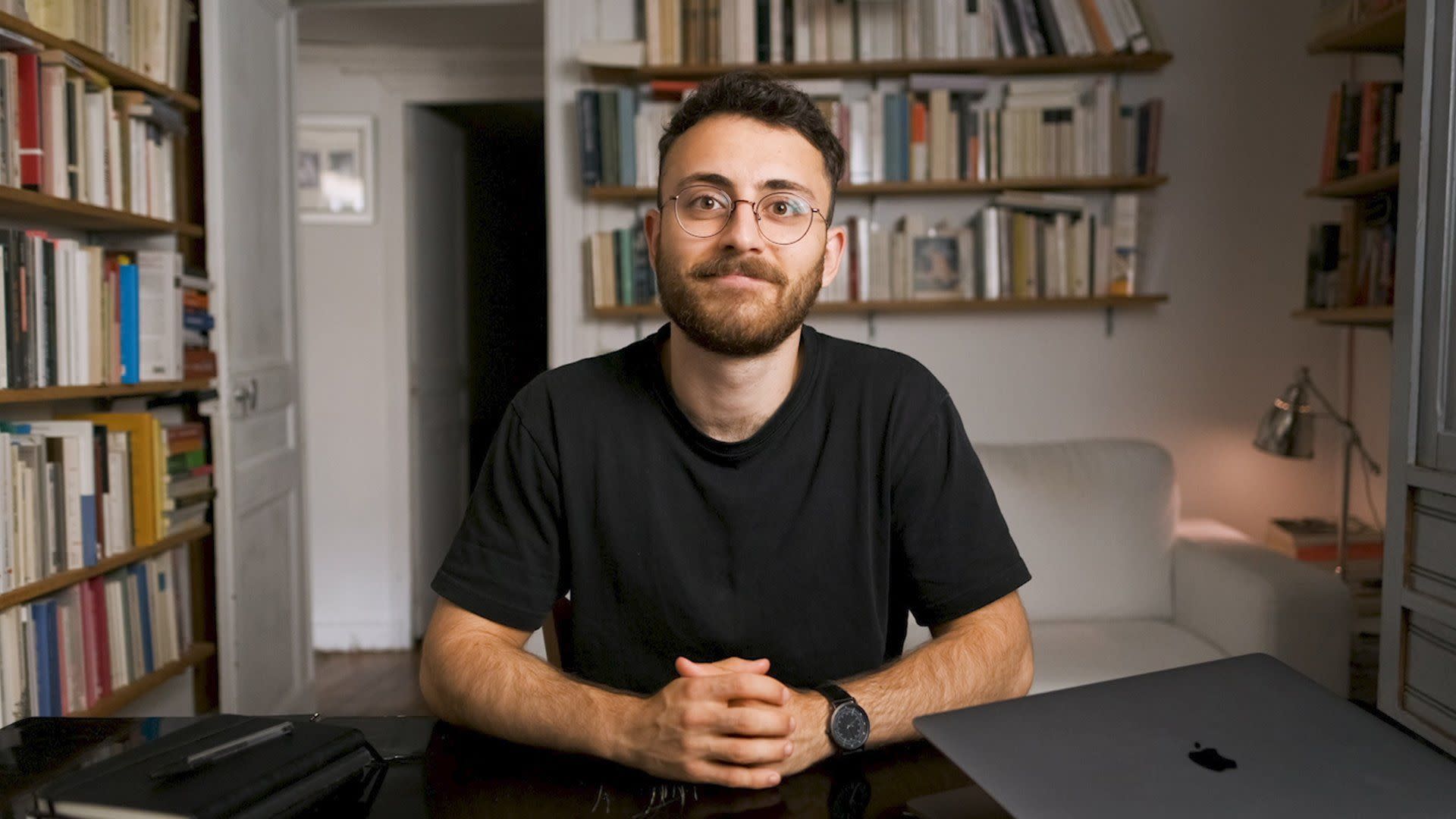
Paris. A rented apartment. A camera pointed at something that most people walk past without noticing. This is where Nathaniel Drew works - not in an office, not on a film set, and definitely not on a college campus. He skipped that part. Instead, he taught himself to shoot, edit, and tell stories from scratch, then pointed that self-education at the world's most interesting material: his own curiosity.
Born in Los Angeles on October 1, 1996, to parents who immigrated from Argentina, Drew grew up in the outskirts of Portland, Oregon, with the feeling that he was looking at the world from slightly outside it. His paternal grandmother is from Egypt. His ancestors' combined journeys span five continents. He did not inherit a single, tidy cultural identity - and that turned out to be the whole point.
A high school exchange year in Spain changed his trajectory entirely. He came back speaking more, seeing more, wanting more. Languages became his entry points into new worlds. By his late teens, he was fluent in English, Portuguese, Italian, and French, with Spanish close behind - five languages that are not a party trick but a genuine philosophy. Each one opens a different room in the same vast house.
My work is my oxygen. It's a way to make sense of the insane world I live in.
- Nathaniel Drew
The YouTube channel launched July 20, 2015, one day after he created it. The first video went up the next morning. Drew had been working as a self-taught videographer and production assistant on film sets - good training, wrong direction. Casey Neistat's approach to storytelling showed him that the camera could be personal without being small. He leaned in.
His channel is not travel content in the traditional sense. It is not language-learning content either, exactly - though one video, "Speaking 5+ Languages with my Polyglot Grandma," crossed 10 million views and introduced him to most of his current audience. What Drew actually makes is philosophical vlogging: the camera following him through Mexico City, Milan, Buenos Aires, and Paris while he interrogates what it means to be alive and not waste the experience.
He lived six and a half months in Mexico in 2019, then three months in Milan the same year, then relocated to Paris - which has since become home. He describes feeling grateful for growing up American while not identifying culturally as American. He felt something similar visiting Argentina: connected to the heritage, displaced from the culture. This in-between state, perpetually mid-crossing, is both his subject and his signature.
His younger sibling Skyler provides the animation work for his videos. His philosophy is guided by two words: amor fati - love of fate. And by a line from Kierkegaard he returns to often: life is not a problem to be solved but a reality to be experienced. For Drew, that is not an abstract idea. It is a production schedule.
Beyond the main channel, he runs "No Backup Plan," a second YouTube channel and podcast exploring creativity and unconventional careers. He writes a Substack newsletter. He has released original music on Spotify - two separate artist profiles. And in January 2024, he launched Frame by Frame, a comprehensive live filmmaking and video editing masterclass now containing over 100 full instructional videos. He learned everything he teaches himself. That tends to be the best kind of teacher.
The channel now has 1.79 million subscribers and 114.9 million total views across 201 videos. None of it happened by accident. Drew is an INTJ with a self-described history of social self-doubt who chose to make his interior life very public - not for the audience, but because creation is how he makes sense of things. The audience arrived as a side effect of the honesty.