Live Feed
655,000+ Twitter followers and counting Author of "Why Does The Stock Market Go Up?" 100,000+ newsletter subscribers 3,000+ articles for The Motley Fool Founder of Long-Term Mindset 6-figure course creator on Maven Motley Fool contributor since 2015 MBA from University of Rhode Island Former medical device sales rep turned Wall Street decoder Donates 10% of consultation fees to The Ocean Cleanup 655,000+ Twitter followers and counting Author of "Why Does The Stock Market Go Up?" 100,000+ newsletter subscribers 3,000+ articles for The Motley Fool Founder of Long-Term Mindset 6-figure course creator on Maven Motley Fool contributor since 2015 MBA from University of Rhode Island Former medical device sales rep turned Wall Street decoder Donates 10% of consultation fees to The Ocean Cleanup
YesPress Profile

Brian
Feroldi

"He turned a 401(k) enrollment form that stumped him at 22 into a career explaining money to millions."

The man who spent a decade selling insulin pumps in New England - then pivoted to make Wall Street speak plain English. 655,000 Twitter followers, one bestselling book, and a mission that hasn't changed: demystify the stock market.

655K+
Twitter Followers
100K+
Newsletter Readers
3,000+
Articles Written
20+
Years Investing
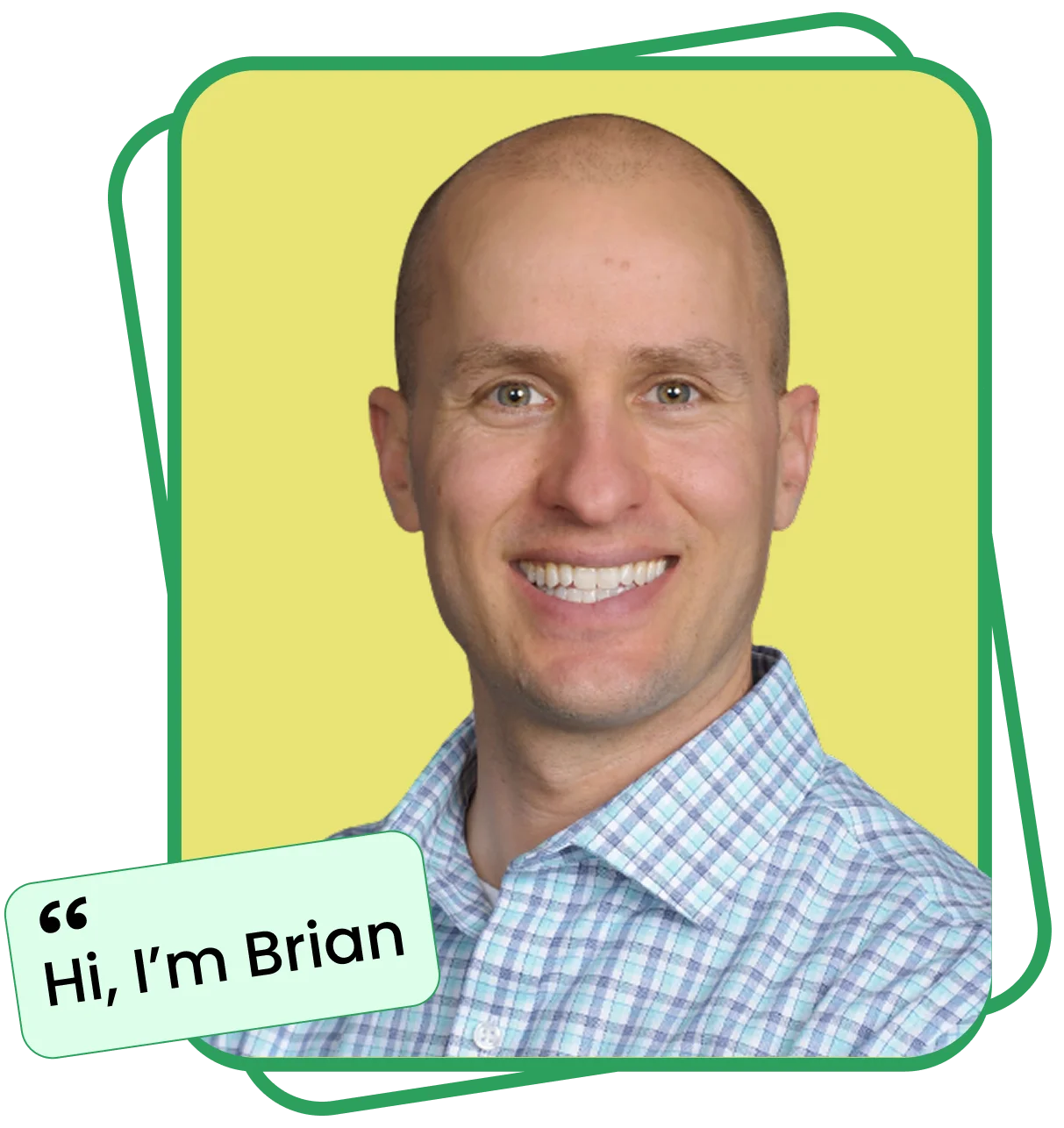
Brian Feroldi - Financial Educator and Investor
Financial Educator
Now Long-Term Mindset is active across Twitter, Substack, YouTube, Maven courses, and a 100,000+ subscriber newsletter - all run by one guy from Providence, Rhode Island.
Motley Fool Contributor
Author
Course Creator
Newsletter Publisher
YouTuber
Investor Since 2004
UConn + URI MBA
Ocean Cleanup Donor
655K+
Twitter/X Followers
100K+
Newsletter Subscribers
3K+
Motley Fool Articles
80K+
YouTube Subscribers

The Guy Who Got Lost Reading a 401(k) Form - Then Built a Career Explaining Money

Brian Feroldi was 22, fresh out of the University of Connecticut, sitting at his first corporate desk when HR slid over a stack of 401(k) enrollment forms. He had a business degree. He had studied accounting. And he had absolutely no idea what any of the investment options meant.

That specific, embarrassing gap - between the credential and the comprehension - became the engine of everything that followed. Two decades later, Feroldi runs Long-Term Mindset, a financial education company serving 100,000+ newsletter subscribers, with 655,000 people following his every post on Twitter/X and a bestselling book that has done what the university system failed to do: explain the stock market to people who actually need to understand it.

He is not a hedge fund manager. He is not a Wall Street analyst. He is a former medical device sales rep from Rhode Island who taught himself to read financial statements on long drives between hospital appointments - and then decided the real product he should be selling was financial clarity.

My career mission statement is to demystify the stock market.
- Brian Feroldi

Nine Years Selling Insulin Pumps. Then One Decision That Changed Everything.

After UConn, Feroldi landed in the medical device world. Specifically: Insulet Corporation, the company behind the OmniPod - a patch-style insulin pump for people with diabetes. He spent nearly a decade working the northeast territory, building relationships with endocrinologists, growing his book of business quarter after quarter, watching a startup become a multi-billion-dollar public company.

What he was doing on the side was more interesting. Long drives through New England meant hours of podcasts, audiobooks, and - unusually for a guy in his position - earnings calls. He had started investing in 2004. He had lost money early. He had rebuilt, recalibrated, and developed a systematic framework for analyzing companies that looked suspiciously like the same patient, methodical thinking that made him good at selling medical devices.

In 2015, he took an MBA from the University of Rhode Island and used it as a ladder into The Motley Fool - not through a formal interview, but through the kind of persistent community engagement that presaged exactly how he would later build his Twitter following. He just showed up, consistently, until they hired him.

Since then, he has written over 3,000 articles for The Motley Fool. That is not a typo. Three thousand. Healthcare. Technology. Business models that require a CFA to read and a translator to explain to anyone else. Feroldi became the translator.

The Long-Term Mindset Empire

What began as a newsletter in January 2020 is now a multi-channel operation. The weekly newsletter goes to 100,000+ investors - six pieces of investing content, under two minutes to read, every Wednesday. The Substack has 16,000+ paid and free subscribers. The YouTube channel (@BrianFeroldiYT) has 80,000+ subscribers watching earnings breakdowns and financial statement walkthroughs. The Maven courses - co-created with Brian Stoffel - crossed six figures in revenue. The Twitter account has grown from 5,000 followers at the end of 2020 to 655,000+ in 2026, adding hundreds of new followers every single day.

Feroldi has built a media business dressed as an education platform, and the audience that follows him skews sharply sophisticated: newsletter readers work at a16z, Amazon, Google, and Microsoft. These are not beginners stumbling onto his feed. They are people who already know what a DCF model is - and still find value in how Feroldi thinks out loud about companies.

"Why Does The Stock Market Go Up?" - The Question Every Adult Should Be Able to Answer

The title is not rhetorical. It is an indictment. Most people who own index funds cannot actually explain why their retirement savings go up over time. Feroldi wrote the book they should have been handed in high school economics - and published it in April 2022 through ChooseFI Media.

Published 2022

"Why Does The Stock Market Go Up? Everything You Should Have Been Taught About Investing In School, But Weren't"

Using a hypothetical coffee company as a running example, Feroldi walks readers through business models, financial statements, valuations, market cycles, and returns - in language that does not require a finance degree to follow. It earned endorsements from Tom Gardner and David Gardner (co-founders of The Motley Fool), JL Collins (author of "The Simple Path to Wealth"), Annie Duke, and Paula Pant.

3.95/5
Goodreads Rating
682+
Ratings
294
Pages

The Trade That Cost Him 70% - and Built His Entire Framework

Feroldi talks about his worst investment the way a good surgeon talks about a case that went wrong: clinically, specifically, without self-pity. The trade was Kinder Morgan, around 2013. The thesis seemed airtight.

Case Study: The Kinder Morgan Disaster

How a "Guaranteed Income" Stock Lost 70%

The thesis: Kinder Morgan ran oil and gas pipelines on take-or-pay contracts - meaning customers had to pay whether or not they used the pipeline. Founder-led management. 4% dividend, growing 10% annually. What could go wrong?

The mistake: Feroldi didn't just buy shares. He used options to leverage the position - selling long-dated puts and buying long-dated calls. When oil prices dropped 50%+, the stock fell 70%. The take-or-pay contracts only worked if counterparties could afford to pay. Under energy industry stress, they couldn't.

The lessons he built into every subsequent investment: Never use options leverage. Maximum 3% position size. Understand counterparty risk. Avoid commodity exposure. These rules now sit in his public investing checklist - the Feroldi Quality Score - used by thousands of investors worldwide.

The Rules Behind the Method

Feroldi's investing framework is built on a simple premise: most individual investors' biggest advantage over institutional money is their time horizon. Institutions need to justify returns quarterly. A person in their 30s investing for retirement has 30 years to let compounding do the heavy lifting.

The framework is public, checklist-driven, and deliberately contrarian to the short-term noise that dominates financial media. He cites ROIC - Return on Invested Capital - as the single best indicator of whether a business has a real competitive moat. He argues that excessive stock-based compensation is a red flag hidden inside non-GAAP earnings reports. He believes writing out your investment thesis before committing capital is the only way to create productive friction against emotional decisions.

01

If you can't explain a business model to a fifth-grader, you don't understand it well enough to own the stock.

02

ROIC is the single best indicator of competitive strength. Everything else is noise dressed up as signal.

03

Maximum 3% position size. Let winners grow naturally. Never force concentration through conviction alone.

04

When your research makes you unbelievably bullish, that's exactly when you're most likely blind to a key risk.

05

Savings rate cures all. Growing income and keeping expenses low matters more than finding the perfect stock.

06

Only invest money you won't need for at least five years. Anything less is speculation dressed as investing.

"Long-term investing is more about temperament than talent."
- Brian Feroldi, Long-Term Mindset

From 5,000 Followers to 655,000 - on a Platform He Ignored for a Decade

Brian Feroldi joined Twitter in July 2009 - practically at launch. Then he ignored the account for roughly nine years. When he finally started posting seriously about investing in 2018-2019, he had 5,000 followers and zero viral moments.

By the end of 2020, still 5,000. Then something clicked. He started treating Twitter not as a social network but as a micro-blogging platform - publishing short, visual, educational content about financial statements, business models, and investing principles. Clean graphics. Clear logic. Concepts that took analysts an hour to read and Feroldi three minutes to explain.

The growth from 5,000 to 400,000 happened in roughly three years. By early 2026, the account sits at 655,000+ followers, adding hundreds per day. His content has been cited by Bloomberg, MarketWatch, USA Today, and Morningstar. His newsletter readers include employees at a16z, Amazon, Google, and Microsoft. He has appeared on ChooseFI six times and counting.

His Twitter advice, given on the Nathan Barry podcast: "Think of Twitter as a micro-blogging platform instead of a social media platform." The distinction sounds small. The results were not.

The Road from Hartford to 100,000 Subscribers

2004
Graduates UConn with a BS in Business. Gets handed a 401(k) form at his first job. Has no idea what any of it means. Starts investing - immediately loses money.
2006
Joins Insulet Corporation as a Territory Manager, selling OmniPod insulin delivery systems across the northeast. Spends his drive time listening to earnings calls instead of radio.
2013
Leveraged position in Kinder Morgan collapses 70% when oil prices fall. Vows never to use options leverage again. Builds the Feroldi Quality Score checklist.
2015
Completes MBA from University of Rhode Island. Parlays community networking - no formal interview - into a writing contract with The Motley Fool.
2020
Founds Long-Term Mindset. Launches newsletter. Starts posting serious investing content on Twitter for the first time after a decade of dormancy.
2021
Launches YouTube channel @BrianFeroldiYT. Grows to 80,000+ subscribers covering earnings breakdowns, financial literacy, and company analysis.
2022
Publishes "Why Does The Stock Market Go Up?" through ChooseFI Media. Endorsed by the Gardners, JL Collins, Annie Duke. Becomes a Maven 6-figure course creator with Brian Stoffel.
2024-2026
Twitter following surpasses 655,000. Newsletter readers cross 100,000. Launches AI investing tools and the Stock Simplifier. Family makes first trip to Europe. The mission continues.

The Mission Hasn't Changed

From a confused 22-year-old staring at a 401(k) form to an educator teaching 100,000 investors every week - the goal is exactly the same: demystify the stock market. Make it accessible. Prove that anyone can learn to read a financial statement, understand what drives business value, and make rational long-term decisions with their money.

Feroldi doesn't think he's smarter than other investors. He thinks he's more willing to be public about what he doesn't know, more committed to first principles, and more patient than the news cycle that sells urgency. That gap between what the market rewards and what the media incentivizes - that's where he lives.

What's Happening in 2025-2026

Dec 2025
Published "My Data-Backed Investing Plan For 2026" on YouTube. Analyzes S&P 500's back-to-back 25%+ years.
Jan 2026
Newsletter covers software stock opportunities, Hims & Hers Health deep dive, and AI investing predictions for the year ahead.
Feb 2026
Featured in international investing media discussing quality company selection in bull and bear markets.
Share this profile