semiconductors
(131)
Datalynq and the part that stops everything
A circuit can work perfectly and still be impossible to build. Datalynq brings the realities of buying electronic components into the decisions that engineers make long before production.

Microsemi made the chips you can't go back to fix
A satellite is a terrible place to discover a cheap component. Microsemi built a business around that problem - then became part of Microchip in a deal valued at roughly $10 billion.
The chip was small. The idea was bigger.
Linear Technology built a business around the analog problems digital products could not escape. Its most useful lesson was knowing when a better chip was worth paying for.

Altera gives silicon a second chance
Its chips can change their circuitry after they leave the factory. Now, after a decade inside Intel, Altera is making a change of its own.

Entegris makes the invisible count
A chip can survive a brilliant design and still lose to a contaminant. Entegris built a business around that awkward fact - supplying the materials, filters and protective worlds that help silicon make it through the factory.

Sandisk made memory small. The stakes got big.
The name on your camera card now supplies the infrastructure behind AI. Its next challenge is making an unpredictable memory business behave more predictably.

Micron Technology: AI has a memory problem
The processor gets the applause. Micron makes the memory that keeps it working - and its shift from PC upgrades to AI infrastructure reveals where computing is getting stuck.

KLA makes small mistakes a big business.
The chip industry keeps shrinking its circuits. KLA built a business around the errors that grow harder to see - and more expensive to miss.

KIOXIA America: A quarter-petabyte changes the arithmetic
AI has a storage problem hiding behind its chip problem. KIOXIA America’s answer starts with a 245.76 TB drive and reaches all the way back to the invention of NAND flash.

Avnet makes the missing pieces fit
A working prototype is only the beginning. Avnet built a business around everything that has to happen before an electronic idea can ship by the thousand.

The chip is only the beginning.
Amkor turns silicon into something the world can use. Its expanding Arizona campus shows why the next contest in computing runs through packaging and test.

PsiQuantum is betting on the factory
A useful quantum computer needs more than clever physics. PsiQuantum is betting that the route to a million qubits runs through chip fabs, optical fiber and some very cold plumbing.

IceMOS makes more of silicon.
From the parts inside Swiss watches to the switches inside power supplies, IceMOS builds a business around a deceptively useful skill: changing the shape of silicon.
BITMAIN and the price of a hash
Bitcoin looks weightless. BITMAIN builds the machines that make it heavy - and sells miners a way to do more work with less electricity.

Arizona Commerce Authority sells the state. The hard part is making it work.
A factory needs more than an address. Arizona’s economic development organization connects the land, people, suppliers, and capital that turn a relocation pitch into a working business.

Sidec: from online shops to silicon chips
Selangor’s digital economy company began by helping merchants sell online. Its next wager is harder: give Malaysian businesses the people, tools and connections to design what the world buys.

The Yellow SiC Group bets on the powder before the chip
Once known for turning sunlight and water into hydrogen, the company now trading as Y-SIC is taking aim at an earlier bottleneck: how Europe makes its silicon carbide.

Uhnder wants your car to see the cyclist beside the truck
A tiny radar chip takes on a large problem: telling a small hazard from its imposing neighbour. Uhnder’s route from a laboratory idea to automotive hardware shows why the invention is only half the work.

AIStorm’s fastest idea: give the sensor less homework
AIStorm puts computation where light and sound first become electrical charge. Its wager is that useful intelligence can arrive sooner when a device has less data to move.

Cornami Wants Your Data to Work Without Giving Up Its Secrets
Cornami builds specialized computers for doing useful work on encrypted data. Its wager: privacy becomes more practical when the software, the mathematics and the silicon are designed together.

Fab2 wants to put the factory on the production line
Sam Zeloof and Jim Keller are building a factory that makes chip factories. The wager behind Fab2: semiconductor progress could depend as much on cheaper experiments as on smaller transistors.
Majestic Labs thinks AI needs a bigger memory
The team behind Google and Meta’s silicon organizations is building Prometheus, a server that puts memory first. Its wager: the next useful leap in AI may come from feeding processors better, rather than buying more of them.
Spin Memory’s unforgettable chip had a cash problem
Spin Memory wanted computer memory to keep its speed and lose its power bill. Arm backed the idea. Applied Materials backed it too. Then the long journey from clever physics to paying customers ran out of road.

Butterfly Network shrank ultrasound. The hard part came next.
A semiconductor chip made whole-body ultrasound fit in a pocket. Butterfly’s next challenge is getting the scan into the hands, habits, and medical records of the people who need it.

Jmem Tek and the secret a chip does not have to keep
The Taiwanese chip designer turns tiny manufacturing differences into device identities, then pairs them with post-quantum cryptography. Its wager: protecting the key matters as much as choosing the algorithm.

Blaize and the Trouble with a Clever Chip
Blaize built a processor for AI that has to live on a power budget. Its harder experiment is turning clever silicon into a dependable business.
Supplyframe and the trouble with a perfect part
A component can be perfect on paper and impossible to buy. Supplyframe built a business around closing that gap - before it becomes a factory’s problem.

The Chip That Saved Itself
Flex Logix sold chipmakers a little room for second thoughts. Then a bug in its own AI chip turned that room into a multimillion-dollar escape hatch - before the company had to rethink the chip business itself.

The Button That Disappeared Into the Dashboard
UltraSense made the switch disappear, then had to make sure a driver could still find it. Millions of automotive controllers later, its buried sensors are being pitched to rings, glasses, and robotic hands.
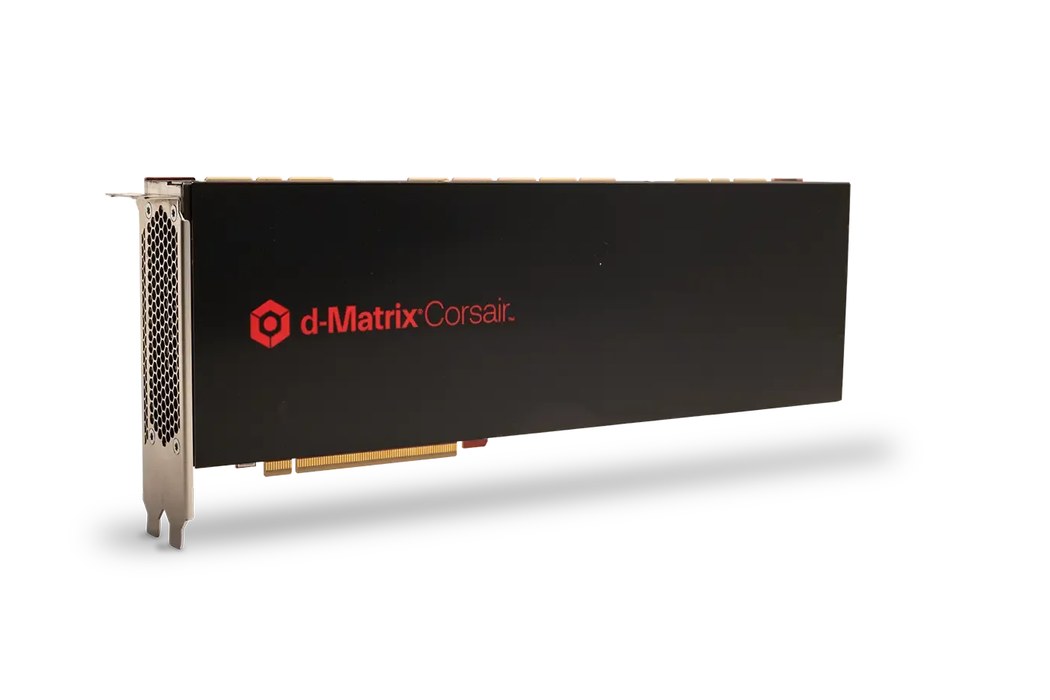
The Chip Was Only the Beginning
d-Matrix bet early that serving AI answers would become its own computing problem. Seven years later, the Santa Clara company is building the chips, network links, rack designs and software to solve it.