Consider the cyclist riding beside a truck. The truck is enormous, metallic and obligingly conspicuous. The cyclist is the one you would rather not hit. For a radar system, however, those two facts can work against each other: the stronger reflection from the truck can make the weaker neighbouring return difficult to distinguish. Uhnder has built a company around that awkward little imbalance.
- Digital codes help radar separate nearby objects and manage interference.
- Magna helped seed the venture and developed the vehicle integration.
- Uhnder reported 200,000-plus chips shipped by February 2024.
The Austin semiconductor business makes software-defined imaging radar chips, with embedded processing and software tools for customers building perception systems. The practical ambition is straightforward: give a vehicle a more useful account of what surrounds it. Automatic braking, adaptive cruise control and blind-spot detection all benefit from better measurements. The chip supplies evidence; the rest of the vehicle must decide what to do.
The truck is easy. The cyclist is the point.
Uhnder calls the relevant capability high contrast resolution. Its white paper explains the problem with small objects beside large ones, including a child near a truck. Ordinary detection is only the entrance examination. Separating two nearby returns is the harder paper. A sensor that reports a large obstacle may still give a driving system too little information about the vulnerable person next to it.
There is another complication. Radar-equipped vehicles send signals into a shared environment. As more sensors appear, interference becomes a problem of collective success: everybody bought the helpful device, and now the devices must coexist. Uhnder’s Digital Code Modulation, or DCM, puts coded patterns into transmitted signals to help recover useful returns and mitigate interference. Its argument concerns how radar sends and interprets signals.
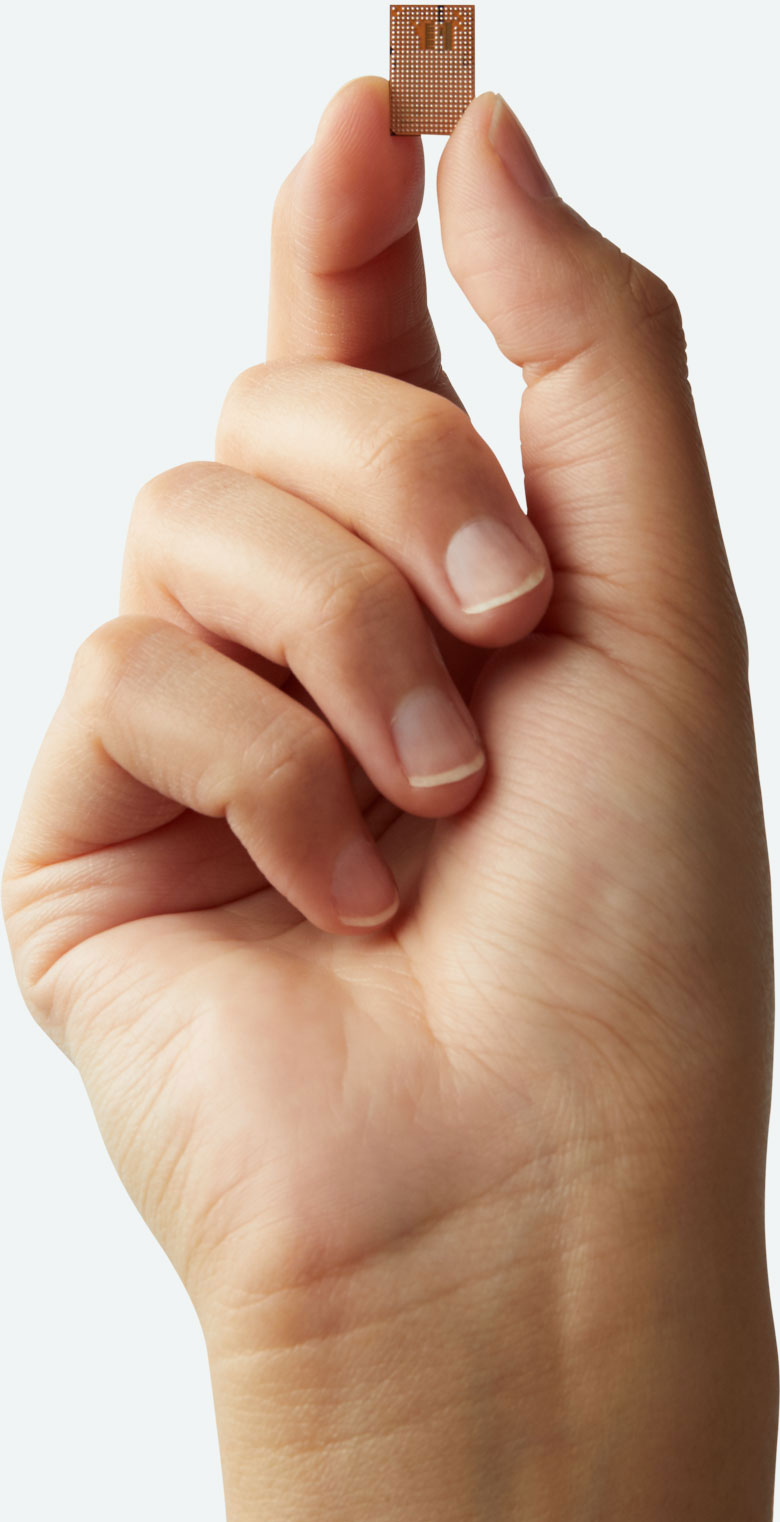
A supplier went looking for a chip
The origin has an appealing reversal. Magna, the automotive supplier, was searching for a meaningful advance in radar. In its published account, it found a Belgian research organisation that had demonstrated digital modulation on a small, single-channel silicon chip. A demonstration offered a direction. An automotive product required considerable additional development.
Magna was introduced to semiconductor veterans Manju Hegde and Curtis Davis. Together they assessed the gap, and the answer was a new company. Uhnder began in Austin in 2015, where Magna says the necessary chip-development talent was available. Magna would seed-fund the venture and work alongside it. The eventual customer relationship was present near the beginning, before the product had earned its place in a vehicle.
The division of labour mattered. Uhnder developed the digital semiconductor; Magna handled the overall radar system and vehicle integration. ICON Radar appeared at the North American International Auto Show in 2018. The broader lesson is an interpretation of that arrangement: founders building a difficult component can borrow a partner’s understanding of the system that must accept it.
“If it moves, it will be automated”Manju Hegde, speaking to Crunchbase News, 2020
Four dimensions, two configurations
The phrase “4D imaging radar” sounds ready for a cinema ticket. The four quantities are more workmanlike: range, velocity, azimuth and elevation. They describe distance, motion and angular position. The output is a point cloud, a set of measurements from which software can build an account of the scene. It is useful precisely because a road contains more than a flat row of approaching vehicles.
Uhnder’s April 2024 briefs show two configurations. The S80 lists 192 virtual receive channels. The lower-cost S81 supports up to 96, with 12 transmit and eight receive antenna channels. Both include processors that can run customer algorithms, plus software interfaces and system tools. The S81 gives the commercial proposition a second shape: customers do not all need the same configuration.
The distinction from competitors deserves precision. Arbe also supplies imaging-radar technology, using transmitter, receiver and processor chips. Uhnder emphasises DCM and integration onto a radar-on-chip. Channel counts alone do not settle which architecture suits a vehicle. Antennas, processing, power and the customer’s requirements enter the decision. “Digital” describes Uhnder’s modulation approach; the briefs still show analog transmit and receive circuitry.
The paperwork has teeth
The early schedule offers a useful corrective to the romance of invention. A 2020 funding announcement expected the Voxel product to be automotive-qualified in 2021. In March 2022, Uhnder scheduled the S80’s qualification and mass-production milestones for April. The published timetable had moved. A demonstration and an automotive-qualified product occupy different parts of the calendar.
The 2022 announcement specified AEC-Q104 qualification, ASIL-B functional safety and a Production Part Approval Process with Magna. The April 2024 briefs list qualification and safety support, alongside an ASPICE-qualified software development kit. Even the company’s quality policy stresses monitored processes, problem solving and risk-based thinking. In this business, dependability has to survive both a road test and a document review.
Digital radar chips shipped.
A shipment count, not a count of cars on the road.
Commercialisation also requires capital. Sensata led a $45 million Series C closed in November 2020. ACME Capital led a $50 million Series D announced in February 2024, joined by investors including Magna and Qualcomm Ventures. That later announcement reported more than 200,000 chips shipped and dozens of customer engagements across automotive, industrial and defense markets. Those are dated company figures. Funding measures financial backing; it does not reveal a chip’s price or the development bill.
A port is a very good place to begin
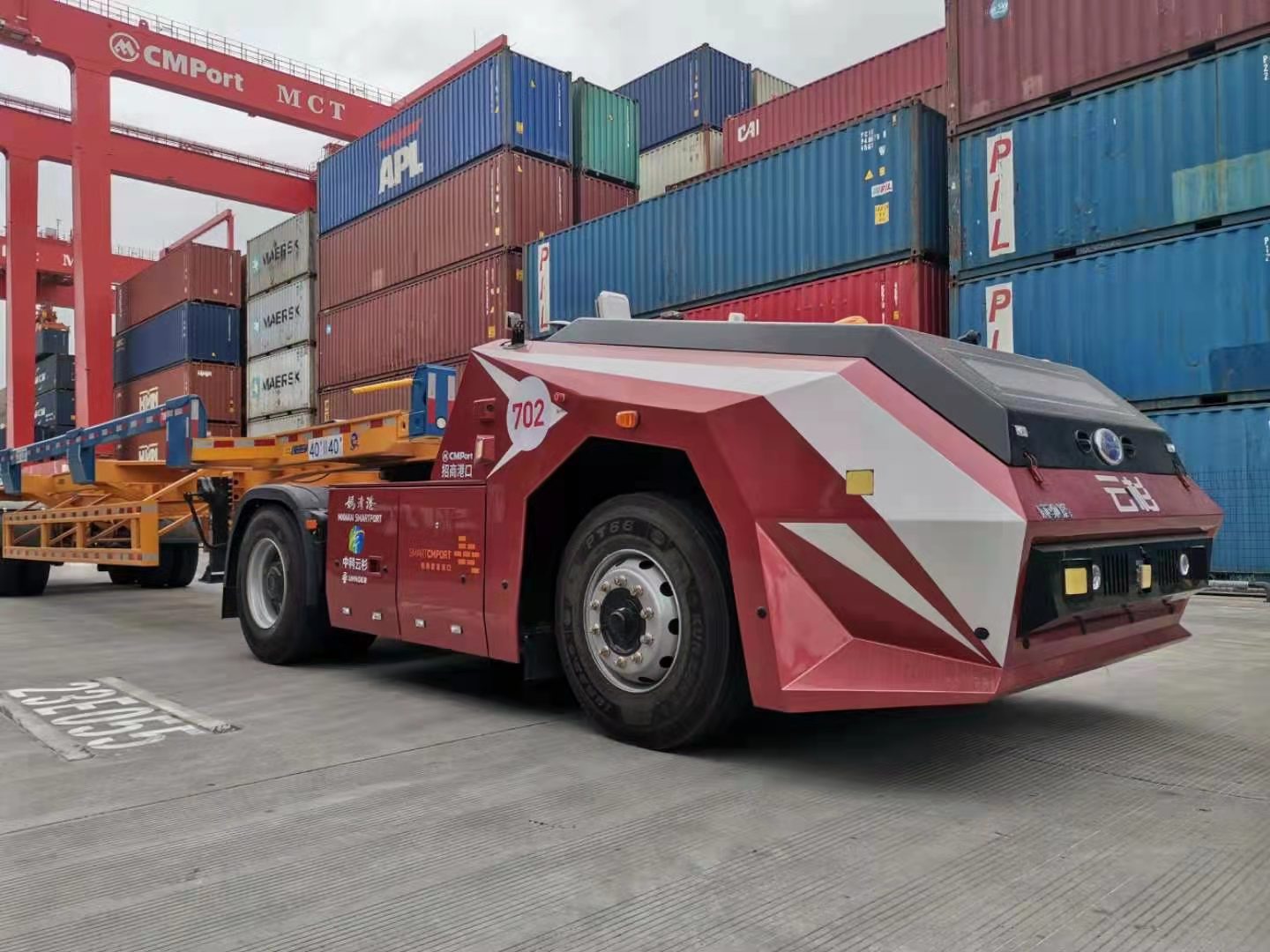
One early application was refreshingly specific. In April 2021, Uhnder and integrator Yunshan announced a radar solution for autonomous trucks at China Merchants Port’s Mawan Smart Port in Shenzhen. The announcement described positioning within five centimetres for container movements, and distinguishing a worker beside a container. These were claims about an integrated solution. Large metal objects, people and many sensors share a working yard.
Other partnerships extend the route to market. OFilm selected Uhnder’s technology in 2022 and announced a planned 2023 radar. South Korea’s bitsensing announced a development collaboration in April 2023, including radar-camera fusion. Spartan paired its sensor software with Uhnder’s radar in 2022. These relationships show a B2B supplier working through companies that turn measurements into systems; each announcement has its own stage of maturity.
What a reader can copy is the early attention to integration: recruit the partner, provide the software tools, and test the complete application. The approach depends on customers willing to undertake qualification and system development. Better returns alone cannot deliver a braking decision or autonomous driving. The cyclist beside the truck remains the test that makes all the engineering intelligible.