In April 2026, Sidec reported that companies in Malaysia’s Semiconductor IC Design Park had hired 302 engineers. Around four in five were fresh graduates. There is an entire economic-development argument inside that second number. A place can attract companies, open offices and announce ambitions. Eventually, somebody has to sit down and design the chip. The supply of people who can do that becomes the story.
- Sidec connects Malaysian businesses with training, mentors, investors and overseas markets.
- Its work spans retail digitalisation, deep-tech acceleration and semiconductor design.
- Selected accelerator participants pay RM6,480 including tax. Investment is an opportunity, not a promised cheque.
Sidec is the Selangor Information Technology & Digital Economy Corporation, a government-linked company with a state development mandate. It occupies an unusual position between a merchant seeking better online sales and a semiconductor company seeking design talent. Both need something they cannot conveniently build alone. Sidec’s business is arranging the missing pieces.
The shopfront was only the beginning
The organisation began in 2015 as SITEC, the Selangor Information Technology and E-Commerce Council. Its early problem was wonderfully concrete: help existing businesses become accessible online. By August 2019, SITEC said it had held 91 free e-commerce classes and supported more than 450 merchants through its Online 100 programme. It also ran merchant awards in which actual online sales performance counted towards the result. Commerce had to happen somewhere beyond the presentation slide.
Success exposed the limits of the original brief. In a 2021 account of Sidec’s formation, then state executive councillor Teng Chang Khim explained that adding an online sales channel could not, by itself, make SMEs more competitive. Startup acceleration had already joined the portfolio in 2018. The council became a full-fledged government-linked company in 2021, with Yong Kai Ping as CEO.
“The broader picture is the digital economy. E-commerce is just one part of the picture.”Teng Chang Khim, 2021
The point was a change in the unit of attention. A shop needed more than a website. It needed ways to improve operations, adopt technology and find new customers. A startup needed more than encouragement. It needed a route from an interesting idea to something another organisation would buy.
Three doors, with an admission price
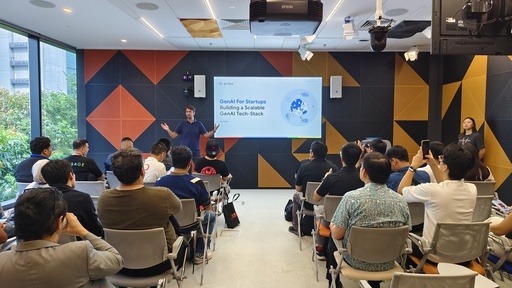
By June 2026, Sidec had organised its accelerator framework into three tracks. Retail-X serves consumer-facing SMEs. Deep-X works with science and engineering ventures, including AI, robotics and semiconductors. Token-X adds digital assets, blockchain and tokenomics. The names have the brisk optimism of an airport departure board. The admission criteria are more revealing.
Retail-X’s published criteria include Malaysian registration, an existing online presence and annual gross merchandise value between RM1 million and RM10 million. Applicants must be founders or co-founders; the business needs at least one audited financial year. This is support for an operating company with some evidence of demand. A person with a handsome logo and no sales has a different problem.
RM6,000 + 8% SST. One-time fee for shortlisted companies in Retail-X, Deep-X and Token-X. Applying is free.
Deep-X asks for technical substance: validated proof of concept, a prototype or proprietary technology, alongside business readiness. Its 12-week programme offers technical validation, commercialisation support and investor connections. Token-X requires technical and business leadership, a working concept or product, and regulatory-ready architecture. These filters tell applicants where Sidec expects the work to begin.
The fee buys access to a bundle of support. Published benefits include mentorship, workshops, technology offers, exposure and hot-desk seats for up to two employees for a year. Overseas opportunities are selective. The sensible founder should decide which of those resources addresses a current constraint, then budget the time needed to use it. A long benefits list is only valuable when the team can turn a benefit into progress.
Silicon needs neighbours
The semiconductor work applies the same logic to a more demanding industry. Sidec launched the Puchong IC Design Park in August 2024. At launch, it described a 60,000-square-foot facility with companies including Maistorage, Skyechip and Weeroc, supported by partners such as Arm, Cadence and Synopsys. Site selection considered power capacity, office fittings, expansion and public transport. Innovation, it turns out, has opinions about the electricity supply.
The ambition is to increase Malaysia’s participation in chip design and intellectual property. Sidec helps assemble companies, tools and talent around that ambition. Cyberview became a partner in the next phase; IC Design Park 2 opened in Cyberjaya in November 2025. Sidec’s contribution is coordination and infrastructure rather than selling a chip of its own.
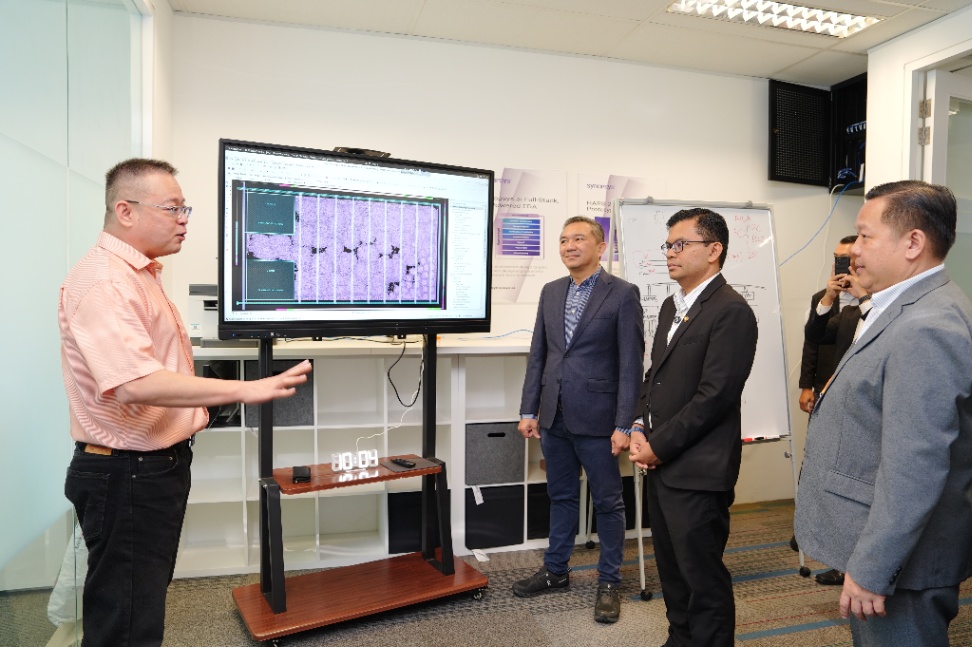
The April hiring update reported 15 active companies and acknowledged difficulty sourcing specialised talent. Fresh graduates provide a pipeline; experienced engineers supply expertise that cannot be hurried into existence. The Advanced Semiconductor Academy of Malaysia, ASEM, links training with industry needs through domestic programmes and international collaborations. The company’s October procurement notices for Cadence and Synopsys design tools show another practical requirement being addressed.
400 target by year-end
75.5% of the published year-end target. Target shown for context; it is not a completed result.
The useful part to borrow
Sidec’s market position rests on connecting local public support with commercial networks. MDEC, MRANTI, private accelerators and university incubators offer adjacent routes; several also work with Sidec. Its stated values emphasise collaboration and growth. The distinction is clearest in its combination of SME programmes, international missions and semiconductor infrastructure within one state’s economic agenda.
A retailer can seek structured digitalisation support. A deep-tech founder can pursue validation and market introductions. Wira AI targets businesses struggling to integrate AI into everyday workflows. World Stage Venture takes selected companies to international markets. Each route addresses a different distance between capability and opportunity.
The lesson to copy is to identify that distance precisely. Introductions cannot rescue a product nobody needs; workshops cannot substitute for an experienced design engineer. Sidec’s approach depends on prepared businesses, useful partners and follow-through after the event. Its most interesting wager is that those pieces can be deliberately brought together, one practical obstacle at a time.