The ANTMINER S23 Hyd. weighs 13 kilograms. It has an Ethernet connection, a metal enclosure and a requirement that would disappoint anyone hoping to put it beside the sofa: three-phase electricity at 380 to 415 volts. Then there is the coolant. Bitcoin may live on a distributed ledger, but this particular route to producing it requires pipes.
- BITMAIN designs specialized chips and sells ANTMINER mining machines.
- Its customers buy lower electricity use per hash, alongside the equipment to deploy it.
- Better efficiency helps. Power prices, cooling and purchase costs still decide the economics.
Consider the machine’s published rating: 580 trillion hashes per second, using 5,510 watts. Run it for a day and it consumes about 132 kilowatt-hours before external cooling. At an illustrative electricity price of ten cents per kilowatt-hour, that is $13.22. Before anyone celebrates the coins, somebody has to pay that bill.
This is where BITMAIN makes sense. The company occupies the machinery layer of cryptocurrency: designing application-specific integrated circuits, or ASICs, and packaging them into servers. Its expertise joins chip design, power delivery, firmware and thermal engineering. The customer wants useful computation without paying for unnecessary watts.
The chip that refuses to multitask
Founded in 2013 by Micree Zhan and Jihan Wu, BITMAIN built its business around ANTMINER. An ASIC is deliberately narrow. Where a general-purpose computer accommodates many jobs, a mining chip is built around a particular calculation. That specialization helps explain both its appeal and its limitation.
A SHA-256 machine serves compatible networks such as Bitcoin. It cannot become a Litecoin miner by changing the wallpaper. BITMAIN sells different hardware for different algorithms, including its L-series for Scrypt mining. For a buyer, choosing the network comes before choosing the box. Flexibility lives in the product catalogue, rather than inside every chip.
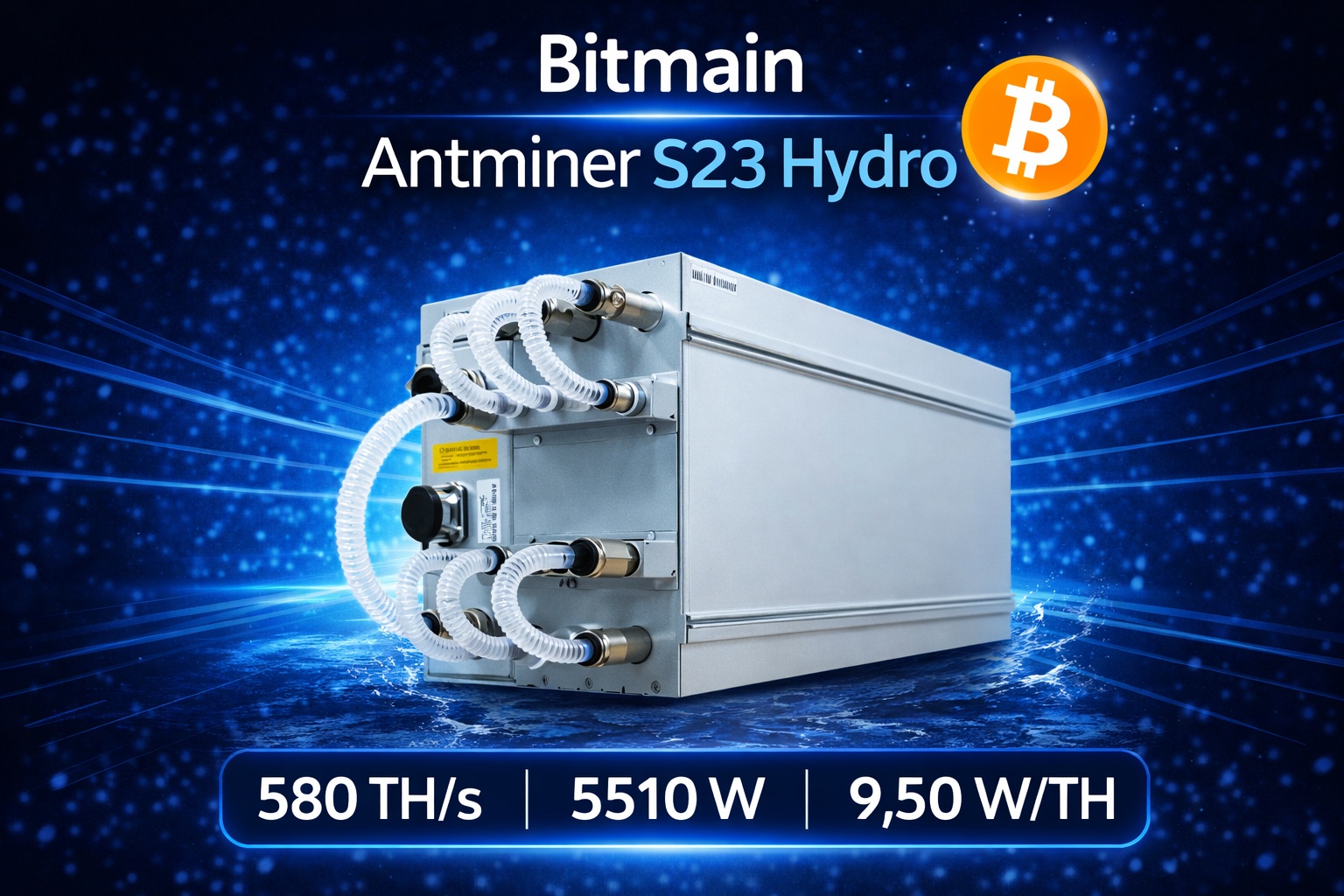
Efficiency is the revealing comparison. The published S21 Pro configuration delivers 234 TH/s at 15 joules per terahash. The S23 Hyd. is rated at 9.5. At equal hashing output, that is roughly 37 percent less miner electricity. Yet the S23 draws more total power because it performs much more work. Confusing those two measurements makes an expensive buying decision look deceptively simple.
Typical manufacturer ratings at different specified temperatures; miner power only. Equal-output reduction: 36.7%. External cooling is additional.
When the warehouse became the problem
BITMAIN’s early growth was dramatic. Its 2017 revenue reached approximately $2.5 billion. But the hardware business has an awkward dependency: a machine’s attraction changes when mining economics change, even if the machine itself remains perfectly functional.
The 2018 disclosures supply the uncomfortable detail. BITMAIN recorded a $391.3 million inventory write-down in the first half of the year. BitMEX Research’s analysis highlighted the exposure created by overproduction. Here, the warehouse was an early warning: the company had committed money to products whose value could deteriorate faster than its sales plan allowed.
Investment bought breathing room. IPO-based figures put three funding rounds at a combined $784.7 million. The Hong Kong listing application nevertheless expired in March 2019. Neither a successful chip nor a large fundraising round removes the problem of matching production to demand in a volatile market.
Then came the founders’ dispute. The January 2021 settlement involved a $600 million share purchase, and Wu left. Bitdeer and BTC.com separated from BITMAIN. The resulting boundary matters today: a company that supplied mining hardware and once housed mining services should not have every historical business pasted onto its current identity.
Buyers order flexibility, too
The customer list explains the scale. In January 2025, BitFuFu announced an agreement allowing purchases of up to 80,000 S-series miners over two years. That was a framework, not evidence that 80,000 machines had already arrived. Orders could be placed in batches, and payment arrangements allowed some share consideration and deferred cash payments.
American Bitcoin’s procurement was another kind of transaction. Hut 8’s annual report describes an August 2025 purchase of 16,299 BITMAIN machines for approximately $314 million, using pledged bitcoin. These are negotiated industrial contracts. The price on an online shop is only one expression of BITMAIN’s business model.
“Creating a better digital world”BITMAIN’s stated vision
There are credible alternatives. MicroBT sells WhatsMiner, Canaan sells Avalon, and Bitdeer has SEALMINER. Riot’s December 2023 purchase of 66,560 MicroBT miners for $290.5 million demonstrates that substantial buyers can choose another supplier. BITMAIN competes through its chip efficiency, product range and deployment equipment; buyers must also compare service, delivery and total installed cost.
Now the box comes with plumbing
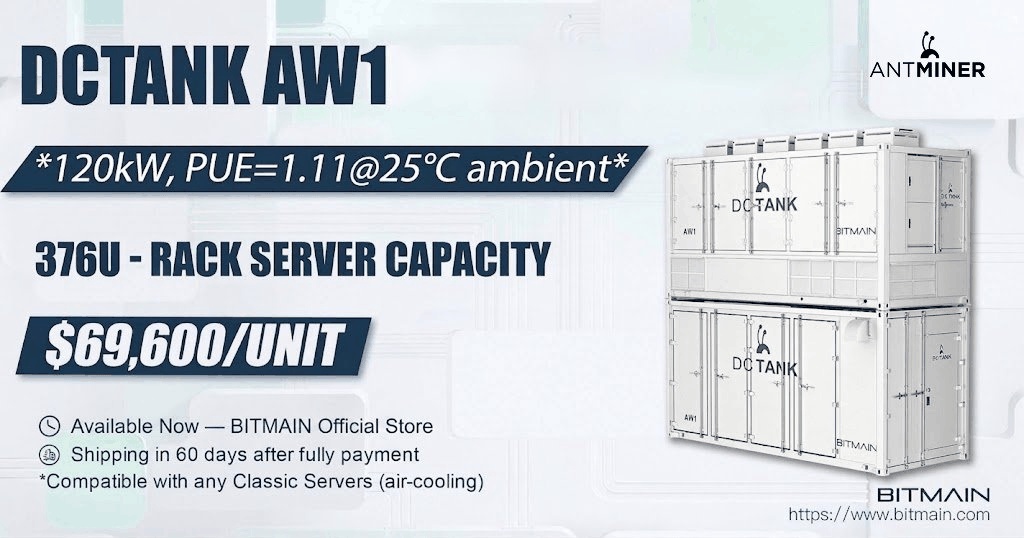
In September 2026, BITMAIN announced ANTRACK AR30 and AR31 cabinets, each accommodating up to 20 S23e U2H miners and 200 kW. Announced prices were $16,000 and $20,000 per cabinet. AR30 connects to existing cooling infrastructure; AR31 includes an independent dry cooler and supports heat recovery. The distinction depends on what the customer already owns.
That is a practical expansion of the product. A mining operator needs working infrastructure, rather than a collection of impressive specifications. Cabinets let customers invest in increments. The purchase remains larger than the cabinet price: machines, site power, installation and operating costs belong in the calculation.
The direction continued at Data Centre World Asia in Singapore. BITMAIN’s October 8 report described prefabricated infrastructure and displayed an S23 XP Hyd. rated at 8.9 J/TH. The product story now stretches from the silicon to the room around it.
Copy the constraint, not the coin
The transferable idea is to measure what customers repeatedly pay for. In mining, electricity accumulates every hour. Improving energy per unit of work addresses that recurring expense. Selling the surrounding deployment system addresses the next obstacle.
Those gains need suitable conditions. Expensive power, inadequate cooling, downtime or worsening mining revenue can overwhelm them. A narrow-purpose chip also offers limited escape if its market changes. The useful habit is to compare a whole operating system of costs. Start with the electricity contract. Then look at the pipes.