Consider a part that does everything an engineer asks of it. It fits. It performs. Its datasheet is reassuring. There is only one inconvenience: by the time the factory needs it, buying it may have become an adventure. Supplyframe has built its business around that interval between a good technical decision and a bad commercial surprise.
- Supplyframe connects component research with electronics sourcing intelligence.
- Engineers get search and design tools; manufacturers buy software; suppliers buy ways to reach them.
- Siemens announced a $700 million acquisition in 2021.
- The useful habit to copy: ask the buying questions before approving the design.
The company calls its approach Design-to-Source Intelligence, or DSI. Behind that name is a plain proposition. A design team should know something about availability, price and lifecycle before a component becomes a dependency. Procurement should see what engineering is considering before the shopping list arrives with all the important decisions already made.
This puts Supplyframe in an interesting position. It operates useful places where people research electronics, and sells intelligence and software to companies whose livelihoods depend on those decisions. The engineer looking for a footprint and the manufacturer planning a sourcing strategy inhabit different corners of the same business.
A search engine with a memory
Steve Flagg launched Supplyframe in 2003. Its early business was electronic-component search. In June 2007, it announced a $7 million Series B led by U.S. Venture Partners, with Clearstone Venture Partners and Arcturus Capital participating. The stated uses were global expansion, more component content and a larger advertising business. Search and commercial attention were connected from the start.
Today, the network includes Findchips, Component Search Engine and EEFOCUS. Supplyframe describes more than 70 search engines, community sites and media properties. People use them to research parts, compare stock and prices, obtain technical information and download design assets. Those activities also produce signals about what the electronics industry is considering.
A search is a clue, not a purchase order. A downloaded model does not guarantee a finished product. But repeated research across many parts and many users can give a market-intelligence business something a static catalog cannot: a view of attention while decisions are still forming. That is the logic behind Supplyframe’s network.
Conceptual illustration of the business, not a technical system diagram.
The scale needs careful reading. In January 2026, Supplyframe reported 1.2 million registered engineers in its technical-content and CAD-model ecosystem, alongside 20% year-on-year growth in model adoption. It separately reported more than 12 million professionals engaging with its broader search, media and SaaS network. Those describe different populations. Neither number is a census of paying enterprise subscribers.
Move the buying question into the drawing room
A bill of materials sounds clerical. In practice, it records dependencies: the parts a product must have if it is to exist. Supplyframe NPI, its new-product-introduction software, analyzes that list for risk, availability and lead times, helps identify alternates, and gives engineering and sourcing teams a place to collaborate.
Supplyframe argues that much of a product’s lifetime risk is committed during design. Its marketing puts the figure at 80%. Treat that as the company’s framing, rather than a universal law. The practical point survives without the percentage: discovering a sourcing problem while a design can change gives a team more choices than discovering it after approval.
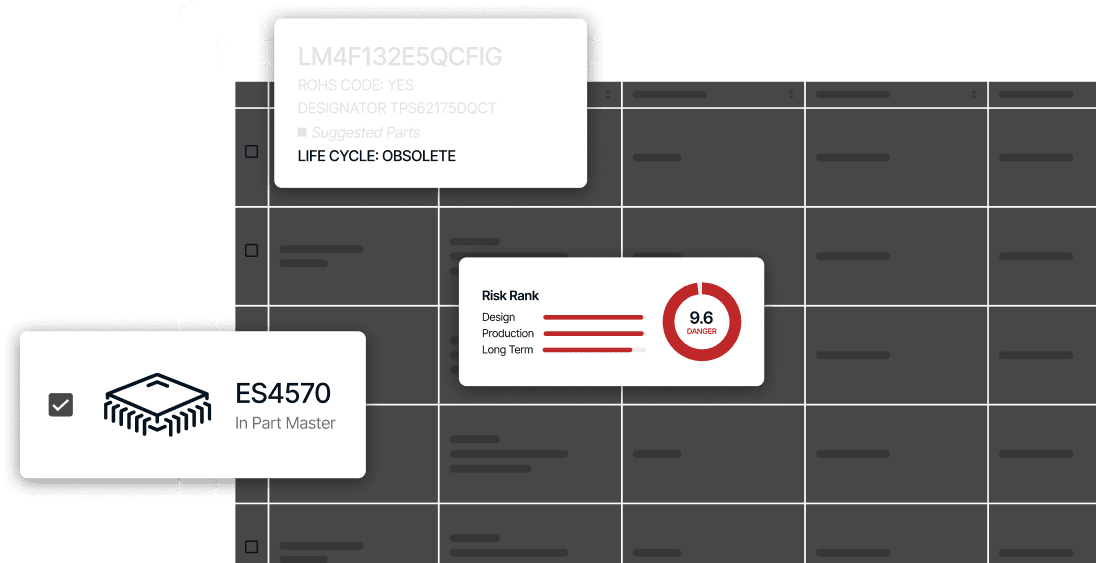
For products already in the portfolio, DirectSource focuses on strategic direct-materials sourcing. It brings component lead times, lifecycle and costs into supplier scenarios and sourcing decisions. Commodity IQ tackles another question: what is happening across the market? Its forecasts, alerts and expert analysis help teams interpret commodity demand, supply, pricing and lead-time patterns.
The lesson is procedural. Review the bill of materials with procurement before the design is approved. Flag difficult dependencies. Identify alternatives early enough for engineering to evaluate them. Revisit assumptions as market conditions change. Software can make that work easier; somebody still has to decide what deserves attention and what action is permissible.
“Longer-term thinking is better than being reactive to an issue that you face today.”
Graham Scott, Jabil’s VP of Global Procurement, in a Supply Chain Matters podcast discussion
Aerospace and defense make the constraint particularly clear. In April 2026, Supplyframe described programs with multi-decade lifespans and frozen bills of materials dependent on legacy silicon. Better information cannot casually unfreeze a qualified design. Its value there may be earlier planning and lifecycle management, while replacing a part remains a substantial engineering decision.
Two sides of the same component
Supplyframe’s customers are not all buying the same thing. OEMs and electronics manufacturers want to reduce sourcing surprises. Distributors and component makers want profitable quotes and a better view of potential demand. Engineers want an accurate model without spending the afternoon building one. The business earns money at several points around that shared component.
DesignSense connects these interests. Engineers can obtain free schematic symbols, PCB footprints and 3D models through Component Search Engine. Suppliers can distribute design assets and use sales intelligence to understand engineering activity. Supplyframe also sells media and digital engagement services to companies trying to reach engineering and purchasing audiences.
CPQ serves the seller’s desk: configure, price, quote. It handles part lists and bills of materials, draws on pricing intelligence and supports quote responses. Supplyframe says users reduce response times by 35% on average. That is a vendor-reported result, not a promised outcome for every distributor. The underlying task is concrete: turn a complicated list of parts into a commercially sensible offer.
Jabil is a named collaborator. In December 2023, the companies announced plans to combine manufacturing and supply-chain expertise with decision intelligence, AI and automation for sourcing, quoting and procurement. That pairing matters because a market signal becomes more useful when somebody understands the manufacturing consequences.
The commercial model combines enterprise SaaS with supplier-facing marketing and engagement services. The free tools offer an accessible starting point for engineers; enterprise projects require a sales conversation. A buyer should scope the work around a real BOM, its data quality, its workflow and its decision owners. A beautiful dashboard earns little if no one is empowered to act on it.
Alternatives include SiliconExpert and Z2Data for component lifecycle and supply-chain risk intelligence. Supplyframe’s distinctive proposition is the combination of engineering content, research activity, media reach and enterprise workflows. Comparing it with competitors means identifying the job first: searching for a part, monitoring risk and reaching an engineer are related purchases, but they are not interchangeable.
The workshop behind the dashboard
In June 2016, Supplyframe opened DesignLab in Pasadena. The current studio description lists 4,900 square feet for research and development, with professional tools for design, manufacturing, art and technology. The original residency invitation offered selected projects up to $2,000 a month. Here was an electronics information business making room for people to build things.

DesignLab runs university workshops and open-source hardware initiatives. Its director, Majenta Strongheart, works across design, social innovation and technology. These activities give a specific texture to the company’s stated culture of creatives and technologists. They are also a reminder that the people behind component data may care about what happens when the parts leave the screen.

Siemens saw a broader connection. It announced the $700 million Supplyframe acquisition in May 2021, bringing electronics-market intelligence closer to its design software portfolio. The deal completed in August. In April 2025, Siemens announced a further acquisition, Wevolver, to expand Supplyframe’s engineering audience, content and digital campaign capabilities.
That move follows the same commercial logic as component search: be useful where engineers investigate what comes next. Supplyframe’s year-end 2025 reporting described approximately 40 global customers onboarded across its SaaS solutions. The network attracts attention; the software asks businesses to put that information to work.
A border is part of the bill
In February 2026, Findchips added a tariff estimator. Users supply tariff codes and country-of-origin information to obtain estimated US import duties and charges. The feature moves another commercial consideration into component research. A part’s price depends on more than the number printed next to it.
Supplyframe’s bet is that these questions belong together: Will it work? Can we buy it? What risks accompany it? What will it cost to obtain? The attraction is less frantic improvisation later. The condition is willingness to let commercial information influence technical choices early enough to matter. The perfect part needs a buyer in the room.
Follow the component trail
Explore Supplyframe, search Findchips, or get design assets at Component Search Engine.