A semiconductor story usually begins with the chip. The Yellow SiC Group asks you to begin with something considerably less photogenic: the material from which the next stages of production will proceed. Before there is a wafer, there is a manufacturing problem. Before the manufacturing problem, there is a yellow crystal. A surprising amount of this company’s history lives in the distance between those two things.
- The ingredient: high-purity silicon carbide, with roots in cubic 3C-SiC research.
- The original ambition: hydrogen made directly from sunlight and water.
- The current industrial bet: a commercial powder plant planned at Dillinger’s steelworks.
A hydrogen idea with a materials business inside it
The name was refreshingly literal. Cubic silicon carbide is yellow; SiC is its chemical shorthand. The founders were Professor Siegmund Greulich-Weber, whose work came out of Paderborn University, and Christopher Höfener, a physicist by training with a long career in private equity. One brought the material expertise. The other brought experience with the rather different physics of financing a business.
The proposition that attracted early attention was photocatalysis. Instead of generating electricity with a solar panel and feeding it to a separate electrolyzer, the company wanted sunlight to drive water splitting at a silicon-carbide electrode. Hydrogen and oxygen would emerge from a process designed around the material itself. In 2023, the idea was being described as a possible hydrogen factory for the roof.
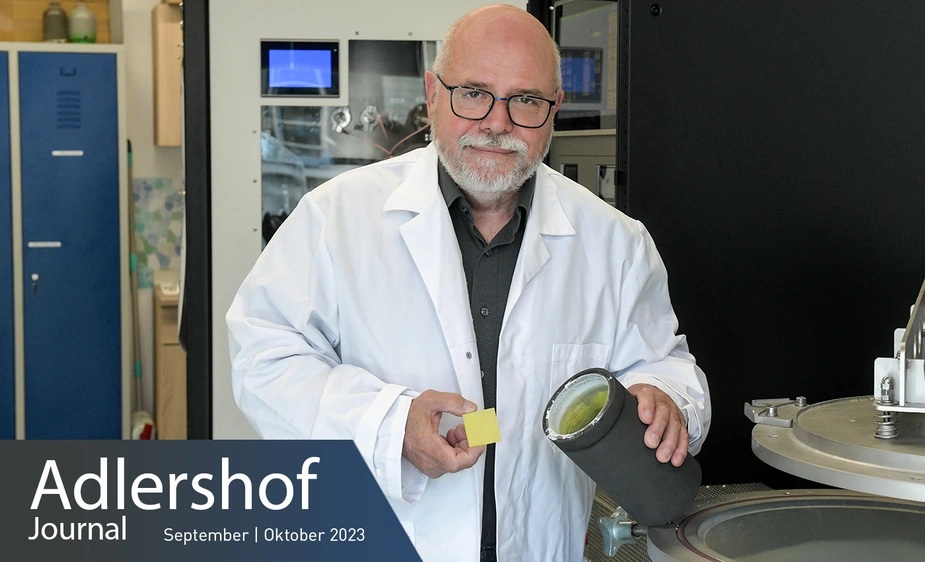
But there was another customer in the plan. In January 2023, the company’s adviser described selling silicon carbide to the ingot and wafer industry alongside developing hydrogen generation. That detail changes the reading of everything that followed. A material supplier could pursue a nearer commercial route while a more ambitious energy application continued through development.
“The solutions must also be persuasive in an economic sense.”Siegmund Greulich-Weber, Adlershof Journal, 2023
The reactor was late. The nitrogen was stubborn.
Look inside the development work and the elegant idea becomes an equipment schedule. The December 2023 project report records a reactor delivered six months late. The target for reducing nitrogen contamination was achieved with a three-month delay. This was a procurement problem with a chemical consequence: the machine needed for the work had to arrive before the material could behave as intended.
There was a second complication. Doping means deliberately introducing atoms to change electrical behavior. The researchers wanted aluminium to produce one kind of conductivity, but unwanted nitrogen worked against it. Increasing doping could improve conductivity while shortening charge-carrier lifetime. The useful material was a compromise, reached through measurement, rather than a purity contest with a single finish line.
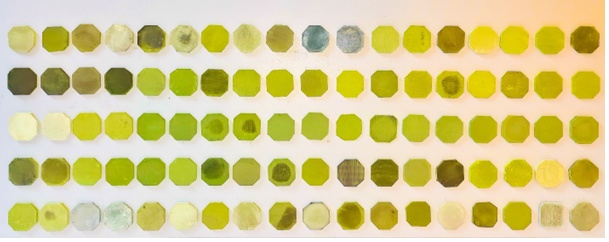
The team developed microporous electrodes to expose more active surface and checked contamination, crystal structure and optical behavior with several analytical methods. The DBU account reports impurities measured into the sub-ppm range. Its conclusion also calls for long-term tests. A laboratory result can justify the next experiment without yet justifying a customer’s twenty-year operating assumption.
Eight million euros before the easy part
The financing tells its own version of that journey. Leif Capital reported €4 million raised by January 2023, naming PVS Investments, conenergy, Vireo Ventures and the founders. Conenergy’s announcement explained the attraction: renewable hydrogen that could be competitive even in a country with Germany’s less generous sunshine.
DBU grant for the October 2022 - October 2023 electrode and photocatalysis project.
By November 2024, H2-International reported more than €8 million raised for development costs, including a substantial contribution from Höfener’s own assets. These are snapshots of funding at different dates. They belong to the work of developing the technology; they are not prices for a delivered hydrogen installation.
The same coverage described functioning prototypes and the task of manufacturing electrodes in larger quantities. A proposed 2025 pilot at an Osnabrück paper-mill site was still a plan in that account. Early projections of hydrogen at six cents per kilowatt-hour in Germany were economic targets. Turning those targets into operating results requires the hardware, the production rate and the lifetime to agree.
Why a steelworks wants semiconductor powder
By September 2026, the public story had acquired an industrial setting. SHS announced participation in Y-SIC alongside the State of Saarland, supporting a first commercial silicon-carbide production facility on Dillinger’s works premises. The proposed plant would produce powder continuously at industrial scale. Here was a steel industry partner entering a different materials market.
The competitive question is upstream. Established routes make SiC in batches or produce specialized films and coatings; buyers need a route suited to their particular application. Y-SIC’s pitch is continuous production of high-purity source material. Its strategic promise is a European supply option, with less dependence on material arriving through distant supply chains.
One material route. Each downstream stage requires its own qualification.
Read this as an expansion of the commercial emphasis. Material sales were already present in the 2023 plan. The hydrogen work and semiconductor feedstock share an origin, but ask different questions of the factory. A chip supply chain needs consistent inputs; a solar-hydrogen installation needs a complete system that performs economically in its environment.
The company also collected industrial access before this factory announcement. SpinLab included it in its accelerator portfolio in 2022. WECONOMY selected it among ten winners in 2023, bringing a year of mentoring and meetings with corporate leaders. For a materials company, an introduction to someone who can evaluate a sample is a practical asset.
First, send the sample
Today the buying route is concrete: request material, inspect its certificate of analysis, qualify it and develop a specification together where necessary. That is useful to crystal-growth and wafer businesses evaluating a source material. It also gives other founders something to copy: make the evidence fit the buyer’s approval process.
For a prospective buyer, the sensible first question is specific: what must this powder do in our process? Particle distribution, composition and the evidence accompanying a delivery matter more than an application list. A material earns its place when the buyer can repeat the result, rather than merely admire the demonstration.
The challenge survives the introduction. Powder must remain consistent as production scales; an electrode must survive beyond the experiment; a customer must accept the material in its own process. Yellow SiC’s most interesting wager is that owning the beginning of the chain can support several endings. The chip gets the applause. The powder still has to earn the order.