A factory is easy to announce. Gather the executives, find an agreeable patch of dirt, distribute ceremonial shovels. Running it presents less photogenic questions. Who can assemble the machinery? Which suppliers are nearby? What happens when the company needs an answer from a utility, a college, and a city before Friday?
The Arizona Commerce Authority lives in those questions. Its public face promotes Arizona as a business destination. Its more interesting work is arranging the connections that make that promise plausible. Economic development begins to look different when you imagine the person responsible for getting every moving part into the same room.
- Moving or expanding? Start with ACA’s location project managers.
- Building a startup? Match the program to your stage and check the current cohort rules.
- Already manufacturing? AZ MEP tackles the problems inside the factory.
The factory has a coordination problem
Consider the relocation service. ACA offers a single point of contact, confidential site selection, arrangements for local visits, and customized research on taxes, property, utilities, transportation, employment, and wages. A location project manager helps a company reach partners around the state. That is a rather practical product for an organization whose name sounds like a committee.
The benefit is fewer disconnected conversations. A cheap building can be an expensive mistake if the workforce is wrong. An appealing incentive can lose its charm when the project does not qualify. ACA puts these questions into a location process, where companies can compare the pieces before committing to the whole.
A state agency with a business-facing front door
ACA emerged in 2011, when Governor Jan Brewer and the legislature sought to diversify Arizona’s economy after the financial crisis. Its remit covers attracting businesses, helping existing companies expand, and supporting new ventures. The organization is led by president and CEO Sandra Watson; the governor chairs its board.
That board brings business leaders together with elected officials and education leaders. The arrangement matters because an employer’s problem rarely respects organizational boundaries. A company can choose a site; a college can teach a skill; state and local partners can help arrange the conditions. ACA’s distinguishing position is between them.
It occupies a different place from a private accelerator or a corporate location adviser. Its mandate is statewide economic development. Regional organizations remain collaborators. Competing states offer alternative destinations, while consultants offer companies their own counsel. ACA’s pitch has a clear geographic loyalty: it wants the business to work in Arizona.
Its business model follows that mandate. ACA administers public programs and works through partnerships, rather than selling a subscription to economic growth. The business gets assistance; the state seeks jobs and investment. Those interests can overlap, but they require separate measures of success. A helpful introduction is a service delivered. A company’s eventual hiring is an outcome that still has to happen.
Those figures require a little grammatical discipline. ACA and local partners reported them for the year ending June 30, 2026. Projected jobs describe company commitments. They are not a completed payroll, and committed capital is not a receipt. The distinction is where a sensible reader begins judging an economic development claim.
Teach the skills before the hiring starts
A relocation pitch becomes sturdier when someone can point to a training room. On October 6, 2026, ACA and college partners celebrated the opening of Mesa’s aerospace and defense Future48 Workforce Accelerator. ACA invested $6.4 million in the renovated facility, designed to serve nearly 1,000 students annually.
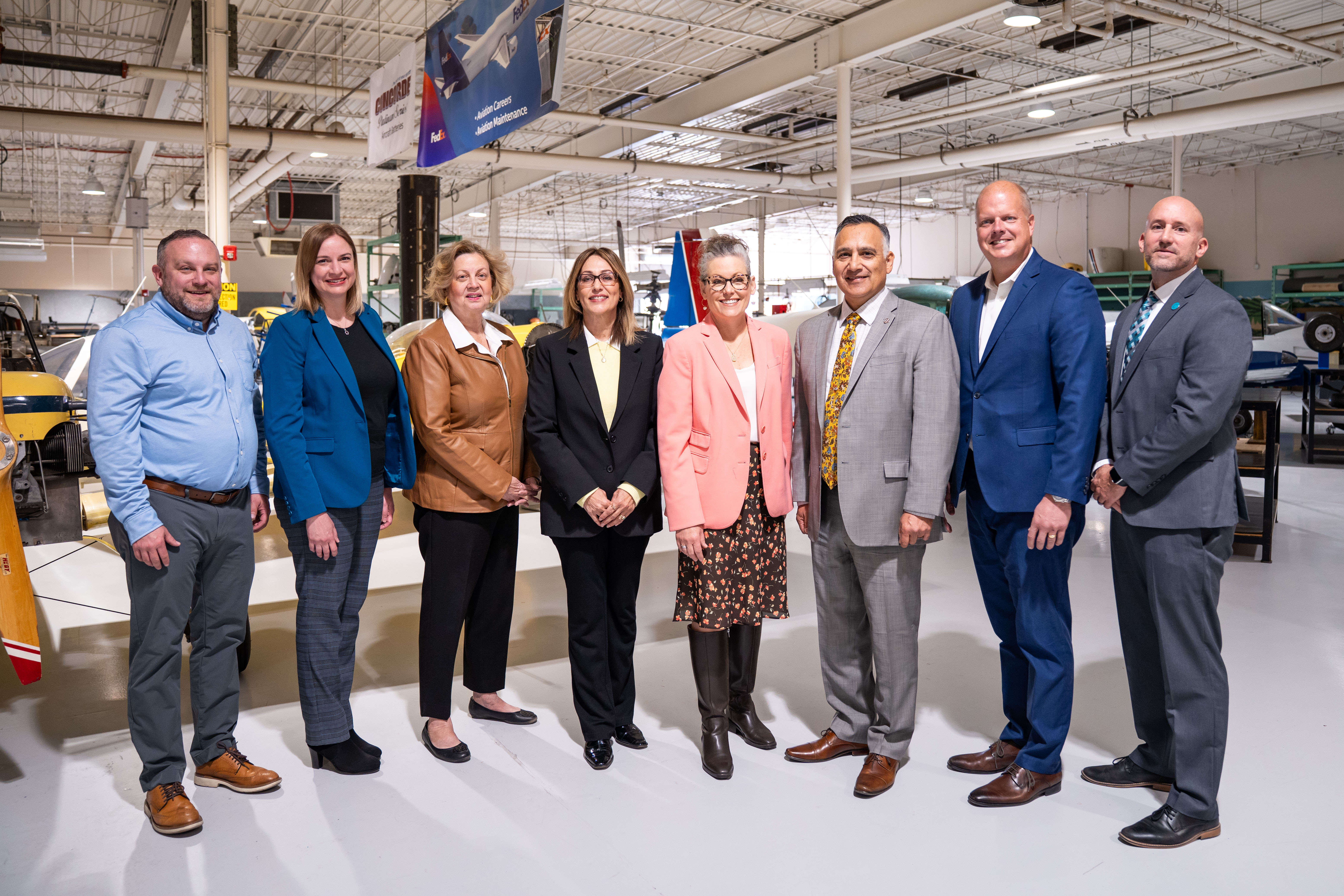
The college’s advisory board includes 16 industry partners. Training builds on composites and sheet metal, with employers helping develop additional classes in precision measurement and avionics. This is the useful detail: the people who need the skills participate in defining them. Workforce development can otherwise become an elaborate answer to a question nobody asked.
Existing manufacturers have another entrance. Arizona Manufacturing Extension Partnership, or AZ MEP, offers help with quality systems, process improvement, supply chains, cybersecurity, and workforce issues. Its FY2025 impact figures include $14.3 million in cost savings. Economic development can involve making an established workshop run better, with considerably fewer ceremonial shovels.
The founder gets a different ladder
A startup needs different connections. Venture Start is a six-week program for validating an idea, identifying a market, and acquiring early customers. Venture Raise addresses companies with a product and early users. Venture Scale is a nine-month accelerator for Arizona companies preparing for a Seed or Series A raise, supported by specialist partners.
The Arizona Innovation Challenge adds competition and structured feedback. Its current program page describes $100,000 in non-dilutive funding after required milestones, plus three months of customized partner support. Founders should read the current round closely: the Fall 2026 competition focuses on SaaS, and its application window closed September 28.
“It was an invaluable process that prepared me to raise VC funding, which I had never done before.”Chris Ronzio, Trainual founder / ACA testimonial, 2025
The fine print earns its keep
Public money complicates the business-facing approach. The 2023 audit identified weak incentive verification documentation and more than $2.4 million spent on five private CEO Forums. Recruitment hospitality had acquired an uncomfortable price tag.
After an attorney general intervention, ACA changed event arrangements. A Final Four sponsorship fell from $910,000 to $555,000, with $355,000 reimbursed. In September 2024, ACA revised policies following statutory restrictions on state-funded executive lodging, alcohol, personal transportation, and entertainment tickets. The August 2025 audit followup still described unresolved work.
Incentives also have conditions. The Qualified Facility program requires eligibility checks; pre-approval does not guarantee a credit. The applicant pays for an approved accountant’s managed review after operations begin. For a business calculating costs, compliance belongs in the spreadsheet beside construction and equipment.
Bring a brief, not just a dream
A useful approach to ACA starts with a concrete brief: location requirements, hiring needs, development stage, and the obstacle holding up progress. Ask for the relevant program or partner. Small businesses can begin with free webinars and the licensing checklist; exporters have international trade resources.
For a founder, that brief might identify the first paying customer and the next funding milestone. For a manufacturer, it might describe a production bottleneck or a missing qualification. Specific requests give advisers something to act on. “Help us grow” sounds agreeable; “help us find the right workforce partner” starts a conversation someone can finish.
The broader lesson is worth copying elsewhere. Give coordination an owner. Ask employers what training they need. Separate forecasts from delivered results. This approach depends on willing partners, eligible projects, and a business with real demand. An introduction cannot repair a product nobody wants, and a tax credit cannot train a technician. The connections help when the underlying business can use them.