public-private-partnership
(27)
The State That Learned to Sell Itself
Michigan built an organization that can sell a factory site, coach a founder, finance a main-street storefront and advertise a lighthouse. The interesting part is not its range. It is the fine print that turns public money into a bet with a receipt.
The City That Learned to Sell the Whole Map
World Business Chicago’s cleverest product is not a program or a pitch deck. It is a front door - one entrance to a region that spent years behaving like eight separate sales teams.
The Company That Sells Detroit Without Selling a Thing
Its service is free, its product is an 11-county region, and its best sales tool may be a soil report. Detroit Regional Partnership turned economic development into a concierge business.
The Company That Sold a Direction
Eighteen counties, more than 175 private investors and one stubborn idea: Northeast Wisconsin becomes easier to choose when it learns to act like a single place.

The Gift Shop That Funds a Mountain
For nearly a century, a small South Dakota nonprofit has turned souvenirs, memberships and private gifts into the invisible infrastructure of Mount Rushmore - from ranger talks to a $17 million parking garage.

The People Who Make a Company Move
A corporate relocation is really a pile of small uncertainties. Broward County's economic development partnership has spent six decades learning which phone call makes each one disappear.
The Switchboard Inside a $7 Billion Boom
Clarksville's economic-development office does not behave like a lone recruiter. It works as a switchboard - aligning industry, tourism, business, schools, and private money until a site, a workforce, and a story point in the same direction.
ZOLLHOF Built a Startup Machine - Then Added the Missing Money
Nuremberg's incubator spent years helping founders without taking their shares. Its next act is a €30 million public-private startup factory - and a fund designed to keep deep-tech talent close to home.
Le Poool Built a 580-Member Machine to Keep Breton Startups From Stalling
Rennes and Saint-Malo do not leave startup support to chance. Their nonprofit operator mixes public money, founder coaching, field trials and a very large address book - then admits the hard part begins after a company finds its market.

T-Hub Built a 572,000-Square-Foot Answer to India’s Startup Bottleneck
Hyderabad did not merely commission an incubator. It built a piece of civic machinery where founders, corporates, investors, universities and government are expected to collide - then turn those collisions into companies.
InovAtiva opens the startup door. Founders still have to sell.
Brazil’s public-private accelerator offers free mentorship without taking equity. Its harder lesson: a clever product still has to win a customer.
The Dot puts Tunisia’s startup maze under one roof
In Tunis, The Dot brings founders, advisers and public institutions into the same building. Its next test is making that proximity useful to entrepreneurs far beyond the capital.
NIC Karachi’s offer: build a business, keep your equity
At NED University, a publicly funded incubator gives founders room to experiment. Its next test is turning that support into businesses ready for customers, capital and life beyond the cohort.
i2i Opens the Doors Between Startups and Industry
Taiwan’s Innovation to Industry turns incubator space, government programs and corporate introductions into a route to market. Its international work gives founders a practical test: who, exactly, is ready to buy?
La French Tech Lille puts the right people in the room
In northern France, a nonprofit turns startup networking into bookable appointments, industrial introductions and a route into public procurement. Its most useful promise is also its least glamorous: saving founders time.
La Fábrica de Sevilla starts recruiting founders before they have a company
School competitions, subsidized incubation and introductions to working founders: Seville’s public-private startup initiative is building a route from the classroom to the first customer.
LHoFT wants banks to share their homework
Luxembourg’s fintech hub is tackling the work financial firms keep repeating. Its toolkit now stretches from a shared-data competition to an AI showroom and investment opportunities for financial-inclusion startups.
NIC Peshawar’s big pitch: Build a company. Stay in Peshawar.
Inside a repurposed telecom facility, NIC Peshawar gives founders workspace, business coaching and routes to investors. Its most useful lessons come from the businesses doing the unglamorous work of finding customers.
Andalucía Open Future offers a place to grow - and takes no equity
Four hubs, more than 80 mentors and no equity fee: Andalucía Open Future gives technology founders room to build in southern Spain. The real commitment is showing up, testing the business and learning to sell.
Sportinnovator’s real sport is getting ideas off the bench
A portable padel court, a shared ride to the stadium, a smarter training session. Inside the Dutch network that helps sports inventions find partners, money and a place to prove themselves.

GK Foundation Waited 14 Years for One Graduation Day - Here’s the Playbook Behind the Patience
A family-funded corporate foundation turned public schools bilingual one grade at a time, then waited from kindergarten to graduation to see whether the bet held. Its method is patient, place-based and unusually difficult to fake.

BioMADE Is Building the Factories Biotech Startups Can’t Afford
A good microbe can make plastic, rubber or protein in a flask. Proving it can do the same inside a 25,000-liter tank is where companies run out of equipment, money and time - so BioMADE is building the missing middle.

The Quiet Fund That Turned Tennessee Into a Startup State
For more than a decade, a small Nashville nonprofit has been doing the unglamorous work of turning Tennessee ideas into fundable companies. Here is how LaunchTN built a statewide engine out of capital, connections, and commercialization.

The Statehouse That Learned to Pick Winners
For 35 years, Connecticut has run a venture fund out of the statehouse. In fiscal 2026 it returned a record $66.5 million - proof that a government can, occasionally, invest like a Sand Hill Road firm.

The Firm Indiana Built to Fund Its Own Future
For 15 years, Elevate Ventures has written the first check for Indiana startups from Gary to Evansville. In 2025, the state that helped create it started asking hard questions about the books.
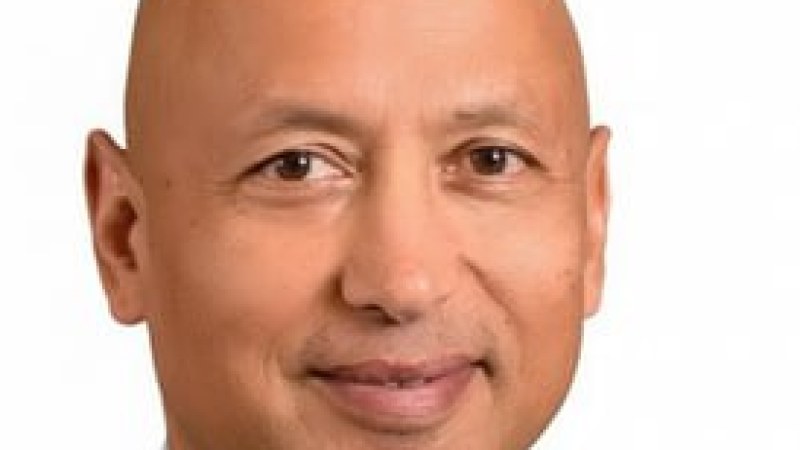
Mit Jha
Dr. Mit Jha is the CEO of Quantum Corridor, the first inter-state quantum-safe commercial communications network in North America, running fiber from Chicago's 350 Cermak data center to Hammond, Indiana. A Purdue-trained PhD in transportation systems and former MIT research associate, he spent two decades structuring mega public-private-partnership infrastructure deals as a Managing Principal at Keystone Global before turning that dealmaking discipline toward building a quantum internet backbone across the American Midwest.
Quantum Corridor
Quantum Corridor is a Midwest network-infrastructure company building North America's first inter-state, quantum-safe commercial fiber backbone. Its live coherent optical network links Chicago to Northwest Indiana with 40 Tbps capacity and 0.274 ms round-trip latency, connecting quantum research labs, hyperscalers, data centers and defense partners. Formed in 2021 as a public-private partnership, it is extending the route toward Purdue, Indianapolis and the Crane naval research base.