Who he is now
Building a quantum superhighway through the American Midwest
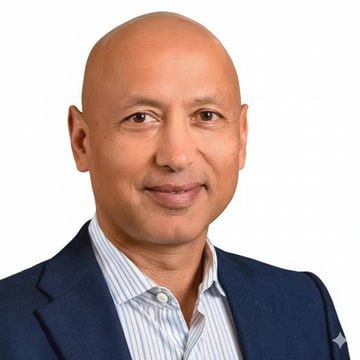
Dr. Mit Jha runs Quantum Corridor, the first inter-state quantum-safe commercial communications network in North America. The line begins inside 350 East Cermak in Chicago, one of the most connected buildings on earth, and runs to a data center in Hammond, Indiana. On paper it is fiber. In practice it is a bet that the next era of computing will need infrastructure nobody has built yet.
Most quantum stories start in a physics lab. This one starts with pipes, permits and financing - the unglamorous machinery of getting things built. Jha's network moves data at 40 terabits per second with a round-trip latency of 0.274 milliseconds, secured by Toshiba's Quantum Key Distribution. Translation: it is fast enough to feel instantaneous and encrypted in a way that makes eavesdropping physically detectable, not just difficult.
In March 2026, the network reached a milestone that made the quantum industry look up. Quantum Computing Inc. installed its Dirac-3 optimization machine at the Digital Crossroad data center in Hammond - the first time a Dirac-3 had been placed in a commercial data center. Customers can now reach quantum optimization by subscription, over a quantum-safe line, from the middle of the country.
Our purpose-built network is designed to grow to serve as a foundation for quantum internet, and we are delighted to have the QCi machine on our network.
Dr. Mit Jha, CEO, Quantum Corridor
The strange specific
His PhD is in traffic, not qubits
Here is the detail that explains the man. Jha earned his doctorate at Purdue University in transportation systems, then spent six years at MIT as a senior research associate in transportation and demand forecasting. His training was in predicting how millions of things move through a network and finding the bottleneck before it forms. Cars, then. Photons, now. The math rhymes.
From the lab he moved into the deal room. At Earth Tech, David Evans and Associates, and PBS&J he ran project development for large public works. By 2018 he had joined Keystone Global - formerly Star America - as a Managing Principal, where he became one of the few people in the public-private-partnership world who understood a P3 from every seat at the table: the concessionaire, the equity investor, the lender, the contractor, the government owner.
That is a rare combination, and it turns out to be exactly what a quantum network needs. The hard part of Quantum Corridor was never whether entangled photons work. It was whether you could finance, permit, build and commercialize a two-state fiber backbone that no existing customer had asked for. Jha had spent a career doing precisely that, for roads.
The line, by the numbers
40 Tbps
Throughput capacity
0.274 ms
Round-trip latency
QKD
Toshiba quantum key distribution
Chi → Ind
350 Cermak to Hammond
The place
A coal plant that now moves light
The endpoint of the corridor tells you something about how Jha thinks. Digital Crossroad, the Hammond data center anchoring the network, was built inside a former coal-fired power plant on the Chicago-Indiana border - complete with a smart greenhouse and upcycled materials. An old machine for burning the past, repurposed to route the future. Quantum Corridor itself was formed in 2021 as a public-private partnership with the state of Indiana, exactly the kind of structure Jha spent two decades perfecting.
The ambition does not stop at Hammond. An expansion is underway to run the line south to the Crane Naval Surface Warfare Center and Crane West Gate in southwest Indiana, pulling defense and national-security customers onto a quantum-safe backbone. The company frames the endpoint plainly: the nation's largest quantum computing superhighway, connecting the Chicago Quantum Exchange, universities, defense contractors and enterprises to computing power most of them cannot yet buy anywhere else.
Our quantum safe network will now have the ability to solve some of the previously intractable optimization problems.
Dr. Mit Jha, on the Dirac-3 deployment, March 2026
Why it matters
The dealmaker's case for quantum
There is a quiet argument buried in Jha's career: the quantum internet will not be won only by the people who understand entanglement. It will be won by the people who can get the entanglement stations sited, funded, powered and connected to paying customers. Physics is necessary. It is not sufficient.
That is why a man with a transportation PhD and a P3 dealbook is running one of the country's most advanced networks. He is not pretending to out-physics the physicists. He is doing the thing they usually cannot: turning a research promise into commercial infrastructure that bills by the month. Fraud detection, portfolio optimization, secure communication for institutions that cannot afford a leak - these are the near-term customers, and the corridor is open for them now.
The Midwest is an unlikely stage for a quantum revolution. That is rather the point. Jha is betting that the center of the country, with its cheap land, its data-center incentives, its research universities and its willing state partners, is where the physical layer of the quantum era actually gets poured. Not in a lab. In the ground, between two states, one strand of fiber at a time.
Fun & telling
Four things worth knowing
01
His doctorate is in transportation systems - not physics - yet he runs one of the most advanced quantum networks in the country.
02
Before the deal rooms, he was a senior research associate at MIT, forecasting how demand moves through networks.
03
His network is billed as one of the fastest, most secure fiber lines in the Western Hemisphere.
04
Toshiba's Quantum Key Distribution makes the fiber effectively tap-proof - a physical guarantee, not a password.