A startup can have a working product and still lack a way into the room where purchasing decisions happen. Innovation to Industry, better known as i2i, has made that awkward distance its business. In Taiwan, the company operates incubation centers, organizes support programs and introduces young businesses to people who might buy, fund or help develop their technology. The name is almost a set of directions: take the innovation, get it into industry.
There is even an accounting joke in the branding. Chairman Gary Gong has explained that the red and black in the i2i logo represent the hoped-for journey from losses to profits. It is a refreshingly concrete ambition for an organization whose everyday vocabulary includes incubation, acceleration and international ecosystems. Eventually, somebody has to pay for the thing.
A company built around an existing job
i2i’s origin begins with an operating team and two centers already serving software businesses. Taiwan’s Institute for Information Industry, or III, had been involved in the Nangang and Kaohsiung software incubation centers. In 2014, a government tender created the setting for a new operating arrangement. The team spun out into i2i, which formally took over operations on July 1.
That institutional inheritance helps explain the company’s character. Its core offer includes rental space, business advice, industry connections and help finding funding. Government agencies also need someone to execute entrepreneurship programs, manage facilities, organize competitions and bring companies together. i2i works on both sides of that arrangement: serving founders while delivering the machinery of startup policy.
The important distinction is operational. Keeping a center useful involves repeated encounters with resident businesses, while a particular overseas program has its own cohort and itinerary. i2i combines those rhythms. A founder may need a place to work today, advice about a business problem next month and a relevant introduction later. The company’s service menu accommodates that untidy sequence.
The useful work behind the introductions
At Kaohsiung, the published services reach from visitor assistance and mail handling to intellectual-property advice and financing consultation. The center describes help with government R&D support, technology transfer and introductions to larger corporate projects. Branding, exhibitions and international marketing sit alongside the less photogenic work of administrative support.
That mix makes sense for a small technology company. A development team can be competent at its product and still need help interpreting a grant application, preparing a commercial conversation or finding an adviser. Buying each piece separately takes time. Incubation puts several routes to assistance within the same working relationship, although the founder remains responsible for using them.
The company’s customers and counterparts therefore extend beyond startups. Innovative SMEs use its business services. Corporations can seek technology collaborators, and government bodies commission startup-support work. For an overseas company, the attraction is a local organization that knows how those groups connect. The service becomes valuable when the introduction is specific enough to lead to a project.
i2i’s public partner list includes Chunghwa Telecom, Malaysia Digital Economy Corporation, QBO Philippines and MassChallenge. Those names indicate the range of its network. A founder still needs to translate access into a precise request: a technical discussion, a distribution relationship, a pilot or a funding conversation. A contact list becomes useful only when someone knows what to ask.
Two directions through Taiwan
The international operation gives that work a clearer geography. IP² Launchpad helps overseas startups establish connections in Taiwan. IP² Scale Out supports Taiwanese teams exploring markets abroad. The program website spells out IP² as Innovation Park International Program, a name with the administrative neatness of a carefully labeled filing cabinet.
Linkou’s Taiwan Startup Terrace officially opened in October 2019. The program’s account credits i2i with an operating role in its development, then draws a present-day distinction: i4i, an i2i subsidiary, operates the site, while the IP² Launchpad Team handles international programs. The address of a startup campus and the organization running a particular service are worth keeping separate.
IP² Launchpad
IP² Scale Out
Different entry points. A shared emphasis on business connections.
The outward itinerary has changed over time. A historical i2i Scalerator application targeted France and Vietnam in 2020. The France pitch centered on corporate connections and the VivaTech exhibition; the Vietnam pitch pointed to Taiwanese business networks there. The underlying proposition was destination-specific: use local relationships to make an unfamiliar market more approachable.
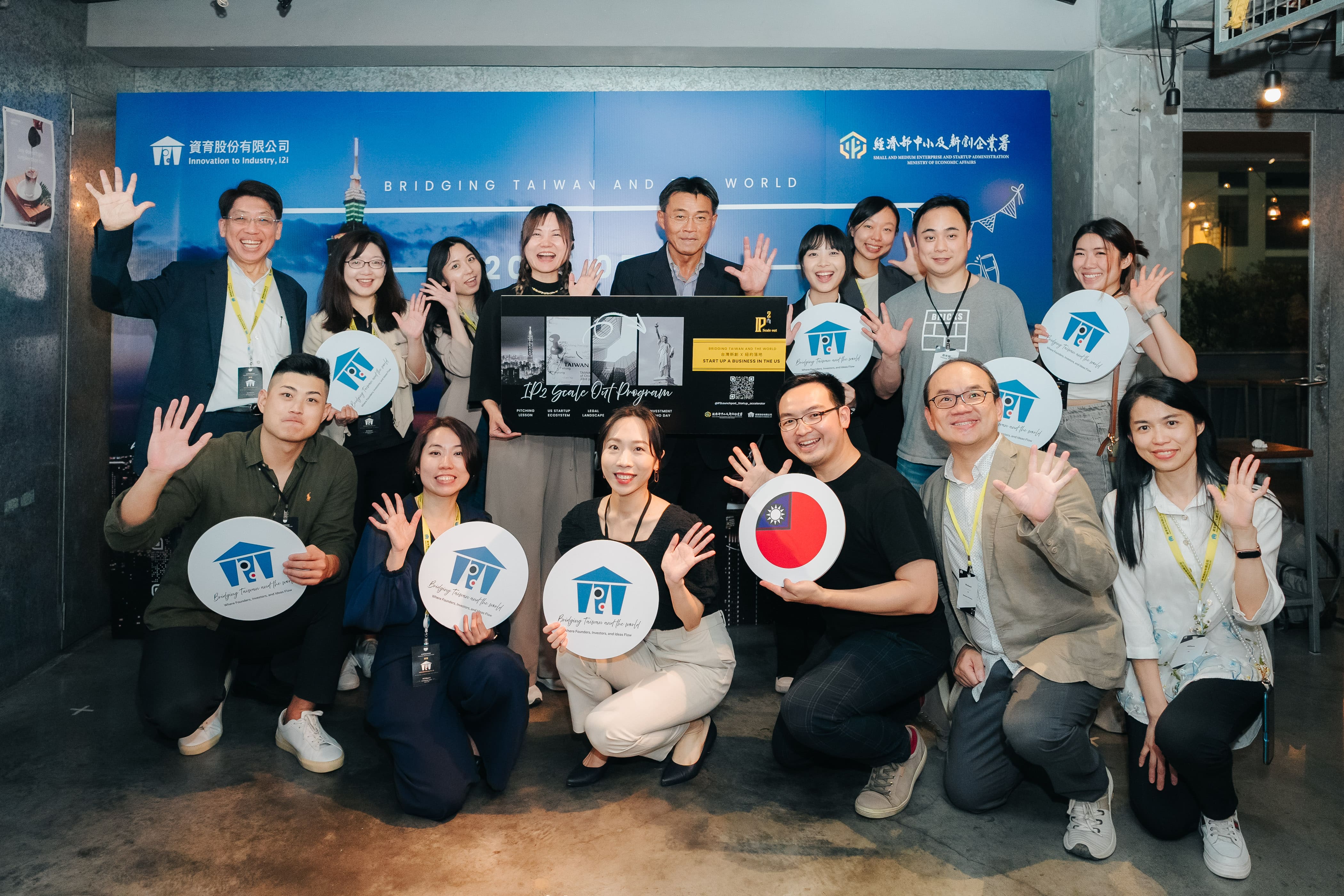
Scale Out began in 2022 with SOSA as a partner. Its published history says the 2022-2023 work supported 12 Taiwanese startups. For 2024-2025, i2i worked with US accelerator EntreCamp and recruited 25 teams in total for month-long New York programs. Business classes, individual pitch rehearsals and a Manhattan Taiwan Demo Day gave the trip a working schedule.
For 2026, the program describes an expansion to San Francisco with 15 Taiwanese startups. It is a new destination in the published itinerary, rather than evidence that every participating business will secure American customers. Training and meetings are activities the operator can arrange. A contract remains a decision for the parties across the table.
The entry ticket includes your own homework
IP² Plus, a more targeted landing program, makes the demands on participants unusually plain. Its published offer seeks mature Israeli companies with product-ready technology in cybersecurity, electric vehicles and medical-health applications. Candidates need an Asia-entry strategy and the resources to cover their local costs. The program envisages regular discussions and quarterly progress checks.
“Have financial resources to cover in-market cost.”
IP² Plus candidate requirements
Its stated opportunities include corporate meetings, joint development, prototyping, supply-chain connections and, for medical businesses, access to relevant regulatory and clinical support. These are substantial tasks. Their usefulness depends on the product, the counterpart and the agreement reached. The requirements favor teams able to commit management time and money after the initial introduction.
Support can vary sharply between programs and years. A Taiwan government-hosted brochure for an Israeli Launchpad offer in 2021 advertised flights, accommodation, workspace and other assistance. That dated package belongs to that offer. A founder considering a new cohort should compare its actual terms, including travel, staff time, follow-up work and any participation charges, before treating the trip as affordable.
The practical lesson is to define the commercial task before joining. An idea-stage team still deciding what to build would be poorly matched to IP² Plus’s mature-product requirement. A company without funds for local activity would miss another explicit condition. Even a prepared team should arrive able to explain which partner it needs and what the proposed collaboration would achieve.
Read the money in the right column
i2i’s business combines workspace rental, incubation services and project delivery. Its public-private operating role also brings payments in the other direction: in January 2025 anniversary reporting, the company said it had paid more than NT$100 million in government royalties over roughly a decade. That is a concrete reminder that running public incubation facilities has a financial structure of its own.
Government royalties reported by i2i in January 2025, covering roughly ten years of incubation operations.
The same report put occupancy at the Nangang and Kaohsiung centers above 95% and described NT$680 million in new investment in the preceding year. These figures describe different parts of the incubation operation. Occupied rooms indicate demand for the centers; investment associated with their businesses describes capital activity. Neither number is a substitute for i2i’s sales.
Founders have alternatives. AppWorks offers an accelerator with mentorship, fundraising guidance and corporate connections, and explicitly describes its program as free of fees and equity requirements. Wistron Accelerator, operated by AppWorks, offers access to the Wistron group and its affiliates. Those overlapping services make the choice depend on the particular company and the relationship it wants to build.
i2i’s distinctive combination is its continuing incubation operation, government-project experience and international programs. The useful comparison is consequently a practical one: which operator can support the next commercial task, in the relevant market, on workable terms? A founder choosing solely by the word “accelerator” leaves most of the important questions unanswered.
A useful evaluation would follow the relationship beyond the event: did a prospective customer agree to test the product, did an adviser resolve a concrete obstacle, or did a partner return with a proposal? Those are questions a founder can apply to any support program. They also keep a busy calendar from becoming the main measure of progress. Meetings consume the same scarce management time that a young company needs for selling and building.
What an introduction should produce
Recent activity shows i2i applying its convening role to narrower problems. In April 2025, it co-hosted an intellectual-property financing seminar with 睿加科技. The gathering brought startups together with financial and specialist organizations to discuss how intellectual property could support financing. The subject moved the conversation beyond pitching toward the assets a young business already holds.
An August 2026 company report on the seventh i2i Star Awards emphasized overseas potential and business matching. It described work with Japanese partner Glovalex and resident startups traveling for commercial exchanges. Awards provide recognition; connecting the selection to meetings abroad gives the recognition a further job to do.
The organization also maintains less formal occasions. Nangang has held birthday networking gatherings for resident executives and company representatives. The public-facing team biographies show experience in government projects, advertising, marketing and business development. This is relationship work performed through both scheduled programs and ordinary conversation, with considerable coordination behind the photographs.
For a founder, the part worth copying is the specificity. Name the market. Identify the missing relationship. Prepare the product and the business case. Budget for the work after the meeting. Then judge an introduction by the next action it produces: a technical review, a trial proposal or a serious commercial discussion. That is where i2i’s name becomes a useful question for any startup: how does this innovation actually get into industry?
Follow the next introduction
i2i website and company news · IP² Launchpad · Scale Out programs · IP² Plus requirements