Polymerize had a product for a very particular kind of frustration. Chemical companies spend time testing formulations, adjusting ingredients and testing again. The Singapore startup used artificial intelligence to predict material properties. Germany, with its chemicals industry, looked like a sensible place to sell it. But a sensible destination is several uncomfortable steps away from a paying customer.
- Start2 connects founders with foreign customers, mentors and corporate partners.
- Its corporate work starts with a business problem, then moves toward a testable pilot.
- German Accelerator offers publicly funded support; founders still budget for travel and time.
Polymerize joined programs under Scaler8, powered by Start2 Group and supported by Enterprise Singapore. Customer interviews and local guidance helped refine its approach. A connection to Meraxis, a Swiss polymer business operating in Germany, produced a proof of concept. That trial led to a contract. The sequence is more revealing than the familiar promise to help startups “go global.” It shows the work hidden inside those two words.
A customer is a better souvenir
Start2 Group occupies the space between a founder’s ambition and a market’s particular demands. It runs startup programs, advises corporations and designs initiatives for public agencies. Its expertise includes market analysis, mentoring, investor preparation, technology scouting and the management of pilots. These are people-intensive services: somebody must understand the startup, somebody must understand the buyer, and somebody must keep the conversation useful.
The Meraxis case makes that division of labour visible. Start2 helped prioritize problems, scope the collaboration and screen potential solutions. Polymerize supplied the technology. Meraxis supplied the industrial setting. In Start2’s account, the resulting work doubled innovation speed and reduced operational costs by 30%. Those are reported customer-project results, with no reason to treat them as the standard return on joining a program.
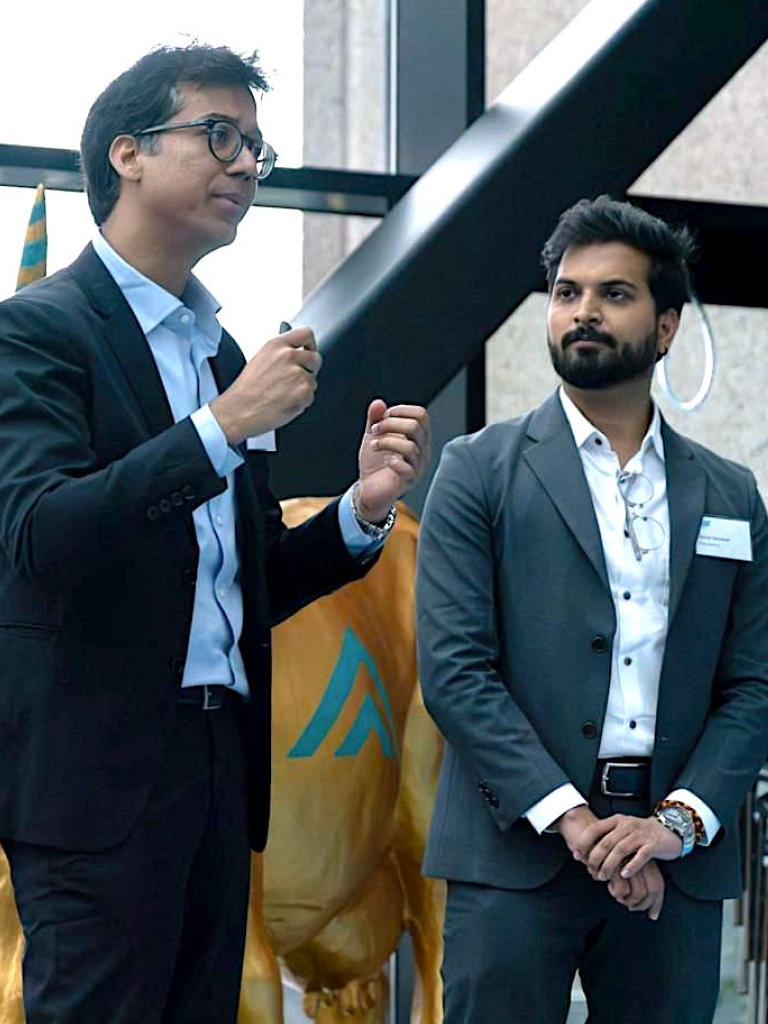
The first obstacles were practical. Meraxis had lengthy physical testing cycles and fragmented material knowledge. Polymerize faced the problem of fitting an AI product into existing research workflows while working with limited data. The pilot gave both sides something concrete to judge. The lesson for a founder is wonderfully unglamorous: make the proposed improvement small enough to inspect.
“To ensure our product resonates with the German market, we knew we needed a partner who understood the local landscape.”Kunal Sandeep · Co-founder and CEO, Polymerize
The map grew larger than the name
The company’s beginnings were local: support for early-stage ventures associated with LMU Munich in 2008. Co-founders Andy Goldstein and Matthias Notz are part of that history; Notz is now Global CEO. German Accelerator brought a government-backed route to international expansion. Singapore followed as an Asian base in 2017. In 2024, German Entrepreneurship became Start2 Group, a name better suited to a business whose connections crossed several continents.
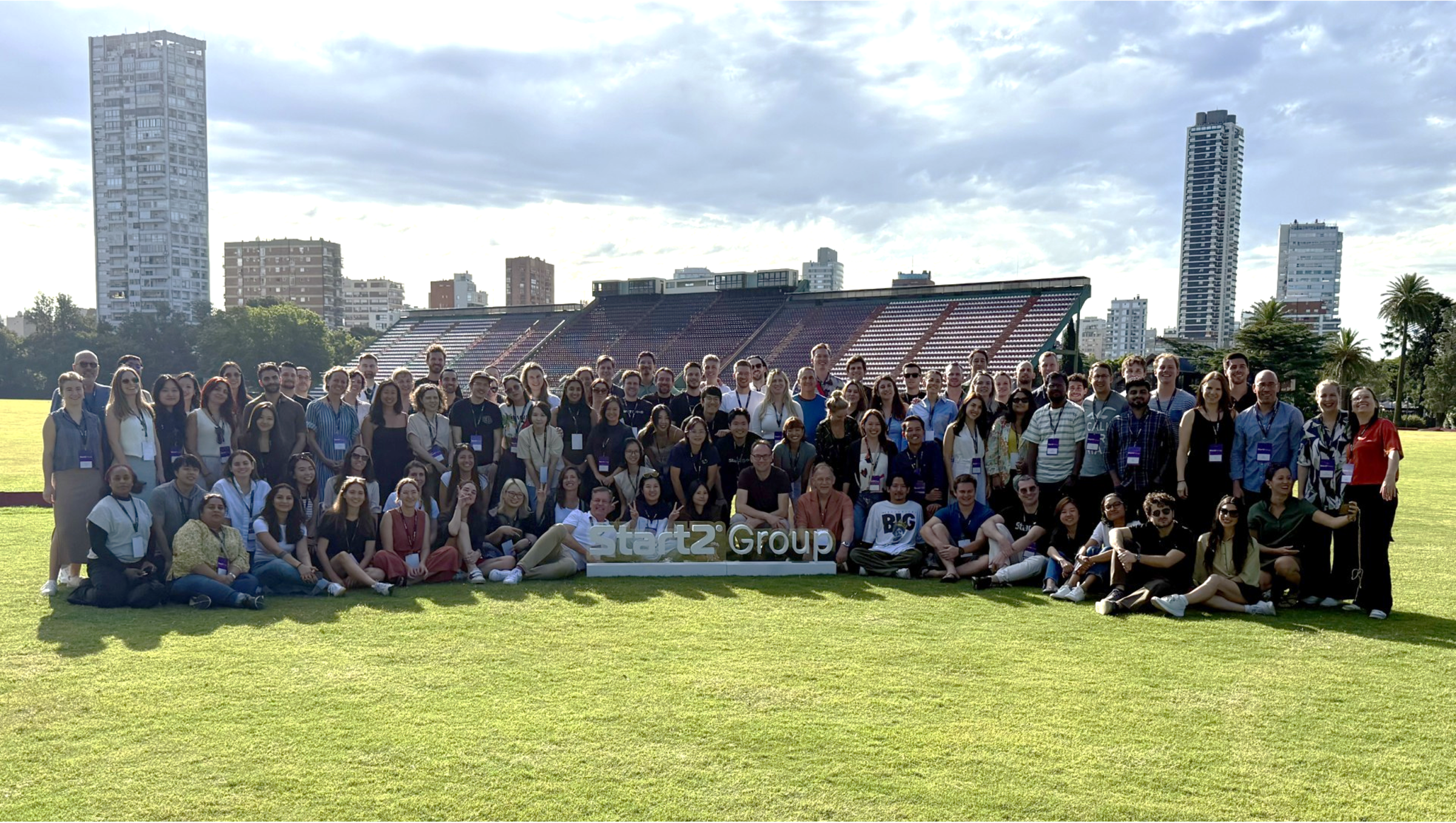
This history explains its unusual customer list. A startup wants a buyer or investor. A corporation wants technology that solves an operational problem. A government wants stronger companies and economic activity. Start2 can work for each, designing the program or arranging the collaboration. Public partners include Germany’s economic affairs ministry, Enterprise Singapore and the Tokyo Metropolitan Government. The paying sponsor and the participating founder need not be the same person.
Its reported scale is substantial, but the distinction between activity and outcome matters. Start2 says participants have raised more than $17 billion. That figure describes participant fundraising across its history. It cannot tell an applicant what they will raise. The Financial Times’ 2026 European startup hub ranking placed Start2 second overall, with first places for network and alumni track record. Recognition supplies context; the individual customer case supplies the mechanism.
The bill includes your calendar
For eligible participants, German Accelerator’s published FAQ lists Kickstart and Market Access as free and Market Discovery at €500 per startup, per program, covering up to three people. It takes no equity. Startups cover associated travel and accommodation. The federal economic affairs ministry finances the program. These terms belong to German Accelerator, rather than every service carrying the Start2 name.
There is also the cost of attention. The FAQ requires at least one founder or senior executive to attend 75% of the time. Start2’s broader internationalization offering typically expects local product-market fit. For a team still struggling to identify its first domestic buyer, opening another front could stretch an already thin calendar. Mentors can make a meeting more useful; they cannot lend the founder another working week.
When the right answer is another question
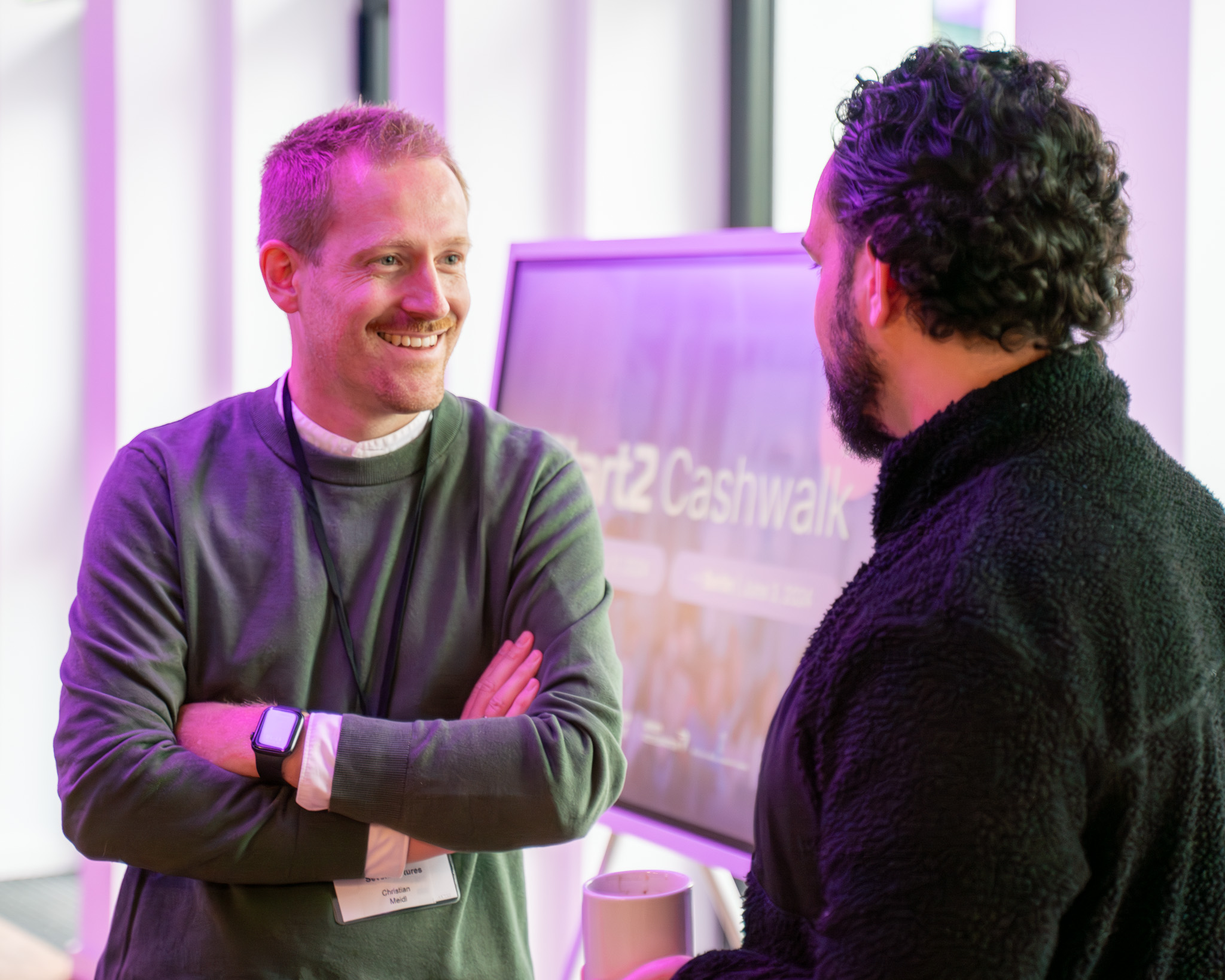
Any-Edge offers a quieter example. The Japanese oral-care startup began exploring Germany in 2024 and encountered uncertainty about healthcare regulations and which organizations to approach. Through market discovery, it examined whether its device should be positioned for medical or non-medical use, and for humans or pets. That exercise helped sketch possible entry routes. The founder described progress in understanding requirements, while saying the company had not yet reached business expansion.
What changed was the precision of the plan. This is a useful corrective to the assumption that every accelerator story must end with a triumphant launch. Sometimes a founder needs better questions before more introductions. The practical move to copy is to identify the intended user and application before treating an entire country as a market.
- 01DefineA specific business need
- 02ScoutA startup that fits
- 03PilotEvidence to act on
The introduction needs an operator
Start2’s GlassDollar partnership clarifies where it fits in corporate innovation. GlassDollar provides the platform for identifying and evaluating startup solutions. Start2 delivers consulting and operational execution, including proof-of-concept work. Alternatives include startup hubs such as UnternehmerTUM, other international accelerators, trade agencies and innovation consultancies. Start2’s particular proposition combines local market relationships with the people who organize the work after a match.
FibreCoat’s Japan case describes the same principle from the opposite direction: a German materials startup gained commercial and manufacturing partnerships through German Accelerator support. For readers considering Start2, the sensible starting point is a precise assignment. Name the market, the buyer, the unresolved question and the test that would justify spending more. An introduction becomes valuable when both sides know what they are there to discover.