The most useful number in GK Foundation’s story is not 500,000 patients, 300,000 meals or even the million-dollar line items. It is 14 years. Around 2011, a group of children in Armenta, Honduras, entered kindergarten in a public-school program built to teach them in Spanish and English. GK Foundation kept adding grades, paying teachers, supplying books and maintaining the machinery around the classroom. In 2025, that class graduated from high school.
A graduation is an ordinary event with an extraordinary denominator: the number of promises that had to survive between the first alphabet song and the last exam. Staff changed. Governments changed. A pandemic arrived. The students grew up. The sponsor stayed.
That is the cleanest way to understand GK Foundation, the privately funded social arm of the Amdani family’s GK Global. It is not a venture-backed company, and the people it serves are not customers with credit cards. The foundation uses the group’s business footprint, local relationships and family capital to deliver education, healthcare, food and environmental programs in the communities around GK operations.
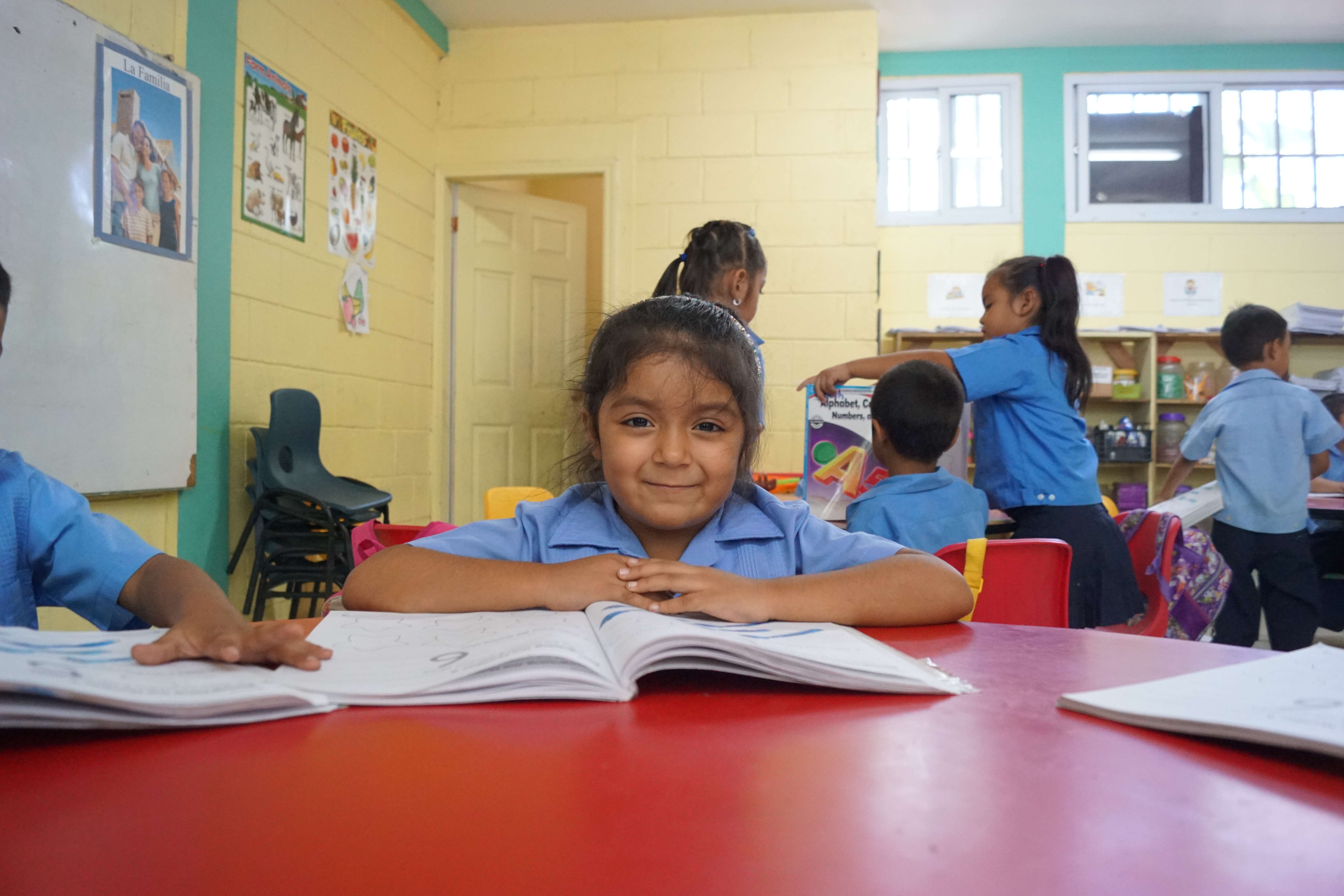
The graduation that took 14 years
The bilingual-school project sounds simple until the shopping list appears. GK Foundation worked with the Honduran government to convert public basic-education centers into bilingual programs. It recruited bilingual teachers, bought books from American publishers, supplied classroom materials, built and maintained computer labs, and remodeled physical space. Students were meant to leave with a bilingual certificate recognized by the Ministry of Education.
The clever constraint was also the slow one: enroll a kindergarten class, then expand by a grade each year. This avoided pretending an entire school could be transformed overnight. It also locked the sponsor into the rhythm of a child’s life. The program now reports more than 6,000 children attending sponsored schools across its footprint.
This is what changed GK’s approach. The group began permanent community-support work after arriving in Honduras in 1991. Two decades of social investment and corporate volunteering eventually hardened into an institution: GK Foundation was formally organized in 2012. The shift was from helping around the edges to managing a portfolio that could outlast an annual campaign.
“With a powerful global business comes great responsibility ... to invest in projects that stand the test of time.”Yusuf Amdani, founder of GK
A public-school bet with private patience
GK Foundation sits in a peculiar corner of the market. It has no conventional competitors because it sells nothing. Public agencies, local nonprofits, international charities and other corporate foundations are the alternatives. Its difference is logistical: GK Global already operates in the places where the foundation works. The group has managers, employees, facilities, suppliers and a reason to return on Monday.
That proximity can make philanthropy less theatrical. In Honduras, the Love & Care Medical Clinic is not a visiting tent. Since August 2013, it has operated as the outpatient area of Mario Catarino Rivas public hospital in San Pedro Sula, offering general medicine, gynecology, pediatrics, dentistry, social assistance and medicines. GK says the clinic has treated more than 300,000 people.
Its partner network extends the same model. International doctors join surgical brigades through Helping Hands Honduras. In Pakistan, the foundation supports institutions including ChildLife Foundation, Indus Hospital & Health Network, Memon Medical Institute and Patel Hospital. In Dubai it backs Pakistan Medical Centre; in Florida, United Heritage Institute; in Bangladesh, OBAT Helpers. The expertise is less about owning every service than choosing operators, supplying missing resources and staying close enough to notice what is not working.
Self-reported program figures; categories may overlap
One child, four systems
The foundation organizes its work into four focus areas. On a presentation slide, that breadth risks looking like a buffet. On the ground, the pieces make more sense together. A bilingual lesson is less useful when a child arrives hungry. School attendance becomes fragile when basic healthcare is out of reach. Floods, dirty water and heat do not politely remain in the environment department.
Education
Public bilingual schools, teacher salaries and training, classrooms, books, computer labs, scholarships and family support.
Health
A permanent clinic, medical and dental brigades, medicines, equipment and support for specialist nonprofit hospitals.
Nutrition
Prepared lunches, ration bags and partner distributions in Honduras, Mexico, Pakistan and Bangladesh.
Environment
Waste recycling, renewable power, water treatment, trees, organic fertilizer and community education around GK operations.
Campeche, Mexico, is the compact version. GK Foundation supports bilingual early education at El Huerto de la Ilusión, or the Garden of Hope. In July 2025 it opened a kitchen, dining room and handwashing facility designed to serve more than 300 children a day. The meal is not a decorative add-on. It is part of the learning infrastructure.
The price appears in fragments
The Amdani family privately funds the foundation, so there are no seed rounds, investors hunting a return or subscription revenue. GK’s public impact material reports more than $1 million invested in educational infrastructure, teacher pay, devices, books and materials. It also reports another $1 million in community donations of biosafety equipment. Those figures reveal the shape of the spending: people and recurring operations sit beside concrete and equipment.
The foundation’s environmental claims show the other side of corporate integration. GK reports recycling 90 percent of administrative-operation waste, deriving 60 percent of installed power capacity from renewable sources, planting more than 100,000 trees and treating all used water in its operations. These are not standalone consumer products. They are operating practices with community consequences, nested inside a business group that spans textiles, real estate, agriculture, technology and hospitality.
The stress test arrived before the diploma
The 14-year school experiment ran straight through COVID-19. GK’s response widened beyond education: the group says it donated more than one million masks, along with medicine, biosafety equipment and food bags in Honduras, Mexico, Pakistan and the United States. Hurricanes Eta and Iota worsened poverty and food insecurity in Honduras, pushing Alimentando Esperanza toward older people, disabled residents, women and children living on the street.
That period exposed the weakness of treating education, health and food as separate lanes. When a shock closes classrooms, removes income and strains clinics at the same time, a single-purpose program has fewer levers. GK Foundation already had four. The response was not frictionless, but its portfolio was built around the same families rather than four unrelated causes.
The part worth copying
Few readers have a multinational group or a family foundation handy. The useful mechanism is smaller than the balance sheet.
- Start with an existing public institution. Improve the school or hospital people already use instead of constructing a private island beside it.
- Fund the missing inputs. A building is not a program. Teachers, books, medicine, maintenance, meals and records are the recurring work.
- Expand at cohort speed. Add capacity as participants advance, and make the completion of their journey the metric.
- Solve the adjacent constraint. If hunger, health or family stress prevents learning, the education plan must account for it.
The approach also deserves scrutiny where the parent company defines the map. GK Foundation’s reach follows GK Global’s operating footprint, so its depth is easier to reproduce than its portability. That is the bargain of place-based corporate philanthropy: unusually good local knowledge in exchange for a mission shaped by where the business happens to be. It can know one neighborhood intimately while leaving the next, equally needy neighborhood outside the operating radius.
After graduation, another kindergarten
The first bilingual high-school class was not an ending. In 2025, Campeche celebrated its second bilingual-kindergarten cohort and later the first graduating class of the Fidel Velázquez Sánchez bilingual public school. Florencia School students moved toward university. In early 2026, the foundation joined the Municipality of San Pedro Sula to open another dining facility for children in vulnerable conditions.
The temptation is to finish on the large numbers. Resist it. GK Foundation’s sharper achievement is making a corporate promise fit the timescale of a childhood. The first class needed 14 years. The next class needs tomorrow’s teacher to show up, lunch to arrive, the computer lab to work and the public certificate to mean something. That is less glamorous than a ribbon. It is also the job.
Go straight to the work