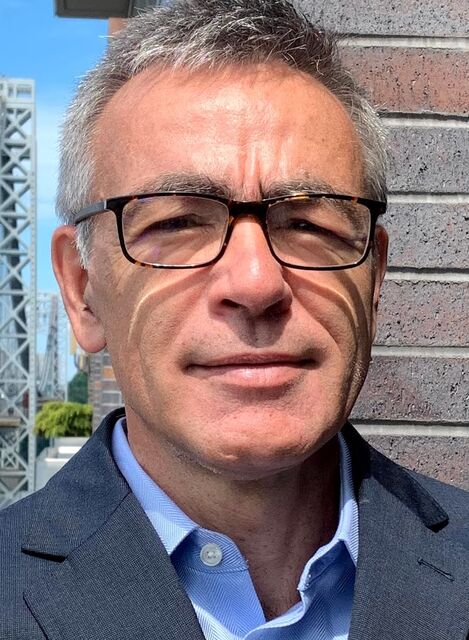
What he does now
Microwd is deceptively simple to describe and stubbornly hard to build. It connects a woman in Mexico or Peru who needs a microloan with an investor who wants both a return and a reason to feel good about it. Rius sits in the middle of that exchange, and his job is to make sure neither side is disappointed. The borrower gets capital at a fraction of what a traditional lender would charge to operate at that scale. The investor gets a portfolio of repayments rather than a donation receipt.
That distinction is the whole point. Microwd is not a charity wearing a fintech costume. The company describes its model as 100% tested and profitable, and it keeps expanding because the loans keep getting repaid. Rius is fond of the idea that doing good and turning a profit are not opposing columns - they are the same spreadsheet, read carefully.
The company operates across Mexico, Uruguay, Costa Rica, Nicaragua and Peru, lending almost exclusively to women. The reasoning is unsentimental: women entrepreneurs in these regions face the steepest barriers to financing and, by the data Microwd gathers, are among the most reliable people to lend to. Rius treats that not as a feel-good footnote but as the core investment thesis.
The fund that turned microloans into an asset class
Here is where Rius's old life and his new one collide in the most useful way. Microwd built the first and only fund in Spain to securitize microloans for women entrepreneurs subscribed with microfinance institutions - a structure approved by the CNMV, Spain's market regulator. Securitization is the kind of word that empties a room at a dinner party. It is also exactly the machinery Rius spent two decades operating on much larger, much less interesting deals.
The fund currently manages more than 15 million euros, and Microwd has projected deploying roughly 18 million euros in new financing across 2025 and 2026. Translated out of finance-speak: a lot of small loans, bundled into something an institutional investor can actually buy. It is plumbing, and plumbing is what lets the water reach the house.
"
The most underbanked entrepreneur on earth is often a woman with a good business and no collateral. Microwd's bet is that she is also a good credit risk.
- The thesis, in plain terms
Before the small loans, the very large ones
Rius did not arrive at microfinance by accident or by way of an MBA mid-life crisis. He spent more than twenty years inside the Latin American operations of three of the biggest names in banking - Banco Santander, Merrill Lynch and BBVA. At Santander he ran equity derivatives sales for Latin America out of the Madrid headquarters between 2009 and 2012, executing sizable transactions with institutions in Mexico, Peru and Colombia. He later served as Head of Corporate Finance Solutions at Santander Private Banking International.
His clients in those years were wealthy families, financial institutions, corporations and local government regulators. The geography was the same Latin America he serves now; only the size of the ticket changed. He also did a stint as Chief Financial Officer at empatIA and has been involved with Alaya Capital, and he sits on the board of Vista Alta Impact Investments, where the bio describes him exactly as you would expect: a senior banking executive specializing in tailored financial solutions across corporate finance, M&A and capital markets.
The education tells the same story with a twist. A bachelor's in business administration from the Universitat de Barcelona is standard issue for a banker. The master's is the tell: not a finance MBA, but a Master in International and Public Affairs from Columbia University's SIPA, earned in New York between 2004 and 2006. Public affairs, not pure finance. It is the kind of choice that looks like a detour until, fifteen years later, it looks like a plan.
A Spaniard in New York running a Madrid company in Latin America
Geography is its own small comedy here. Rius is a native of Spain. He lives in New York with his wife. He is CEO of a company headquartered in Madrid that does almost all of its work in five Latin American countries. The org chart at Microwd puts him alongside founder and president Alejandro de Leon - whose own origin story begins with a trip to a community in Nicaragua - plus a team that has grown from two people in 2016 to more than seventy across multiple countries.
In 2026 Rius appears as a speaker at GLI Forum Latam, on a panel pointedly titled "Rewriting the Rules of Money." It is a fitting marquee for someone whose entire second act is an argument that the rules, as written, leave too many good borrowers outside the building.