In 2004, a collection of Northeast Wisconsin executives began to notice the trouble with maps. The lines were tidy. The economy was not. A manufacturer consolidating plants did not care that one workforce lived in Outagamie County and another crossed the line from Winnebago. A site selector did not arrive yearning to conduct 18 separate conversations. Yet the region presented itself as a cabinet of local jurisdictions, each with its own handle.
Bob DeKoch and Kathi Seifert, two business leaders in those early conversations, reached a conclusion that was almost embarrassingly practical: the business community had to join the people already doing economic development, and the counties had to get better at appearing together. In late 2005, that conclusion became New North, Inc.
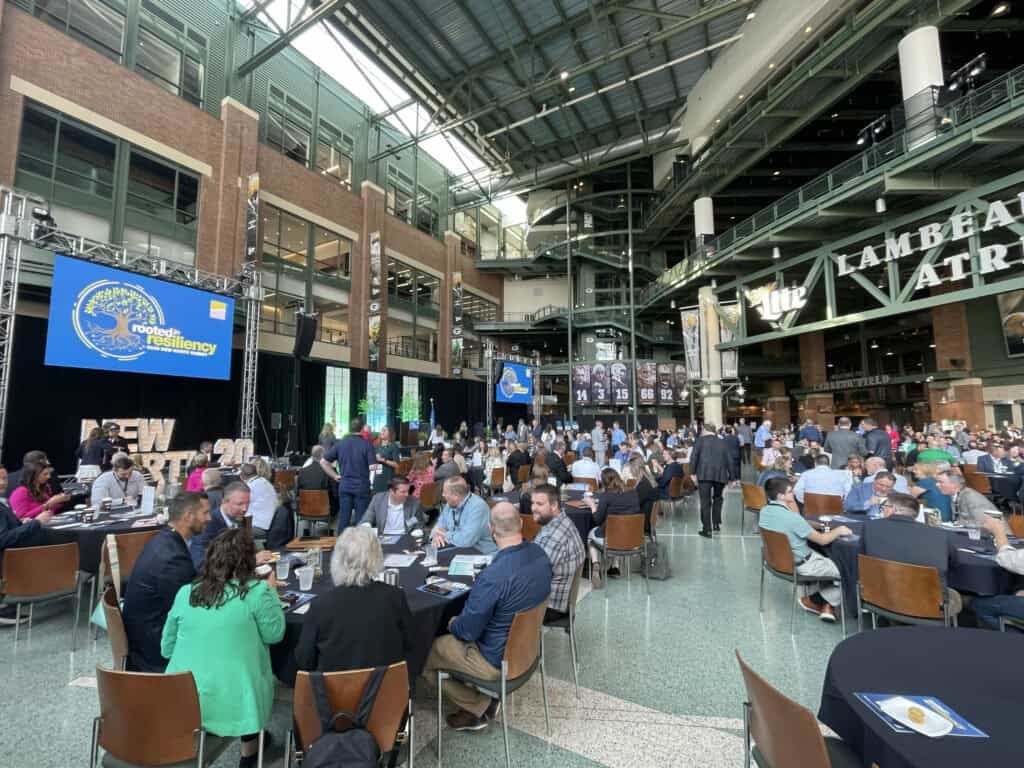
The company has no conventional product. It manufactures introductions, common language and fewer wrong doors. It is a 501(c)(3) regional economic-development corporation for 18 counties, running from the Fox Valley and Green Bay toward Lake Michigan and the Upper Peninsula border. Its headquarters sits on Lombardi Avenue in Green Bay. The address feels theatrical, but it is also accurate: New North works where civic identity, private enterprise and a very large football brand overlap.
“We all recognized that regional economic development leaders were doing that job, but the business community wanted to get more involved.”Bob DeKoch, co-founder
The product is the handoff
Suppose you run a company looking for a factory site. You need acreage, utilities, transport, labor data, incentives and someone who knows which local official will answer on Friday afternoon. New North presents itself as the first call. It gathers regional intelligence, responds to requests for information, arranges visits and hands the prospect to the right local and state partners. In 2024 it answered 44 site-selection requests, collaborated on 12 regional visits and counted 18 successful projects.
That is only the most legible part of the portfolio. New North convenes employer-led alliances in manufacturing, construction and digital work. It helps colleges and companies compare notes on the talent pipeline. NEW Launch Alliance connects founders, mentors, investors, accelerators and pitch contests with no membership fee. New North Hires Heroes, created with Mission Wisconsin in 2020, translates military experience into civilian opportunity and gives employers a route to transitioning service members, veterans and spouses.
There are regional reports, daily business-news emails, demographic dashboards, certified-site videos, global trade outreach and recruitment campaigns with names like More YOU in NEW and Cool Stuff. This can look like a crowded services menu until one sees the common function. Each offering lowers a coordination cost. The customer spends less time discovering who knows what.
The tiny company with the enormous balance sheet
There are two sets of numbers in this story, and confusing them would flatter everyone. New North itself is small. The latest public tax filing reports about $1.7 million in annual revenue. Roughly two-thirds came from contributions and grants, and nearly one-third from program services. Its investor page names more than 175 private supporters, from Thrivent and utilities to the Green Bay Packers, Microsoft, manufacturers, banks, builders and colleges.
The region it represents is enormous by comparison. New North's 2025 report put annual gross regional product above $90.1 billion, real-property value at $152 billion and new construction at $2.7 billion. Those are regional indicators, not a nonprofit's sales results. New North does not get to claim the economy. Its contribution is the connective tissue around it.
The model is a nonprofit subscription to regional competence. Investors pay because the benefits of a better labor market, faster business inquiries and stronger infrastructure spill across company and county lines. In a normal market, everybody wants the spillover and hopes someone else will buy it. New North's achievement is persuading employers that the shared layer deserves a budget.
What broke the old assumption
The first failure was not a program. It was a scale mismatch. In the early 2000s, manufacturers were consolidating while towns and counties still marketed themselves one at a time. The executives who founded New North changed their minds about the proper unit of competition. A municipality could still deliver a permit or develop a site, but the labor shed, supplier network and outside perception were regional.
That insight explains why New North is different from both a chamber and a consultancy. It does not replace local economic-development offices, and it is not a hired gun that leaves after producing a report. It occupies the layer between them. Its board, alliances and investors keep the same people in recurring contact, long enough for a warm introduction to become routine rather than heroic.
In 2024, peer reviewers from the International Economic Development Council tested the machinery. They examined governance, finance, strategy and local relationships, then accredited New North and described it as one of the country's highest-performing regional organizations. Their praise came with homework: keep building the workforce, housing and childcare agenda; cultivate AI and digital skills; and protect funding and political support without leaning on reserves. Even a collaboration machine needs fuel.
A food-bank operator takes the regional view
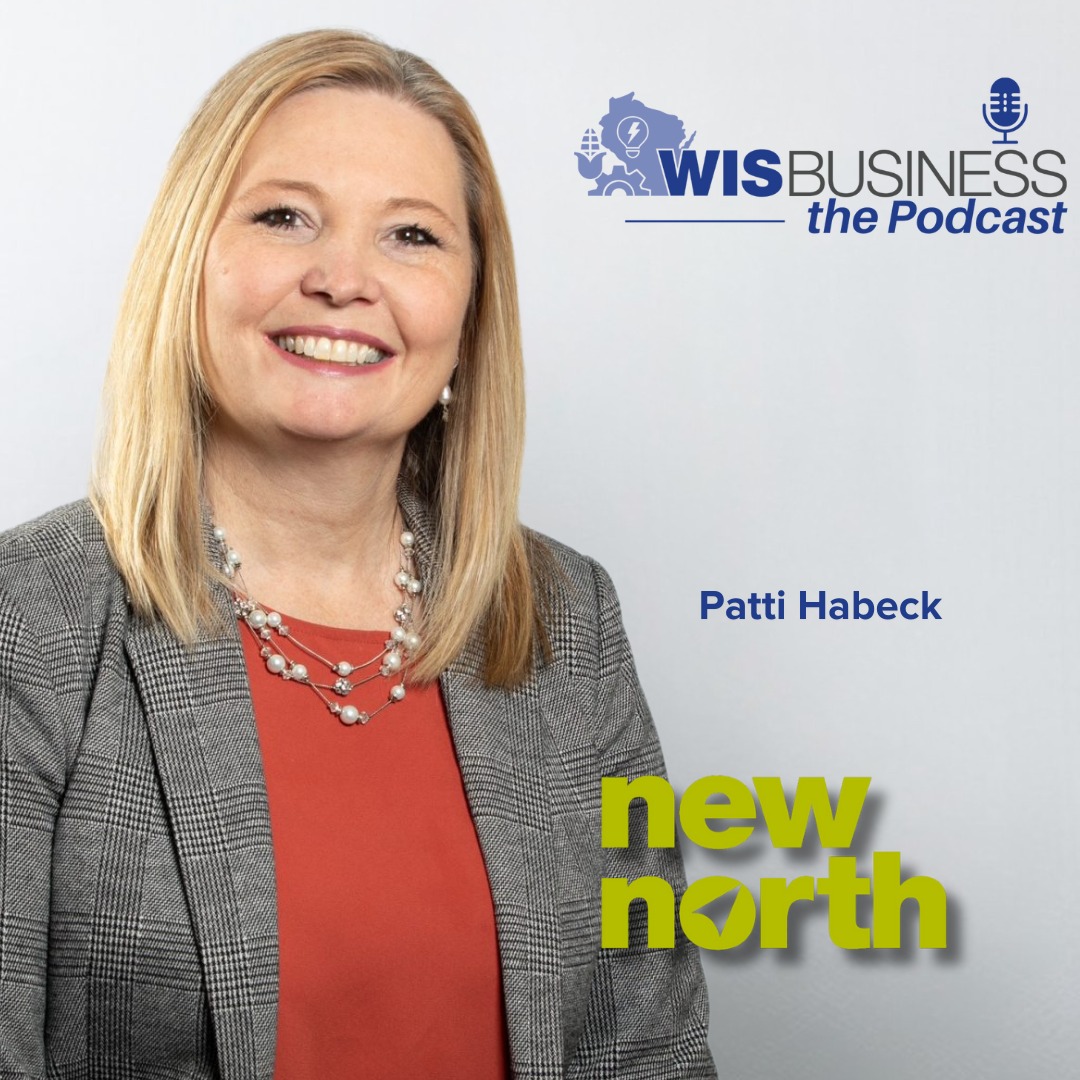
Leadership changed at the end of 2025. Barb LaMue retired after six and a half years, and the board unanimously selected Patti Habeck. Habeck had spent 14 years at Feeding America Eastern Wisconsin, where her record involved unusually physical forms of coordination: food, trucks, warehouses, partner agencies and government funding. She oversaw a 40,000-square-foot distribution center, doubled annual food distribution to 60 million pounds and diversified revenue.
Her move makes sense if one understands economic development less as ribbon cutting and more as systems design. Habeck has described the new role as looking “up and out” - creating conditions for opportunity across a region rather than attacking one social problem. In 2026, New North added a $1 million startup consortium with UW-Green Bay, returned Juan Corpus to an enterprise-wide strategy role and used its summit to frame infrastructure, talent and innovation as one competitive brief.
You can copy the shared data, the single intake point and the employer-led working groups. You cannot copy trust on a procurement schedule. The approach weakens when local partners hoard leads, investors treat the nonprofit as a sponsorship vehicle, or nobody agrees which outcomes belong on the scoreboard.
The useful part to steal
A region trying to imitate New North should begin with the least glamorous deliverable: one reliable handoff. Pick a problem that crosses borders, such as a site-selection inquiry or a difficult occupation. Agree on a shared intake, assign local ownership, publish the same data and follow the prospect until the loop closes. Then repeat it. New North's industry alliances and veteran program are variations on that sequence.
The second move is to make the funders users. A manufacturer that helps shape a training alliance is not merely donating to regional virtue; it is buying a better recruiting channel. A utility supporting site readiness is improving the quality of future leads. A college at the table gets earlier warning about changing skills. The coalition holds because participation can solve an operating problem.
And the third move is to keep the claims honest. Broadband grants do not belong entirely to the convener. Neither does migration or construction. New North is most convincing when it points to the connections it made, the requests it answered and the tools others reused. A conductor does not play every instrument. The audience can still tell when the orchestra has rehearsed.