An electrosurgical generator and a Peshawari sandal make an unlikely pair of startup exhibits. Yet both appear in the early record of the National Incubation Center, Peshawar. APRUS Technologies developed surgical equipment; Bera set about turning traditional footwear into a contemporary brand. Their shared address tells you something useful about the place: a business did not have to look like a Silicon Valley software company to belong.
NIC Peshawar supplies some of the things a new founder usually has to assemble separately: somewhere to work, people to question the business plan, technical resources and introductions to potential backers. The proposition is especially pointed for entrepreneurs in Khyber Pakhtunkhwa, or KP. Access to those resources can begin in Peshawar, close to the problems and customers that suggested the business in the first place.
The physical starting point was a 12,000-square-foot facility repurposed at the PTCL Training Center. The project began in September 2017; its formal launch followed in January 2018. LMKT and telecom operator PTCL established the center with funding from the Ministry of IT and Telecom and Ignite. The initial plan was to accommodate more than 25 selected startups a year.
That institutional ancestry explains the business. This is a publicly funded incubation operation managed by a private technology company. Its founding story belongs to a partnership, with LMKT chief Atif Rais Khan among the people behind its establishment. Entrepreneurs receive support; the public program seeks businesses, employment and regional economic activity in return.
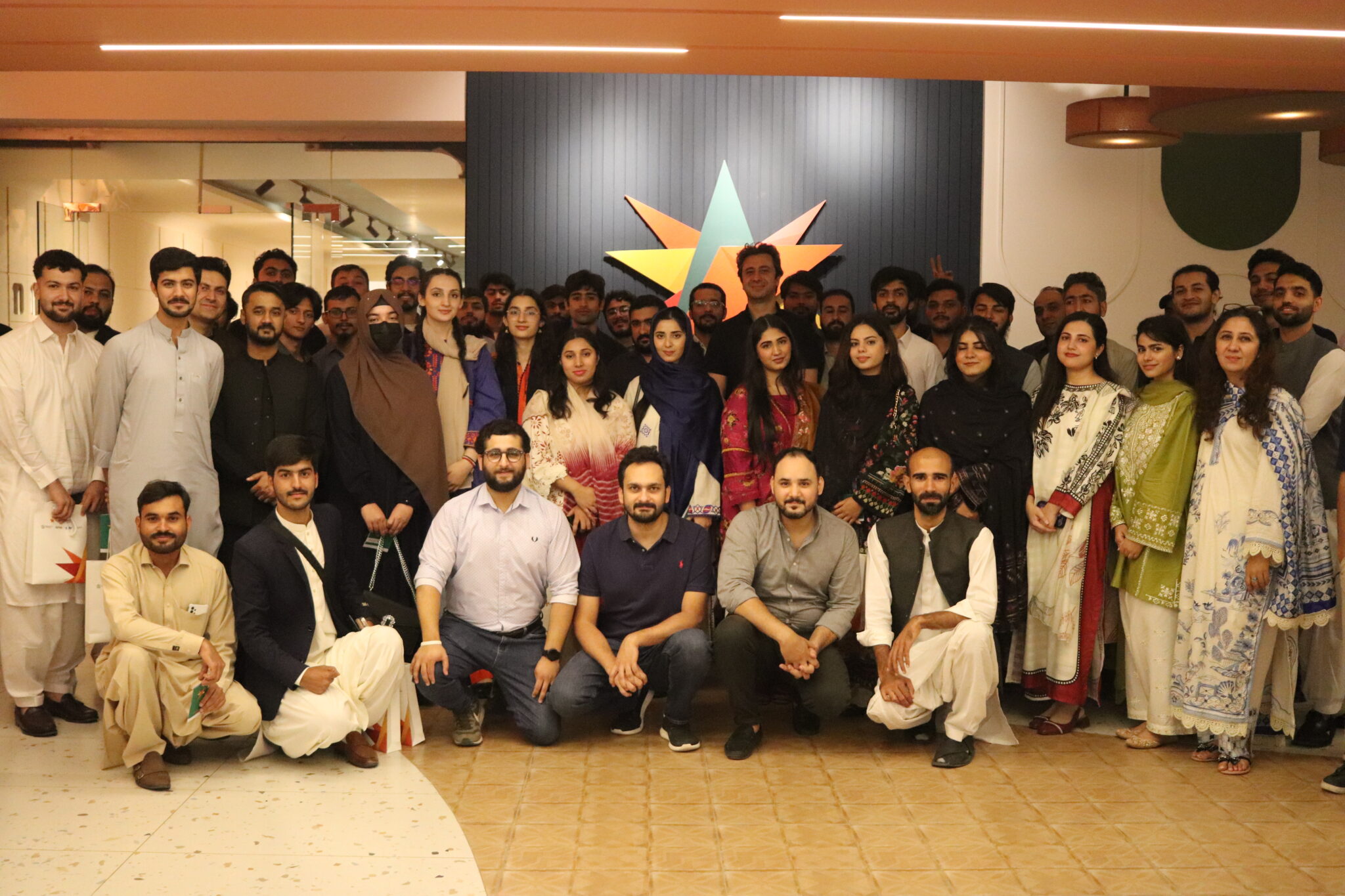
The desk is free. The work is yours.
In its recruitment material, NIC Peshawar advertises services free of cost. A 2026 video tour makes the offer tangible: workstations, meeting space, a workshop hall and a makers lab with 3D-printing and CNC capabilities. The tour also includes a cafeteria. Founders may spend their days discussing customer acquisition, but lunch remains a fairly dependable acquisition problem.
The center’s published facilities include backup power, an auditorium and rooms for meetings. Its support menu extends to cloud credits, marketing assistance, financial planning and legal advice. Those are practical interventions: shared infrastructure can reduce the number of small operational problems competing with product development. Sponsored travel opportunities also give selected startups a way into events beyond their home market.
The educational component combines individual coaching, workshops and access to experienced mentors. Advisors and entrepreneurs in residence work with selected ventures on strategy and execution. Accelerate Prosperity and Orbit Startups contribute to a curriculum presented as internationally informed and adapted to Pakistan. The important unit of progress is a founder’s business decision, whether that concerns a price, a customer segment or a sales channel.
Pre-acceleration begins in the ninth month of the incubation cycle. Orbit’s contribution concentrates on sales, customer acquisition and investor readiness, with access to its international network. That sequence offers a useful discipline: build the commercial argument before asking a larger audience to believe it. Investor introductions create opportunities; founders still have to persuade the person across the table.
and product work
and sales
from month nine
The customer does not care about your cohort number
Consider Eleven.pk, an early retail venture. PTCL’s 2018 annual report says founders Sajid and Naveed Shah began with $75 in inventory and sold it online within 24 hours. It reported PKR 9 million in revenue by December that year. The opening experiment was wonderfully legible: buy a little stock, see whether people pay, then decide what deserves more money.
APRUS worked on a different problem. Brothers Muhammad Mohsin Rafiq and Nauman Rafiq developed an electrosurgical generator. Bera’s Muhammad Rashid and Muhammad Jehangir pursued footwear. These businesses required different expertise and different routes to market. Grouping them under incubation makes sense only if the support can accommodate the difference between selling a fashion product and developing medical equipment.
The 2025 graduation roster widens the picture. STEMverse offers experiential science and technology learning through hardware kits, maker labs and teacher training. Relitic Media works on video production and online presence. Al Futriyaat grows mushrooms and develops products from them. Those are distinct customers: schools and educators, creators and businesses, then food buyers and farmers.
Al Futriyaat supplies a particularly useful answer to what can go wrong first. Its graduation profile identifies shelf-life problems and market fluctuations, and describes a response: mushroom pickles, cookies and powder. Perishability put pressure on the original product; processing opened other ways to sell it. That is a concrete change of direction, grounded in a commercial constraint.
The lesson a reader can copy is modest and actionable. Identify the constraint before expanding production. If stock spoils, more stock can magnify the loss. If a small inventory sells quickly, repeat the experiment and examine the margin. An incubator earns its place when its advice helps founders make those decisions with better evidence.
“To overcome challenges in mushroom shelf life and market fluctuations, we’ve developed products such as mushroom pickles, cookies, and powder”
Al Futriyaat · NIC Peshawar graduation profile, 2025
Who pays for a free place to build?
Free admission to a support program does not mean the program costs nothing. A 2023 PIDE-RASTA research paper by Abdul Wahid and Gulfam Khan Khalid put NIC Peshawar’s annual operating cost at approximately PKR 70 million in its historical comparison. That figure is a study estimate for the earlier operation, rather than a current budget or a funding cheque for founders.
The same paper questioned the reliability of reported startup and employment outcomes across the incubation centers it studied. Its criticism matters because an impressive total can conceal several different things: businesses admitted, businesses still trading, people employed and activity that might have happened anyway. Counting participants answers a different question from measuring additional economic value.
NIC Peshawar’s Cohort 15 material says it has supported more than 400 startups. Read that as the center’s reported reach. For an applicant, the more immediate test is whether the program can help secure a relevant customer meeting, solve a technical bottleneck or improve a sales process. Those are outcomes a founder can inspect directly.
The funding distinction is equally practical. Ignite and the ministry support the center; investors decide whether to back individual companies. Revenue earned by a startup belongs to that startup. Keeping those accounts conceptually separate makes the model easier to understand and its claims easier to judge. A room full of investor logos is the beginning of a conversation.
A local network with an overseas address book
LMKT announced in August 2024 that it would continue operating NIC Peshawar and NIC Karachi through its renewed partnership with Ignite and the ministry. The current Peshawar partner roster includes Orbit Startups, Accelerate Prosperity, Sybrid and IMSciences. It combines investment experience, business education and technology expertise around a regional base.
That combination defines its position among alternatives. A university incubation center can provide a route from campus research to business. A commercial coworking operator sells space and convenience. An accelerator may be more appropriate when a company already has traction and needs concentrated growth support. NIC Peshawar assembles workspace, training and investor access within one local program, with a later pre-acceleration stage.
The wider activity has also reached beyond the building. Its Chitral Ideathon with Accelerate Prosperity covered market research, business strategy and finance. A separate Outcubation program worked with IT services startups on product development and marketing. The center also records climate-focused initiatives and a digital safety session with the Digital Rights Foundation for women participants.
International exposure has a specific example in BizB, the pre-owned fashion business from NIC Peshawar’s fifth cohort. Ignite reported that it attended an acceleration exchange for women entrepreneurs in 2022, supported by the US Embassy in Pakistan and TiE organizations. For a founder, such an exchange can widen the set of people able to interrogate a business model.
The culture presented in these activities is collaborative and instructional. The current team page includes program, startup growth, community and monitoring roles, alongside project director Asim Ishaq Khan. That mix suggests the daily operation requires follow-through as well as events: somebody has to turn a mentor introduction into a useful appointment.
From a freelance invoice to a repeatable business
NIC Peshawar’s newer writing turns toward an identifiable pool of prospective founders: freelancers and digital service providers. Its argument is that people already solving customer problems may be well placed to build products around recurring work. A tool developed for one client can suggest a broader market, provided other customers actually share the need.
The latest cohort directory makes that ambition visible. It lists RestuRun, described as restaurant software combining point-of-sale, inventory and financial reporting; ShadowBook, a WhatsApp checkout and booking product; and FlowForge, which proposes turning natural-language instructions into n8n workflows. These are venture descriptions, not independent verdicts on performance. They show the kinds of operational problems entering the building now.
Cohort 15’s stated priorities include customer discovery, revenue growth and investment readiness. Its recruitment description addresses validated ideas, early traction and technology-enabled businesses. For someone preparing to apply, a useful starting package would be a clear customer problem, evidence from actual users and a short account of where the business is stuck. That is editorial advice drawn from the program’s priorities, rather than an official admissions checklist.
The model is most useful when the founder can participate, accept scrutiny and act on introductions. It will be less useful to someone seeking an automatic investment or hoping a free desk will settle an unresolved demand problem. Hardware ventures, too, must distinguish access to prototyping equipment from the later work of manufacturing and any required approvals.
As of September 10, 2026, the center also lists InvestLab 4.0 for September 21-23, aimed at aspiring and emerging investors. Teaching the people who might write cheques adds another side to the operation. Peshawar needs customers and capable backers as well as founders. NIC’s proposition becomes persuasive when those people have practical reasons to keep meeting.