At one of La Fábrica de Sevilla’s first student gatherings, the parents came too. The October 2022 event brought together 94 young people selected for their academic records, with the promise of help during the next stage of their education. For an initiative dedicated to technology startups, it was a revealing place to begin: well before the company registration, the investment pitch or the first invoice.
Seville was trying to make entrepreneurship an imaginable future for people who had barely finished school. La Fábrica’s proposition still follows that logic. Find talent early, give it somewhere to gather, introduce it to people who have built businesses, and offer progressively more practical ways to try. The patient part of the enterprise is easy to overlook amid the startup vocabulary.
Its name translates as “The Factory of Seville.” The website calls it “La Casa Startup de Sevilla”, the city’s startup house. Both metaphors fit. There is a production process here, but also a front door.
A city puts founders on the teaching staff
La Fábrica emerged in October 2022 through Seville City Council, the Chamber of Commerce and collaboration with the open-innovation platform Sevilla Futura. Local entrepreneurs were part of the design from the beginning. The municipal announcement put experienced founders at the center of mentoring and training, supported by digital professionals and Chamber resources.
The purpose was economic as well as educational: encourage technology companies with international prospects and give innovation a larger role in the city’s development. Offices at Marqués del Contadero supplied an initial base. Schools, universities and the existing business community supplied people who might otherwise have had little reason to meet.
This helps explain where La Fábrica sits in the market. Its offer spans entrepreneurship education, incubation and business introductions. A founder might also use university support, Andalucía Emprende, a coworking community or a specialist accelerator. La Fábrica’s distinguishing feature is the combination of municipal backing, Chamber resources and access to working entrepreneurs across several stages of development.
“La Casa Startup de Sevilla”
The initiative’s own description: the city’s startup house.
Before there is a startup, there is a student
The BIG Idea competition reaches secondary, Bachillerato and vocational students in Seville and its province. It asks young people to formulate entrepreneurial ideas before they need the machinery of an established business. A competition gives that first attempt a deadline, an audience and a reason to explain the idea clearly.
Talento Pro works on a longer timetable. It recognizes strong academic performance and adds professional and entrepreneurship skills during higher education. Its published activities include public speaking, professional presentation and practical technology workshops. That matters because a good exam result and a persuasive explanation of a business idea are different achievements.
By August 2025, the Chamber reported 400 students in Talento Pro. The same update recorded more than 140 BIG Idea submissions and more than 90 Summer Emprendedor registrations. Those figures describe different kinds of participation; they cannot sensibly be added into a startup total. They do show multiple points of entry into an organized local program.
Different programs, different measures. Chamber of Commerce update, August 2025.
The next step can be deliberately short. The 2025 Summer Emprendedor ran from June 23 to 27 at EUSA, with morning sessions combining teamwork, mentoring and startup lessons. Participants worked toward a minimum viable product. The advertised reward for the strongest projects was a route into CámaraTech incubation.
A week to make the idea answer back
The summer format is useful because its pieces are visible. In the original 2023 program, participants worked in teams on proposed ideas, received lessons on Lean Canvas and financing, then applied them with entrepreneurial guides. The closing pitch forced each team to put its work into a form someone else could question. An office visit added a look at a functioning local startup.
There is a modest, copyable lesson here: attach an activity to every lesson. A business-model session should produce a model to challenge. A prototype should create something to discuss with a potential user. A pitch should expose the gaps in the explanation. The program’s structure makes the classroom only one part of the week.
CámaraTech takes that practical intent further. Its incubator advertises ten modules, covering customer development, business models, minimum viable products, marketing, sales, launch, AI and low-code tools, finance and pitching. Personalized mentoring and practical missions sit alongside the teaching. The current page also welcomes people who have the motivation to start but no settled idea.
- 01ExploreSchool ideas and professional skills
- 02BuildTeam exercises and a first prototype
- 03TestCustomer development and mentoring
- 04ConnectFounder feedback and startup conversations
An editorial map of the offer, not a compulsory sequence or a measured conversion funnel.
The price is zero. The work includes hearing “no.”
The incubator’s cost statement is unusually direct: participation is fully funded for entrepreneurs. Admission involves an application, an interview and documentation for selected participants. Removing the fee makes the offer easier to approach; it does not remove the work of developing a business.
Some of that work has theatrical names. Trueque Galáctico is a negotiation exercise. Aventura del NO Infinito involves facing rejection. Beneath the playful packaging is a recognizable problem: someone can understand a sales slide while still dreading the conversation that ends in refusal. The exercises put behavior, as well as knowledge, on the curriculum.
For a participant, the productive question is which assumption the next conversation should test. Does the customer recognize the problem? Is the proposed solution understandable? Would anyone pay? That is an editorial reading of the curriculum’s emphasis on customer development, sales and feedback, rather than a claim about any particular graduate’s results.
Institutional support makes this service model possible. CámaraTech’s funding notice identifies 80 percent European Regional Development Fund co-financing for its coworking and digital-hub project under the 2014-2020 program. That percentage belongs to the named project. It should not be treated as a breakdown of every euro behind La Fábrica.
Likewise, a 2023 mayoral announcement described €1 million for a collection of entrepreneurship activities, including La Fábrica, Sevilla Emprende, Sputnik and other support. The practical distinction is between a participant’s fee, a program’s financing and a city’s wider budget. They answer different questions.
Four startups, four founders, better questions
For a seed-stage team, Boost Your Startup makes the mentoring offer specific. Its published format calls for four startups and four participating founders. Each startup sends a representative to present the project and receive feedback. A useful preparation would be to arrive with a decision that needs testing, rather than an immaculate presentation designed to conceal uncertainty.
Startup Talks supplies the recurring public meeting point. The series is designed to run monthly, bringing entrepreneurs together for discussion and giving developing startups a chance to pitch. Its calendar has covered business models, financing, virtual reality, no-code tools and AI. A June 2026 listing paired Ateni and AlgaSlime for a conversation about moving from idea to market.
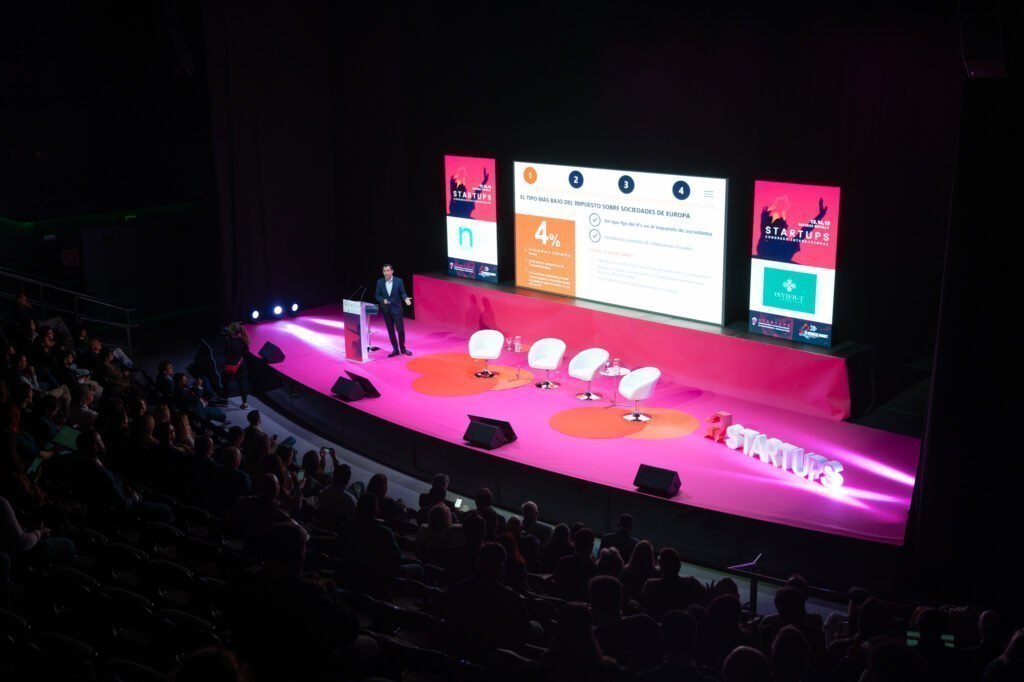
These formats solve an access problem. An inexperienced founder may need a knowledgeable person to challenge a pricing assumption or suggest a relevant introduction. The meeting creates the possibility. Whether it becomes useful depends on the specificity of the question and the follow-up after the chairs are stacked.
The welcome mat includes your children’s school
La Fábrica also looks beyond people already living in Seville. Its English-language softlanding guide gathers resources for international technology entrepreneurs and digital nomads considering a move. The contents run from workspaces and financing to bureaucracy, neighborhoods, schools, transport and healthcare.
That range is one of the initiative’s more human details. Relocating a business can involve a partner, a family and an unfamiliar administrative system. Putting those subjects together acknowledges the actual decision a founder is making. The guide offers an orientation point from which to pursue the relevant services and specialist advice.
Its Research Observatory takes a different approach to reducing uncertainty, offering information about markets, competition and emerging trends. The shared purpose is practical: help people locate information and people they would otherwise have to assemble themselves. For a newcomer, knowing which door to approach can be a service in its own right.
The house is adding rooms
The offer has widened beyond the first-time technology founder. Desafío Consolida for Women combines business strategy, leadership work and mentoring over three months. A February 2026 report described 115 businesswomen having passed through the program and more than 345 mentoring sessions. Its continuing community, called la Tribu, includes former participants who return as mentors.
AI supplies another extension. In November 2025, the Chamber announced an AI Hub connecting Seville businesses and initiatives working with artificial intelligence. Its stated agenda includes training, entrepreneurship and adoption by businesses. Ironhack appears among the collaborators on the hub page. The focus brings established organizations with technology needs into the same broader conversation as people trying to launch something new.
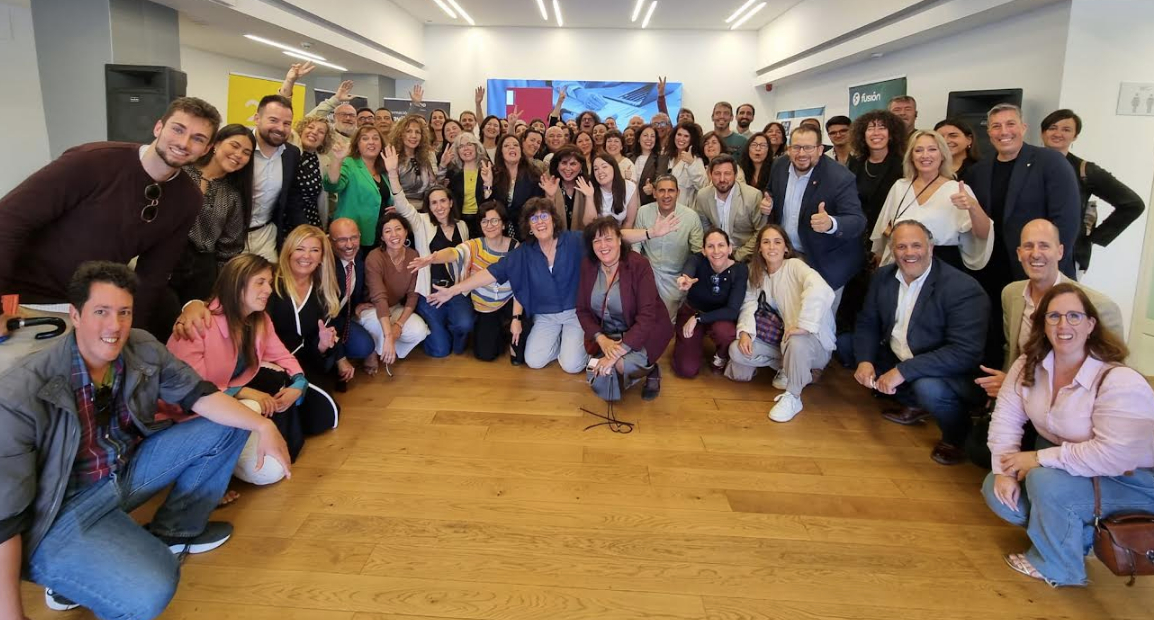
The wider market is crowded enough to make navigation valuable. At the May 2026 Sevilla SVQ Emprende forum, the municipal entrepreneurship service presented a guide to 135 support resources, including 32 incubation and acceleration programs. La Fábrica operates among these institutions. Its ability to connect people across them matters alongside its own activities.
The next useful step
A student can begin with a competition or skills program. Someone exploring a business can investigate incubation. A seed-stage founder can seek focused feedback, while an incoming entrepreneur can work through the softlanding guide. Choosing by stage makes more sense than signing up for everything bearing the word startup.
For another city, the part worth borrowing is the connection between activities: an accessible first encounter, a practical task, experienced feedback and somewhere to go next. It requires mentors who participate, institutions that keep programs running and founders prepared to revise their ideas. Attendance alone cannot supply those conditions.
La Fábrica’s proposition is concrete enough to test. It brings the people, lessons and introductions within reach. The next customer conversation tells a founder what to do with them.
Find your way in
Explore the programs, follow the next conversation or get in touch.