Consider the coffee machine. In most offices, it is a minor convenience. At Unknown Campus, it belongs to the business model. Founder Hendrik Halbe describes putting coffee in the corridor and arranging shared facilities so people cross paths. The question behind this small intervention is rather large: what happens when an aspiring entrepreneur stops being surrounded exclusively by other aspiring entrepreneurs?
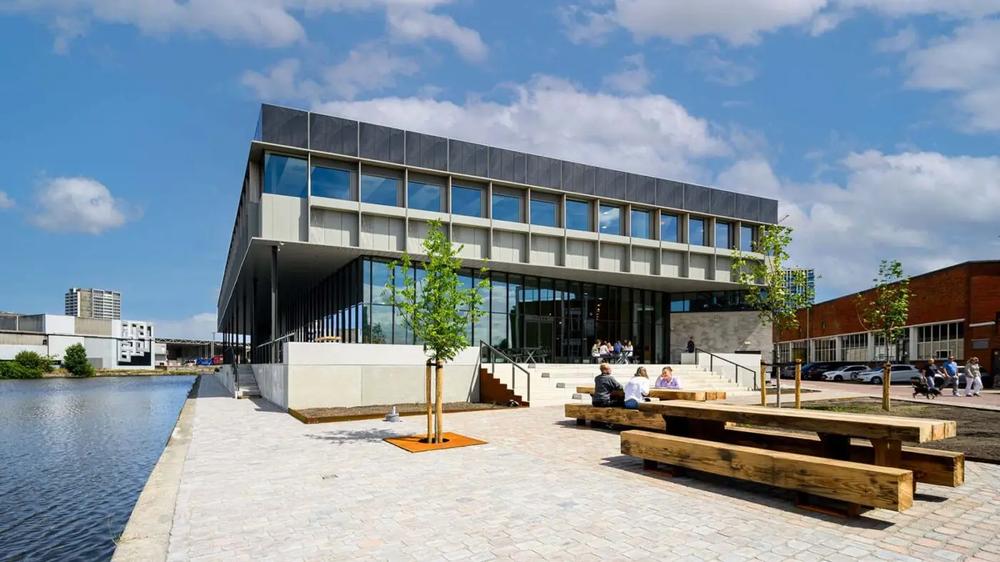
In The Hague's Binckhaven district, Unknown has made that question architectural. Its flagship, Titaan, is a 13,000-square-metre innovation hub in a former tobacco warehouse. Students attend Unknown University of Applied Sciences in the same environment as working companies. A difficult business decision can therefore have a neighbour, rather than merely a chapter number.
- A campus company combining workspace, entrepreneurship education and industry connections.
- A four-year bachelor's, a one-year master's and a €3,000, ten-week incubator programme.
- The experiment: shorten the distance between learning something and trying it.
First, buy the building
The campus belongs to Unknown Group, whose entrepreneurial ecosystem work dates to 2008. The group took its present form in 2018 and merged with investment business VenturesOne in 2021. That combination brought startup scouting, business development and investment experience together. Titaan, opened in 2023, gave those activities a physical meeting point.
The city originally expected to operate the property itself. Its March 2022 sale letter explains the change of mind: experienced private operators wanted ownership, would invest in their concepts and had relevant expertise. The municipality could protect its goals through the tender and leasehold conditions. Unknown Group scored 100 out of 100 across quality, process and price.
The price was €17.095 million. This was a property bid, not a venture funding round. Redevelopment had already proved troublesome: material inflation and unexpected hazardous materials pushed transformation costs up by approximately €2.3 million. Before the first inspirational conversation, there was the considerably less inspiring business of making an old industrial building usable.
A purchase commitment by Unknown Group. The building is part of the proposition, not merely its backdrop.
Your business is the homework
Unknown University started in 2018. Its proposition is straightforward: work on a real venture while earning a degree. The Bachelor of Science in Entrepreneurship & Innovation lasts four years; the Master of Science in Scaling Up takes one. Both sit in applied higher education, with entrepreneurship as the central activity.
The curriculum makes the relationship concrete. Branding, finance, legal mistakes and sales appear alongside incubator work. Students receive personal coaching and work with practitioners. The attraction is immediate relevance: a question about pricing arrives while someone is actually trying to sell something. Unknown says students from more than 35 countries have joined its university.
It also allows a business idea to change. The university's published guidance says a failed startup can lead to a pivot, a new venture or teaming up with others. That is a useful distinction for a student: an unsuccessful product does not automatically make the whole learning process unsuccessful.
Academic work and company building share the same calendar.
The university's FAQ quotes €15,000 per year for the bachelor's, although another tuition paragraph lists €14,200. Treat the cost as approximately €15,000 and confirm the intake price. For someone wanting a shorter commitment, the Get Started programme publishes a €3,000 fee for ten weeks, including a desk, goal-setting sessions and coaching.
A corridor cannot mark a thesis
There is a revealing complication. An external review adopted in September 2024 praised the bachelor's self-directed curriculum, Titaan's learning environment and its quality assurance. It also recommended conditional reaccreditation, asking for clearer assignment requirements, assessment rubrics and evidence that graduation projects demonstrated all intended learning outcomes.
The university currently describes its programmes as NVAO-accredited. The review remains instructive about the model's demands: freedom to build still needs clear standards for judging what someone has learned. A commercially promising idea and a well-assessed degree project are related achievements, but neither can simply stand in for the other.

“Fueling founders to fix the future.”UNKNOWN CAMPUS / ITS STATED MISSION
The other customer has a procurement department
Students are only one audience. Founders can rent offices, flex desks and maker spaces, book meetings or join programmes. Businesses can seek startups that address specific operational problems. Unknown's current Labs offering turns its network into scouting, matching and routes toward industrial pilots. A founder needs a customer; an established company needs a solution it can test.
The group lists energy, food, education and other areas of work. Its Energy Hub Binckhaven connects solar generation, storage, bidirectional vehicle charging and a smart microgrid. The campus becomes a place to test energy systems under working conditions. The participating network includes Euro Battery Group, Stedin, Shell, TU Delft and TNO.
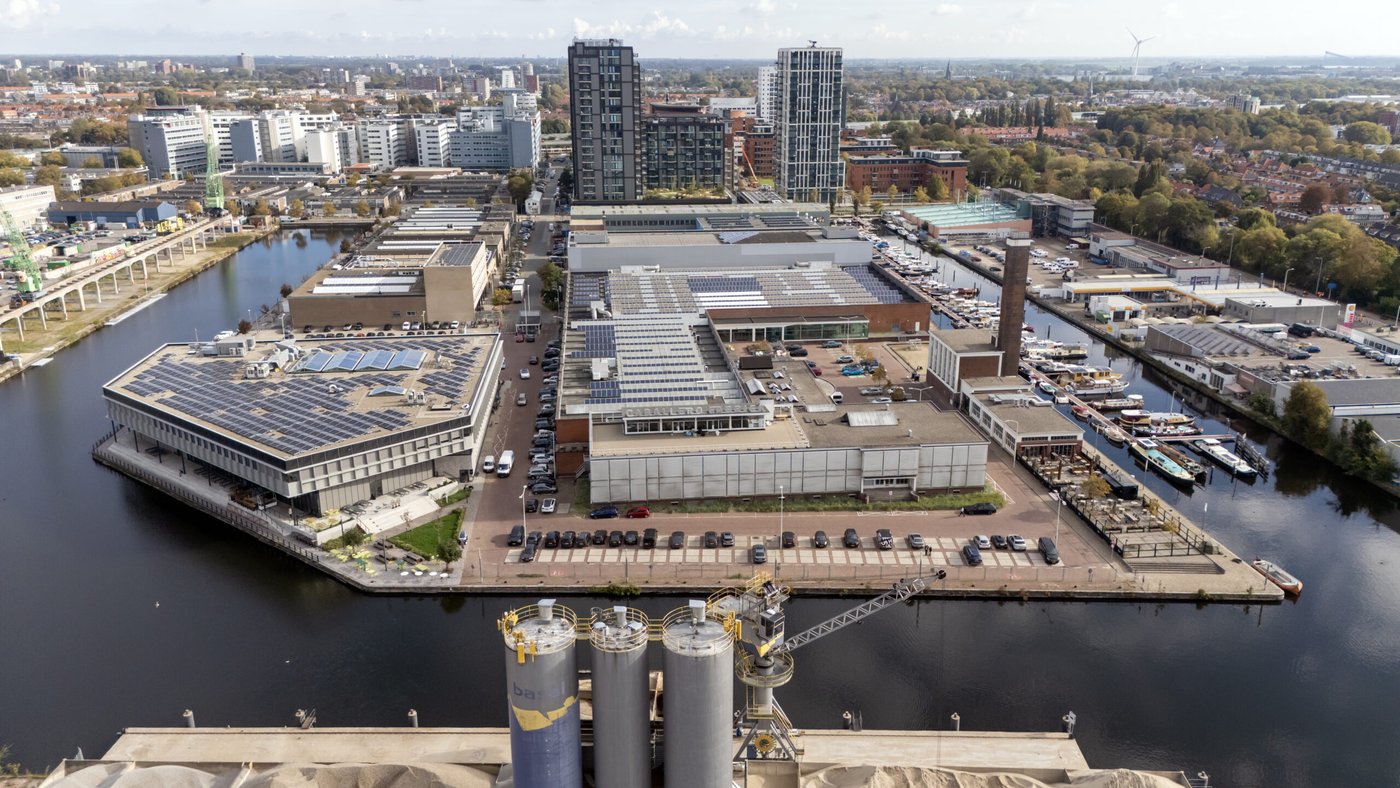
The commercial logic has several legs. The municipal assessment described rent, programming, events and memberships as income sources; the university sells education. Multiple activities can help support a startup-focused location. They also require several kinds of competence: managing a building, teaching students and getting businesses to work together are different jobs.
Borrow the arrangement, earn the encounter
In the market, Unknown sits between an innovation hub, an entrepreneurship school and a corporate innovation partner. Its company-reported 2025 startup-hub ranking placed it 72nd in Europe. Its distinctive feature is the combination: founders, students and industry can remain in contact beyond a single course or pitch event.
The transferable idea is modest enough to copy. Put learners near practitioners, organise repeated encounters and apply each lesson to an active problem. Yet proximity needs willing participants, useful expertise and time. A founder who only wants cheap floor space, or a student who wants a lecture-only education, may find the arrangement an expensive distraction. The coffee machine can start a conversation. It cannot do the work that follows.