A shopping mall is an odd neighbour for a college until the assignment is to persuade somebody to buy something. The Institute of Venture Building occupies EA Chambers in Chennai’s Express Estate, the development that also contains Express Avenue Mall. Here, commerce is close enough to interrupt a theory. Somewhere beyond the classroom, a customer has a budget, a preference and absolutely no obligation to admire your presentation.
- The sequence: learn for a year, undertake multiple internships, then build a venture.
- The stake: IVB promises ₹1 lakh in seed funding per undergraduate founder.
- The bill: ₹13.25 lakh in program fees; a university degree and accommodation cost extra.
- The shorter experiment: an eight-week D2C Lab for school students launches this October.
The year the classroom disappears
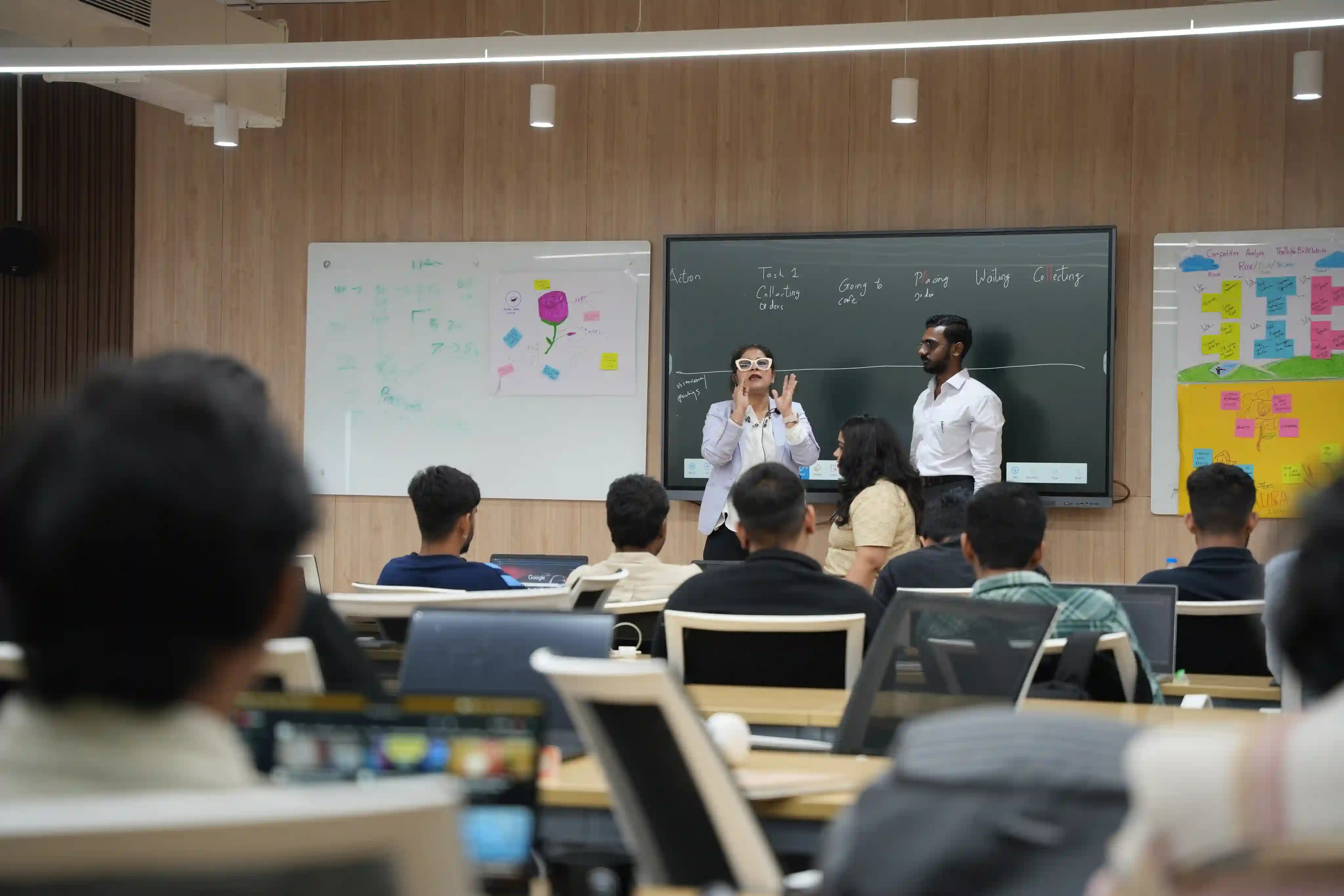
Most discussions about practical education leave the timetable intact. A workshop appears here, an internship there. IVB rearranges the calendar. Its three-year undergraduate program begins with experiential classroom learning, sends students into companies for the second year, and reserves the third for venture building. The last two years are advertised without classes. That is a fairly large concession for an education business to make.
The customer is usually a school-leaver, with a family willing to pay for an unconventional route through higher education. Year one supplies business, technology and people skills. The current program highlights marketing, finance and software development specialisations. The ambition is to give a future founder enough knowledge to build something and enough commercial sense to sell it.
Then the environment changes. Three to four internships put students into different industries and roles. IVB’s employer-facing pitch offers full-time, in-office availability and selection through demonstrated work. Businesses can use interns on marketing channels, operational systems or technology projects. This makes employers participants in the education, rather than visitors arriving at the end to inspect it.
A cheque after the exposure
In year three, students form teams around problems they recognise. IVB promises ₹1 lakh per student, illustrating a four-person team with ₹4 lakh to work with. The money arrives within a larger arrangement: mentors, networks, experimentation and investor encounters. A cheque alone would make a rather thin curriculum.
There is a useful design choice here. Students are expected to encounter workplaces before choosing a venture. In principle, that gives them observations to build on: an awkward process, an unmet customer need, a task nobody wants to perform. It also gives prospective co-founders time to learn how their classmates behave when work becomes inconvenient.
IVB sits between business education and venture incubation. A conventional degree with internships and a campus incubator is an alternative; so is an online degree with independently arranged work experience. IVB’s proposition is to organise the pieces in advance. Its expertise lies in coordinating practitioners, projects and founder support, drawing on partners including CareerTrek, Campus Fund, Mount Judi Ventures and The StepUp Ventures.
The degree travels separately
The credential requires careful reading. IVB awards a program certificate. It does not directly award a university degree. Students are encouraged to pursue a recognised online degree alongside the offline program, with options listed from institutions including IIM Bangalore and IIT Madras. Each university has its own admissions requirements. The arrangement separates the credential from the place where students spend their days.
That distinction also explains an early obstacle. In their February 2026 interview, founders Mano Venkatesh Rajaselvan and Mohammed Amer described parental resistance and student concern about the degree. They responded by explaining the parallel online route, making faculty more visible and bringing in cricketer Ravichandran Ashwin as brand ambassador. Selling an unfinished campus during construction added another difficulty.


The founders are IIM Calcutta batchmates with backgrounds spanning sales, marketing, venture capital and family business. They also have a much older association. “We went to the same school and even had consecutive roll numbers,” Mano told the interviewer. Co-founder matchmaking appears to have begun unusually early.
“We went to the same school and even had consecutive roll numbers.”Mano Venkatesh Rajaselvan
The arithmetic deserves its own lesson
The tuition model is straightforward: families buy the program. The published undergraduate fee is ₹50,000 for admission plus ₹4.25 lakh for each of three years, totalling ₹13.25 lakh. University degree fees are separate, starting at ₹35,000 annually; optional accommodation is listed at ₹17,000 monthly. Seed funding is capital for a business, not a refund of the education bill.
The important comparison is the complete cost against the experience a student expects to gain. Mentorship and internships can make an uncertain venture more manageable. They do not remove commercial risk. A student who needs a campus-awarded degree, a predictable academic routine or a guaranteed financial return has different requirements from the ones this program is designed around.
Eight weeks, five students, one shop
IVB now offers school students a smaller commitment. D2C Lab is advertised for October 18 to December 6, 2026, with separate cohorts in Chennai, Coimbatore and Madurai. Grades 9-12 students work in teams of five. The fee is ₹20,000 each; IVB supplies ₹40,000 per team. The revenue goal is ₹1 lakh-plus, explicitly without a revenue or profit guarantee.
The eight-week schedule moves from product and supplier selection to an online store, campaigns, selling at a flea market and an investor pitch. IVB’s site also reports undergraduate D2C examples: sports merchandise brand Offside Origins at ₹4 lakh in revenue and lifestyle brand Socksee at ₹1.42 lakh. These are institution-reported venture figures. Revenue records sales; it does not tell us what remained after costs.
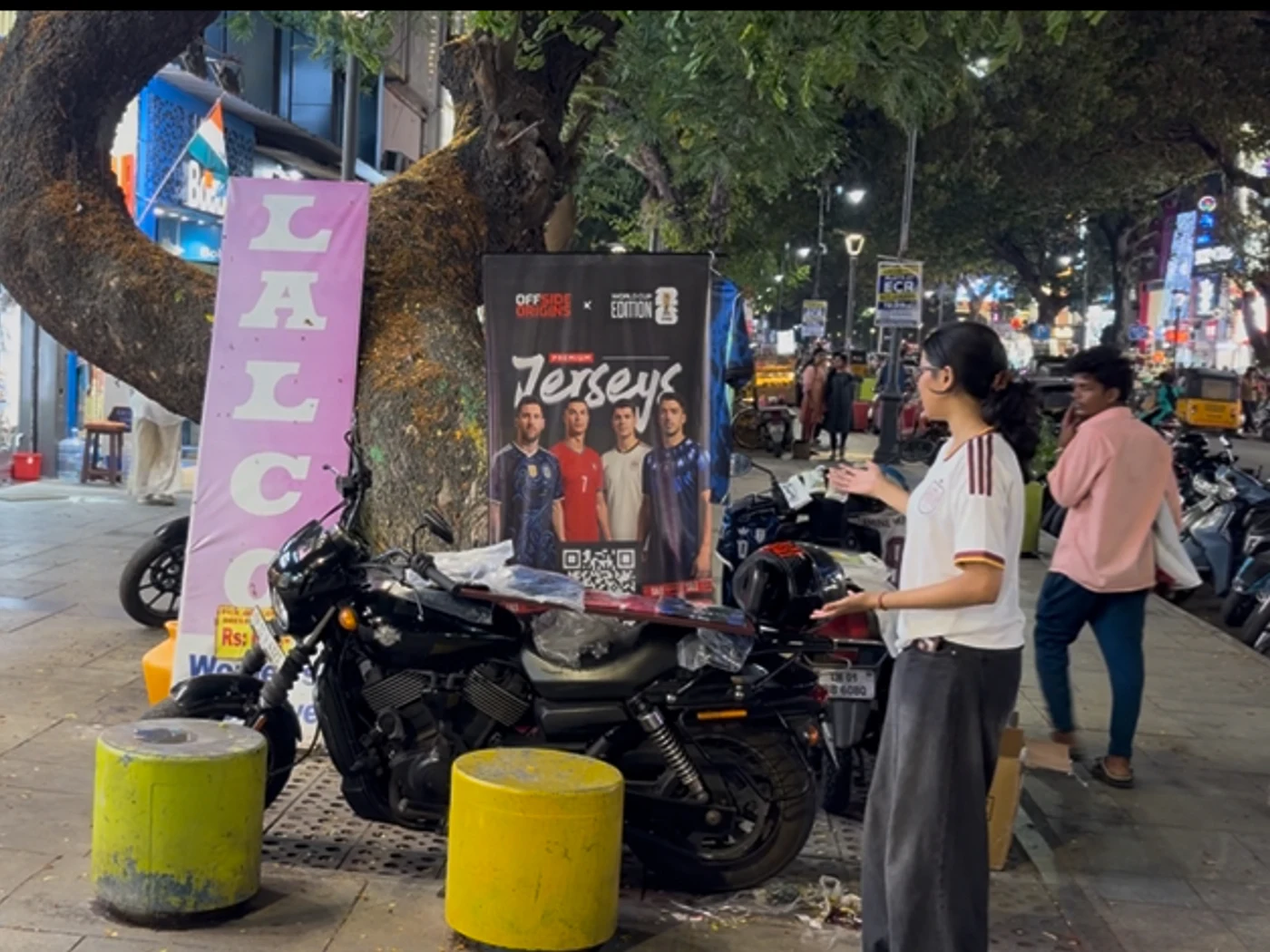
For other educators, the most portable idea is the sequence: observe a business, make something small, sell it, then revise. For students, IVB offers an organised chance to practise that sequence with peers and support. The test of the approach happens when an outsider decides whether the thing they built is worth paying for.