A startup trying to improve the world still has to persuade somebody to buy something. That awkward little transaction sits at the center of BonBillo, a Boston-based accelerator whose founders work on problems ranging from access to healthcare to cleaner delivery fleets. Its pitch brings the Sustainable Development Goals into the same room as customer acquisition costs. The mission gets a hearing. So does the spreadsheet.
BonBillo reports 73 alumni startup teams, more than $103 million raised between them, and 87 percent still operating. Those are company-reported portfolio figures, not a controlled experiment in accelerator effectiveness. They nevertheless give this small organization a substantial story to tell: social entrepreneurship taught through the everyday decisions that determine whether a business can keep going.
BonBillo's published alumni figures. Funding belongs to the startups; it is not BonBillo's own financing.
The world-saving idea meets its first customer
Founded in 2017, BonBillo works with entrepreneurs pursuing social, health and environmental outcomes. Its stated themes include education and jobs, financial inclusion, gender equality, sustainability, and health, food and wellness. This is a broad sector brief with a specific commercial expectation: solve a real problem for a customer.
The alumni list makes that concrete. ArkoPay provides financing to smaller construction businesses in Indonesia. Healthpro helps healthcare providers hire workers on demand. Blitz combines logistics technology with an electric vehicle fleet. In India, Cambrian Bioworks works on more accessible DNA diagnostics. These businesses have different products, buyers and operating constraints. Their common classroom problem is turning an ambitious purpose into an offering people will use and pay for.
BonBillo's customer-discovery material starts with market segmentation and conversations with end users. Founders investigate what prompted a purchase and how a buyer searched for a solution. The aim is to understand a buying journey before delivering a sales pitch. For a social enterprise, that exercise can be particularly revealing: the beneficiary, daily user and person controlling the budget may be different people.
That last distinction has consequences. A useful product can stall because its founder understands the user but has never mapped the purchasing decision. BonBillo's acquisition curriculum explicitly examines the champion, economic buyer, influencers and people with veto power. The practical lesson is almost impolitely specific: find out who can actually say yes.
A former portfolio manager, a roomful of founders
Founder and CEO Suraj Kripalani previously worked as a portfolio manager at BlackRock. BonBillo's team listing pairs that financial background with education and product experience: program adviser Julia Turnbull works in custom programs at MIT Sloan Executive Education, while product director Swapnil Chugh is identified as the founder of INSEAD Learning Hub. The wider mentor roster spans customer acquisition, impact assessment, product design and operations.
The organization developed its international format early. In January 2020, eight startups completed a two-week Cape Town pilot run with Startupbootcamp AfriTech. Seven came from South Africa and one from the United States. The strongest teams were to be considered for BonBillo's subsequent accelerator cohort. That was a small, tangible experiment in taking entrepreneurship training between markets.
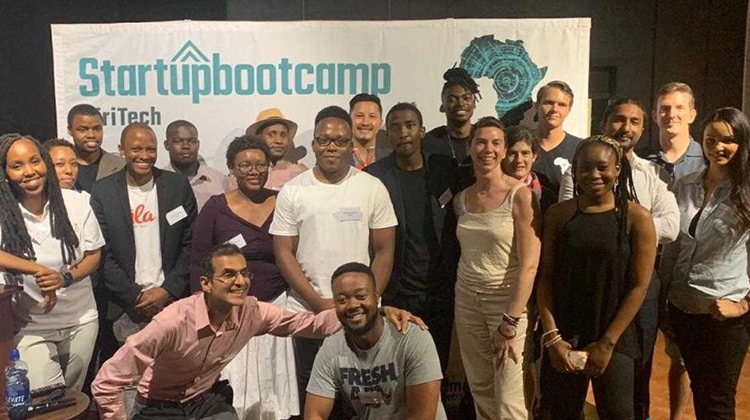
A participant's account from the preceding year adds texture. Writing about a ten-week Boston program on behalf of LULA, Azra Mboweni singled out weekly individual mentorship, resources and the subjects covered. It is a description of repeated attention rather than a single inspirational afternoon. BonBillo's published values emphasize trust, compassion and collaboration; that account offers one participant's view of how the teaching felt.
The homework is the business
BonBillo assembles its teaching from established methods: Bill Aulet's Disciplined Entrepreneurship, the Google Ventures Sprint approach, HubSpot's customer-growth frameworks and Theory of Change. Its contribution is the combination, sequencing and guidance as founders apply them. The names on the reading list are recognizable; the work is specific to the company in the room.
Consider the product sprint. BonBillo's public guide has participants narrow a problem, sketch competing solutions independently, select an approach, build a prototype and test it with users. Independent sketching gives quieter ideas a chance before group discussion takes over. The prototype exists to expose a weak assumption while changing it is still relatively cheap.
BonBillo also used the method itself. Its guide describes a remote sprint to design the customer experience of its own platform and a Miro canvas shared for other teams to use. In April 2020, it applied Sprint to map responses to the coronavirus crisis and frame questions entrepreneurs might tackle. These are documented examples of the organization using the tools it teaches.
- 01 / NarrowChoose a customer and a costly problem.
- 02 / TestPut a prototype in front of real users.
- 03 / PriceConnect customer value to a business model.
- 04 / MeasureTrack commercial progress and social outcomes.
The business-model lessons ask founders to examine customer preferences, competition, cash flow and the timing of value creation. A subscription, one-off payment and shared-savings arrangement distribute risk differently. A founder can copy that exercise immediately: write down when the customer receives value, when the company gets paid, and which party finances the gap.
Good intentions get a measurement plan
The impact work introduces a second chain of reasoning. Theory of Change connects an organization's activities to outputs, outcomes and eventual impact. Selling a service is an observable event. Demonstrating that the service changed someone's circumstances requires another step.
BonBillo's material features impact-assessment specialist Yaquta Fatehi explaining how to size data collection to the resources available. Founders consider what information would reveal gaps, when they will use it and how to collect it. In some circumstances, outputs can serve as proxies supported by existing development research. The exercise should help a team make decisions, as well as communicate with funders.
That is a useful discipline for anyone borrowing the method. Pick a measurable result, explain the assumptions connecting the product to that result, and revisit those assumptions as evidence arrives. A dashboard full of activity counts can look industrious while answering very little. The harder question is whether the intended change followed.
The mentor now has an AI toolbox
BonBillo's current agent catalog advertises more than 50 tools organized around familiar founder tasks. A pitch-deck grader reviews an uploaded deck. A grant-matching agent takes information about the startup, target customer and location. Other tools address positioning, financial projections, customer journeys and product roadmaps. The attraction is a shorter route from a vague question to a draft that a founder can inspect.
In a September 2025 episode of Prompted: Builder Stories, Turnbull described converting practical funding knowledge into a grant-discovery agent. Building the tool forced the team to prioritize what mattered in its expertise. That is a revealing change in the delivery of advice: a mentor's accumulated judgment has to become explicit enough to guide a repeatable interaction.
“The only thing worse than not having any funding is having the wrong kind of funding.”
Julia Turnbull, Prompted: Builder Stories, September 2025
The tools are most persuasive as preparation for a human conversation. A proposed customer segment needs interviews; an estimated acquisition cost needs actual spending and conversions; an investor match needs current verification. Generating an answer is easier than establishing that it fits the business. BonBillo's combination of software and mentorship gives founders a way to challenge the draft.
Three ways in, with different bills
The Global Innovators Community starts at $99 a month for one founder, with a six-month commitment. Its published team tiers are $199 for up to five people and $399 for up to ten. Monthly individual mentoring expands from 20 minutes to 30 minutes to an hour across those tiers. Weekly online sessions and monthly city gatherings supplement the learning platform and tools.
The Growth Partner Program adds five hours a month of mentorship and execution support across finance, product and marketing, plus custom agents. Its dedicated page advertises an early-bird price of $1,249 a month with a six-month commitment. That makes the initial commitment $7,494. Five hours can help finish a projection model or settle a roadmap; it is a limited allocation of senior help.
Arithmetic from the dedicated program pages. Accelerator fees and equity terms are separate.
Accelerator pricing needs closer reading. The homepage advertises a one-week bootcamp starting at $4,999. The global accelerator page describes two weeks and still references $3,499. Cape Town's page contains both a $3,499 pricing paragraph and a $4,999 application fee. A prospective participant should get the cohort's duration and full cost in writing before budgeting travel.
Cape Town's terms also describe a $15,000 investment at the startup's current valuation, typically for 0.5 to 2 percent when BonBillo is the first investor. The listed fee excludes flights, accommodation, daily food and commuting. A conditional provision allows teams to repurchase the equity at its purchase price within three days after the accelerator ends. The fee, investment and ownership stake deserve separate lines in the calculation.
What survives the flight home?
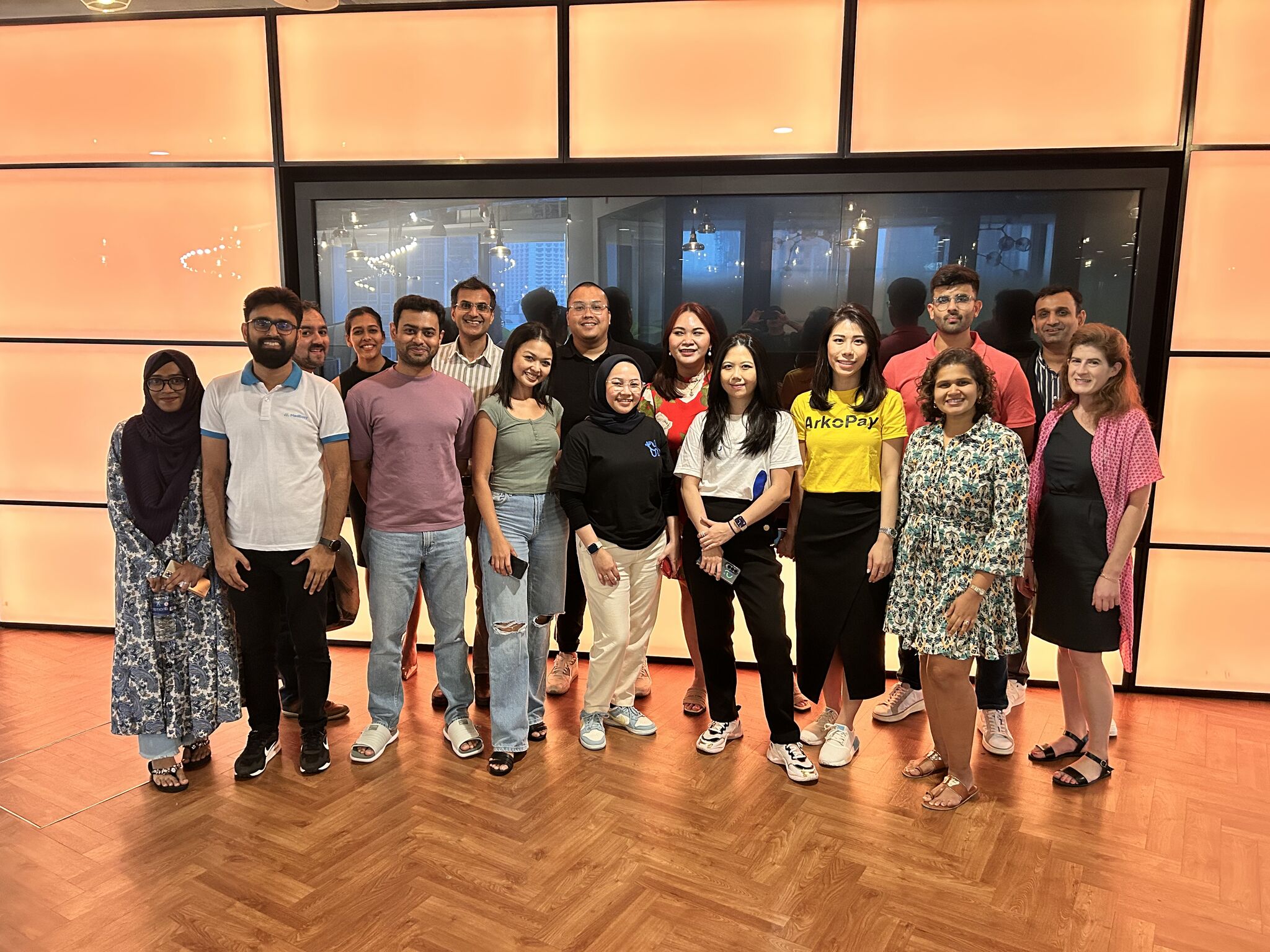
The global program describes three months of weekly check-ins after the bootcamp and twelve months of community access. Partner benefits include cloud, software and startup-service offers from organizations such as AWS, Google Cloud and HubSpot for Startups. These benefits can reduce eligible expenses; their advertised value is not cash in the bank.
BonBillo occupies the space between entrepreneurship education, a founder community, part-time operating support and an accelerator that takes equity. Its combination is most relevant to an impact startup with initial traction and specific questions about customers, product or fundraising. A team seeking extensive daily execution would need to account for the support hours. A business expecting an investor introduction to guarantee a round would be buying the wrong expectation.
Goodable founder Muhammad Lila's testimonial supplies the plainest explanation of the appeal: “I knew what I didn't know.” BonBillo gives that admission a curriculum and a calendar. The part a reader can copy is equally plain: identify the uncertain assumption, design a small test, assign someone to it, and set a date to examine the result. Even a world-changing idea needs next week's appointment.
Keep exploring
BonBillo website · Community plans · Try the AI tools and watch demos · Founder stories · Newsletters
LinkedIn · Twitter / X · Facebook · YouTube videos · Singapore Demo Day video