Géraldine Blin had a problem that looked, from a distance, like success. ARS 95, the Val-d’Oise association she directs, had almost doubled its budget and workforce. By January 2026, it reported €10 million and 130 employees. Yet its trajectory had become harder to read. Keeping the machinery running left less room to decide where it should go. Blin joined Antropia ESSEC’s Scale Up program in July 2025. Growth had supplied the occasion. The need to think supplied the reason.
- Partner-funded support for French social enterprises and associations.
- Strategy, mentoring and impact evaluation, with work between sessions.
- Free tuition; participants still invest time and cover some expenses.
The growth problem hiding in plain sight
That is a useful way into Antropia. An accelerator sounds like a place that tells people to move faster. Here, some of the work involves making room to choose. Blin described external challenge, an entrepreneurial mentor and conversations with other leaders as valuable parts of her experience. Her organization already had employees, beneficiaries and a substantial budget. What it sought was a more deliberate way to develop.
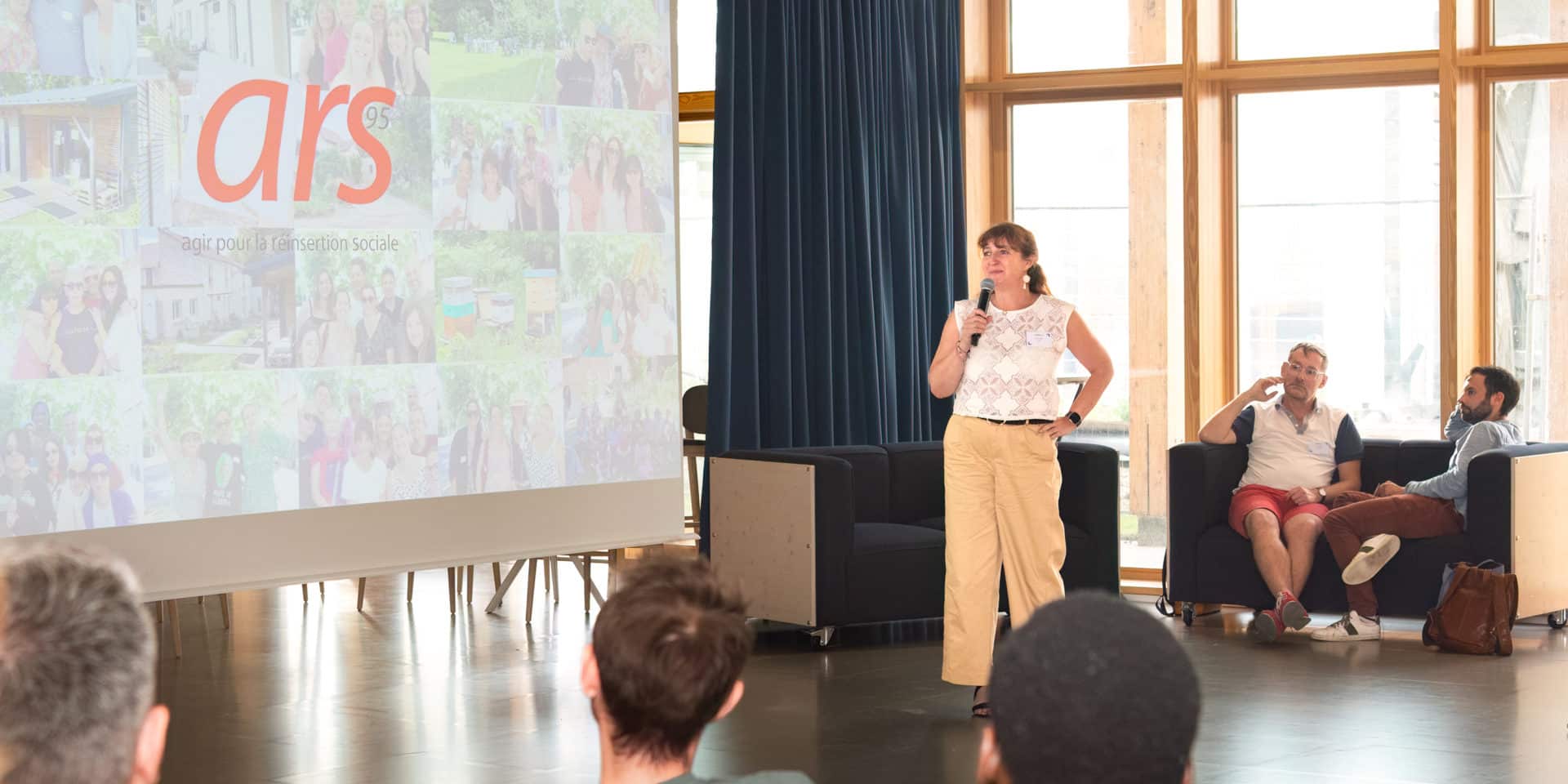
Antropia’s practical subject is the connection between a social mission and an organization capable of delivering it. A housing initiative needs workable economics. A community service needs governance. A promising intervention needs evidence about the difference it makes. These questions can become more awkward as the organization grows.
A business school for decisions that matter
Created in 2008 by ESSEC’s Social Innovation Chair, with professor Thierry Sibieude identified as its founder in ESSEC publications, Antropia sits inside a management-school ecosystem. Its resources include teaching, experienced entrepreneurs, specialist experts, students and connections to finance partners. The school gives the accelerator an academic base and a network it can put to work.
There is local work alongside the national offer. In Val-d’Oise, Antropia helps entrepreneurs and departmental teams structure social experiments. The process begins with listening to public-service specialists and understanding local needs. It then moves toward a practical test, evidence gathering and consideration of whether the solution can be repeated elsewhere. That sequence gives a founder something more useful than a general invitation to network: an operational problem and people who understand it.
Its users include association directors, cooperative leaders and founders of commercial social enterprises. Their legal structures differ, but they share questions about money, teams, partnerships and impact. Scale Up mixes collective work with some teaching separated by legal status. That is a sensible detail: shared problems do not make an association and a company interchangeable.
The business model also explains the offer. Partners finance the programs so selected entrepreneurs can attend without tuition fees. Antropia lists organizations including BNP Paribas, Malakoff Humanis, Banque des Territoires and the European Social Fund among its partners. The relationship brings corporate, public and philanthropic institutions into an ecosystem serving impact organizations.
Free tuition. A very real commitment.
Scale Up turns that support into a working schedule: more than 70 hours of workshops, monthly program check-ins, strategic mentoring and specialist coaching. Participants develop a three-year roadmap. Toward the end, a collective of experts challenges the strategy in a “crash test,” followed by a Demo Day presentation to finance and partnership contacts. A plan gets an audience before it gets treated as settled.
- 01Bring a proven solution
- 02Work with mentors and peers
- 03Challenge the three-year plan
Free attendance still has a price in attention. Scale Up asks leaders to reserve at least two days each month. Modes d’emploi, the employment-inclusion program, explicitly leaves transport, accommodation and meals to participants. An organization must be able to spare its decision-maker and use what comes back. Introductions to funders create opportunities; they are no promise of a cheque.

Teach the organization to count
Size Up addresses a different bottleneck: knowing what an intervention achieves. Its aim is internal capability. Participants use ESSEC’s impact-evaluation laboratory methods, beginning with a Theory of Change: an explanation of how activities are expected to produce results. They define indicators, collect data and analyze it, then produce an internal report focused on a stakeholder group.
The commitment is substantial. The program includes eight seminar days and asks for roughly one-fifth of a full-time employee’s time, with leadership involved. Antropia reports that 89% of participants have internalized the approach. Read that as an organizer-reported outcome. It describes adoption of a practice, rather than proving how much additional social benefit the training caused.
The useful question is what changes for the people the organization serves.An editorial reading of Antropia’s impact-led approach
In a 2024 interview, then-director Jérôme Schatzman described a sector with more support offers and greater expectations of economic viability. Proving impact had become more important. Antropia’s position makes sense within that market: management support for organizations expected to demonstrate both a durable model and a worthwhile result.
Who gets a seat in the room?
The 2026-2027 Scale Up cohort contains eleven organizations. La Bouquinerie du Sart uses secondhand books and clothing to help people in accommodation centers move toward employment and housing. Familles Solidaires works on inclusive housing. Proxité supports young people through mentoring. The activities vary; the task of organizing a larger, dependable service connects them.
The latest offer also includes Modes d’emploi, which plans to bring together 24 employment-inclusion organizations in 2027. Cooperative programs address food-system and ecological transitions. makesense and Ronalpia, familiar names in French impact support, are collaborators on Territoires Nourriciers. Choosing support therefore involves finding the right program, territory and stage of development within an interconnected market.
Selection involves active searching, too. For the 2026 Scale Up intake, Antropia says its team proactively identified half of the applicants; the rest arrived through national communication. Shortlisted leaders faced an in-depth interview, then a committee including partners and alumni. Access to the room depends on an assessment of both impact potential and whether the program fits the organization’s needs.
Fit is concrete. Scale Up’s general criteria include three years of operation, a proven solution, at least €250,000 in revenue or budget and a small salaried team. The current Size Up intake has specific eligibility around aging, caregivers and related issues. A founder with an untested idea, or a team unable to release staff time, needs a different starting point.
The part any reader can borrow is straightforward: protect recurring strategy time, put an experienced outsider beside the leader, write down the route ahead and invite challenge. Assign somebody to measure what changes. Antropia packages those habits into a program. Their value begins when an organization makes room to practice them.
Antropia ESSEC ↗ Scale Up ↗ Size Up ↗ Stories & updates ↗ LinkedIn ↗ Facebook ↗ X ↗