Mark Horoszowski had something to give away, and the world was making it awkward. He had left Seattle with professional experience in accounting, marketing, and building a business. He wanted to volunteer those skills while traveling. The available invitations often seemed to assume he would prefer a shovel. There were houses to build and fees to pay. Finding an organization that actually needed the work he knew how to do required considerably more effort.
It is a peculiar inconvenience: being willing to work for free and still struggling to find the right assignment. But that inconvenience contained a business problem. Professionals wanted to contribute. Organizations needed expertise. The two groups were having trouble finding each other. Horoszowski would eventually help build MovingWorlds around that gap, with a name for the exchange that sounded like it had packed a laptop and walking boots: Experteering.
A respectable career, briefly
Horoszowski grew up in Seattle, the son of parents from Poland and Slovenia. Helping others was familiar family territory. So was accepting help. That combination matters in his account of his upbringing: service involved reciprocity, rather than a permanent division between people with answers and people waiting to receive them.
The conventional professional equipment followed. He earned business and accounting degrees at the University of Washington and took a job at PwC. Accounting offered a sensible destination for someone who understood numbers. One busy season was enough for him to decide that it was a poor personal fit. A degree can get you through the door; it cannot make you enjoy the furniture.
He moved into a marketing agency, progressing from accounting into client management and then helping launch a digital strategy subsidiary as search and social media became business tools. During the Great Recession, he wanted the agency to do more for nonprofits. He and its owner had different ideas about growth. He hired his replacement and prepared to leave.
There was another nudge. An application to the Acumen Fund Fellowship got him as far as interviews, but no further. He responded by deciding to organize his own version of the experience. Two months after the rejection, he quit his job. A politely worded refusal had become an unusually elaborate travel plan.
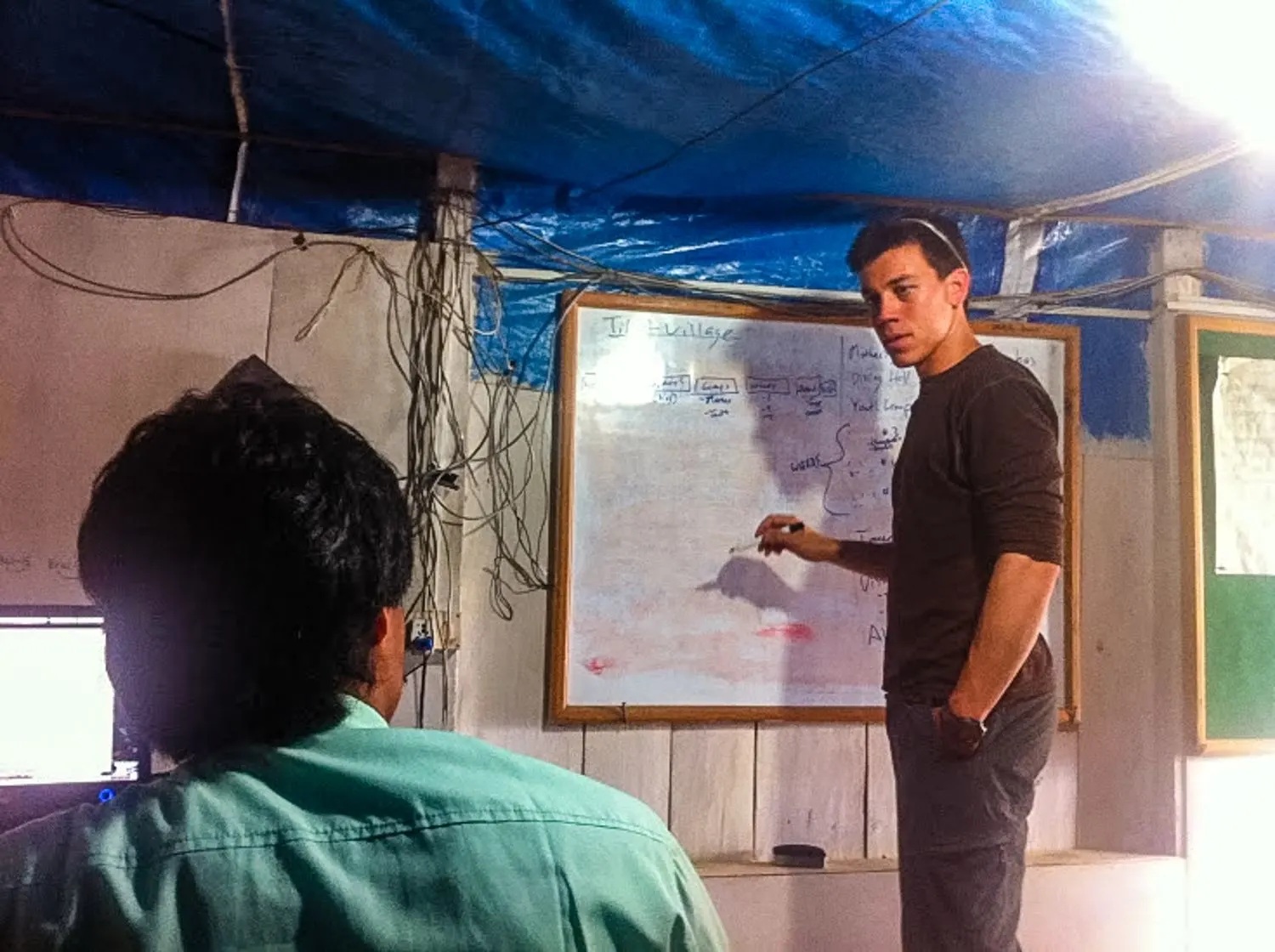
Brunch in Buenos Aires
The journey took him through places including Nepal, Malaysia, Indonesia, New Zealand, and Argentina. He worked on business, marketing, and organizational projects. The question he carried was practical: what helped social businesses flourish? His later account emphasized capable leaders, effective teams, and connections. Money belonged in the picture, but so did the people who could help an organization put it to work.
In Buenos Aires, he met Derk Norde through a mutual friend's event. Norde brought a different vantage point: experience with social entrepreneurs and impact investment, including co-founding BiD Network. A few days after their first conversation, they met again over Sunday brunch. The setting was agreeable; the problem they were discussing was stubborn.
Norde knew entrepreneurs who needed experienced people on their teams and could not afford commercial rates. Horoszowski had encountered the difficulty from the other direction, offering his own professional skills. Their social circles supplied another clue: plenty of people wanted more purpose in their working lives. Together, these observations suggested that introductions, properly organized, could be valuable infrastructure.
The idea took shape in 2010. MovingWorlds' early development involved piloting, learning, and building a team, including time in Chile. By October 2014, the company announced its global Experteering platform after three years in beta. This was a business assembled through successive attempts to make the exchange work, rather than a brunch conversation that obligingly turned into finished software.
A scoped project. Useful work. Learning on both sides.
The host gets a say
The early model made a consequential choice about who should define the assignment. Local organizations identified the expertise they needed. Professionals could then find projects suited to their experience and circumstances. This sounds modest until one considers the alternative: arranging an experience around what a visitor would enjoy doing and hoping it proves useful to somebody nearby.
MovingWorlds provided a matching platform and support, rather than operating every project itself. In its early arrangement, host organizations could contribute accommodation and other local benefits in exchange for expertise. The professional supplied time and knowledge. Both sides had something to offer, and both had a reason to take the planning seriously.
In 2013, MovingWorlds won the Northwest Entrepreneur Network's First Look Forum, receiving a package of business-building services valued at $50,000. The recognition came while Horoszowski was explaining a problem that could sound almost absurd: internationally mobile people with useful skills were paying to perform work unrelated to those skills. An accountant abroad remained an accountant. Travel had not automatically improved his masonry.
Experteering offered an alternative. The work might be financial planning, communications, engineering, or another professional discipline. Its usefulness depended on the fit. The point was to connect a demonstrated need to an appropriate person, then give that relationship enough structure to produce something the organization could keep using.
“Learn, spend time talking to potential customers, and try things… fast.”
Mark Horoszowski, 2021
The work changes the worker
The bargain also made room for the professional to learn. By 2016, Horoszowski was describing an institute that combined overseas skills-based projects with coaching, mentoring, industry exposure, and a network. Someone reconsidering a career could test a direction through actual work, with people who had a reason to care about the result.
Corporate interest expanded the model. Microsoft, Siemens, and Kering were among the companies he named as asking MovingWorlds to develop programs. An assignment with a social enterprise could support a host organization while giving employees a different setting in which to practice leadership. The challenge was real, the resources unfamiliar, and the usual office assumptions less dependable.
His own teaching runs alongside the company. He has served as adjunct faculty at the University of Washington Tacoma's Center for Leadership and Social Responsibility and is an RSA Fellow. The connection between professional development and useful service has become a recurring subject of his work. A career move, in this view, can include finding out whose problems your existing experience helps solve.
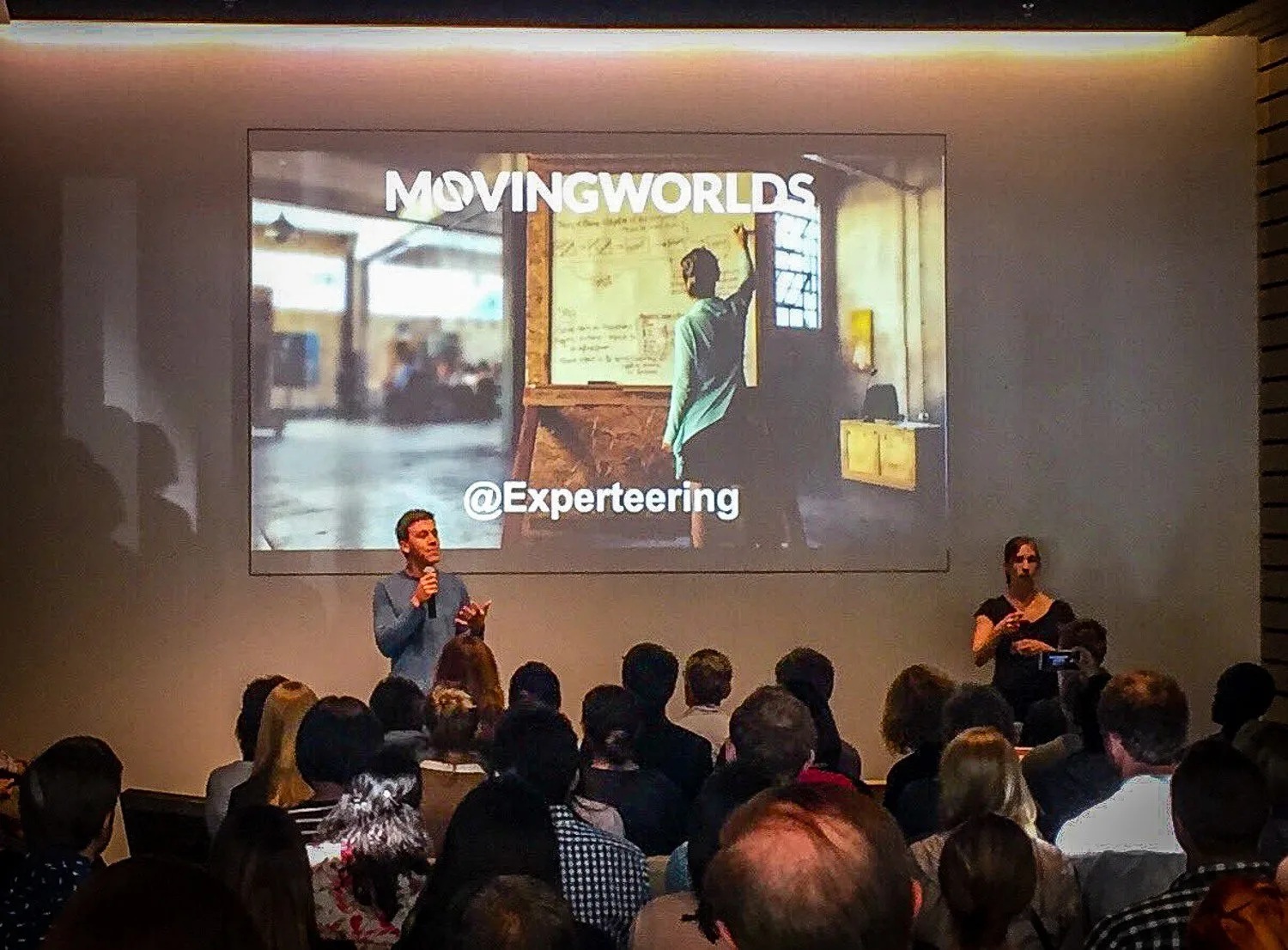
A founder still learning to lead
Horoszowski's enthusiasm for learning extends to an inconvenient subject: his own conduct. Discussing leadership in 2022, he acknowledged that some of his natural tendencies did not help create the culture his organization needed. His task was to notice how he reacted, listen to colleagues, and change how he communicated and collaborated. A founder's habits do not become good management simply because the founder owns them.
He has described fairness as a personal preoccupation and pointed to his parents' quiet, community-based giving as an influence. Among the leaders he has looked to are Upaya Social Ventures co-founder Sachi Shenoy and Acumen founder Jacqueline Novogratz. What attracts him is sustained work on difficult problems and commitment to principles, including when those principles complicate the job.
Away from work, the Pacific Northwest still supplies his preferred terrain. Hiking, trail running, backcountry skiing, and cross-country skiing feature in his account of how he gives his mind room to work. His public writing has also acquired a more domestic classroom: in 2024 and again in 2025, he published reflections on what becoming a parent was teaching him about entrepreneurship.
- 2010The founding idea takes shape.
- 2014The global Experteering platform launches.
- 2022The TRANSFORM Support Hub brings partners together.
- 2025The hub is consolidated into the MovingWorlds platform.
Keep asking what would help
The organization has grown beyond its original travel-and-volunteering proposition. The TRANSFORM Support Hub, launched in 2022 with partners including SAP, TRANSFORM, and Unilever, connected social enterprises to professionals, peers, corporate partners, investors, and learning material. In 2025, it was consolidated into the MovingWorlds platform. The expanding network retained the question that had made the first introduction useful: what support does this enterprise actually need?
Horoszowski is still taking that question into public conversations. In March 2026, he appeared on The Purpose Profit Shift to discuss professional expertise, corporate partnerships, and the discipline of focus. His LinkedIn writing that year challenged corporate social responsibility's loose claims and examined its relationship with the World Cup. The vocabulary has become more corporate; his attention remains on whether the activity produces something worthwhile.
He also writes and interviews entrepreneurs through How to Help a Few Billion People, alongside Caroline Asiala. The project explores organizations balancing purpose and profit, including the decisions and setbacks behind them. Listening to other founders fits the pattern of his own beginning: an existing professional path stopped answering his questions, so he went looking for people working on different ones.
There is an appealingly unglamorous proposition beneath it all. Before buying a ticket, announcing a mission, or offering to help, ask what work needs doing. Then ask whether you know how to do it. Horoszowski's journey began with that mismatch and became a company devoted to making better introductions. The useful thing in your luggage may already be the thing you do for a living.
Follow the work
More from Horoszowski, plus conversations that follow the idea out into the world.