Rachael Chong had learned investment banking. Volunteering gave her lumber to haul. The mismatch sounds like a small inconvenience until you consider the other side: somewhere, a nonprofit needed financial help. The person and the problem existed. They simply had no convenient way to find each other.
Chong later helped build BRAC USA, drawing on friends and former colleagues for discrete professional assignments. That experience supplied the more useful insight. People would donate expertise when the request made sense. Catchafire, founded in 2009, turned that observation into a marketplace for getting nonprofit work done.
- Professionals donate skills through projects and one-hour calls.
- Foundations and companies fund programs; nonprofit access is free.
- The trick worth copying: agree on a deliverable before asking for help.
Put a finish line on generosity
“Help with marketing” is an invitation to confusion. A social media content calendar gives both parties something to discuss, make, and finish. Catchafire’s catalog contains more than 150 project types across finance, HR, design, technology, strategy, and other functions. Each arrives with a scope, milestones, and deliverables. The template does some of the management before anybody meets.
A nonprofit chooses and customizes a request. Professionals apply with relevant experience and an explanation of their interest in the cause. The organization reviews applicants; projects include an interview before work begins. This is a selection process, with judgment on both sides. Software can introduce people. It cannot decide whether they understand each other.
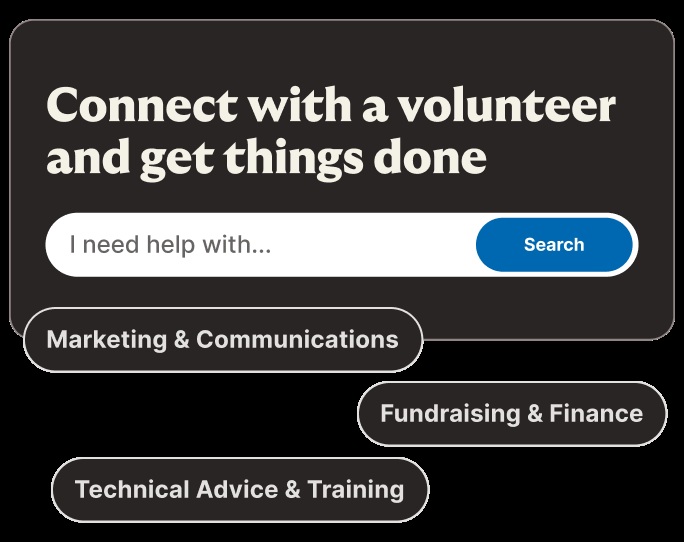
Projects typically require five to 50 volunteer hours. A one-hour consultation provides a smaller entry point: discuss the problem before commissioning the solution. For a professional, that makes volunteering easier to fit around work. For a nonprofit, it creates room to ask a basic question without accidentally recruiting an entire department.
Volunteers do not need a nonprofit résumé if they meet the assignment’s professional prerequisites. That opens the door to people whose experience sits in a different sector. A designer can bring design; a finance professional can bring finance. The nonprofit supplies the context that makes the skill useful, which is why the conversation before the work matters.
the need
the project
the match
the work
Free to use. Someone still pays.
The paying customer often sits outside the match. Foundations sponsor access for nonprofits; companies buy employee volunteering programs. Catchafire packages the software with coaching, training, implementation, and reporting. Its pricing page offers funders access across their network, charging for organizations that use the program. The sale is partly about making a whole portfolio easier to support.
Current membership guidance describes foundation sponsorship or an application for a free place, subject to availability. Volunteers donate their labor. Nonprofits still contribute something scarce: time to explain the work, answer questions, and put the result into use. A free consultant cannot rescue a project nobody inside the organization has time to own. Urgent work needing guaranteed availability may call for a paid provider instead. A continuing staff responsibility also needs a continuing owner. The practical fit is a bounded assignment with someone available to review it, make decisions, and carry the result forward after the volunteer leaves.
Taproot Plus also offers skilled volunteer projects and short consultations. Catchafire’s particular package brings matching, project templates, nonprofit advising, and funder reporting together. A foundation can see engagement across its participating organizations. A nonprofit can get help choosing what to tackle first. That surrounding service is part of what the customer buys.
The Peter & Elizabeth Tower Foundation began its Catchafire partnership in 2019, after a community survey exposed demand for capacity building alongside limits on money and staff. Its case study reports more than 800 volunteer matches. In February 2026, Dominion Energy announced a program giving grantees and partners access to similar professional support. The common purchase is continuity: somewhere to turn between grant decisions, when an operational problem refuses to wait.
Forty-two jobs behind the mission
Consider New Voters, the youth-led organization working on high school voter registration. Its public Catchafire case study records 42 projects and calls, with an estimated $169,890 in professional-service value. The work included brand development, marketing strategy, and board structure. These are the assignments that rarely appear in the photograph of a registration drive, but help an organization keep running afterward.
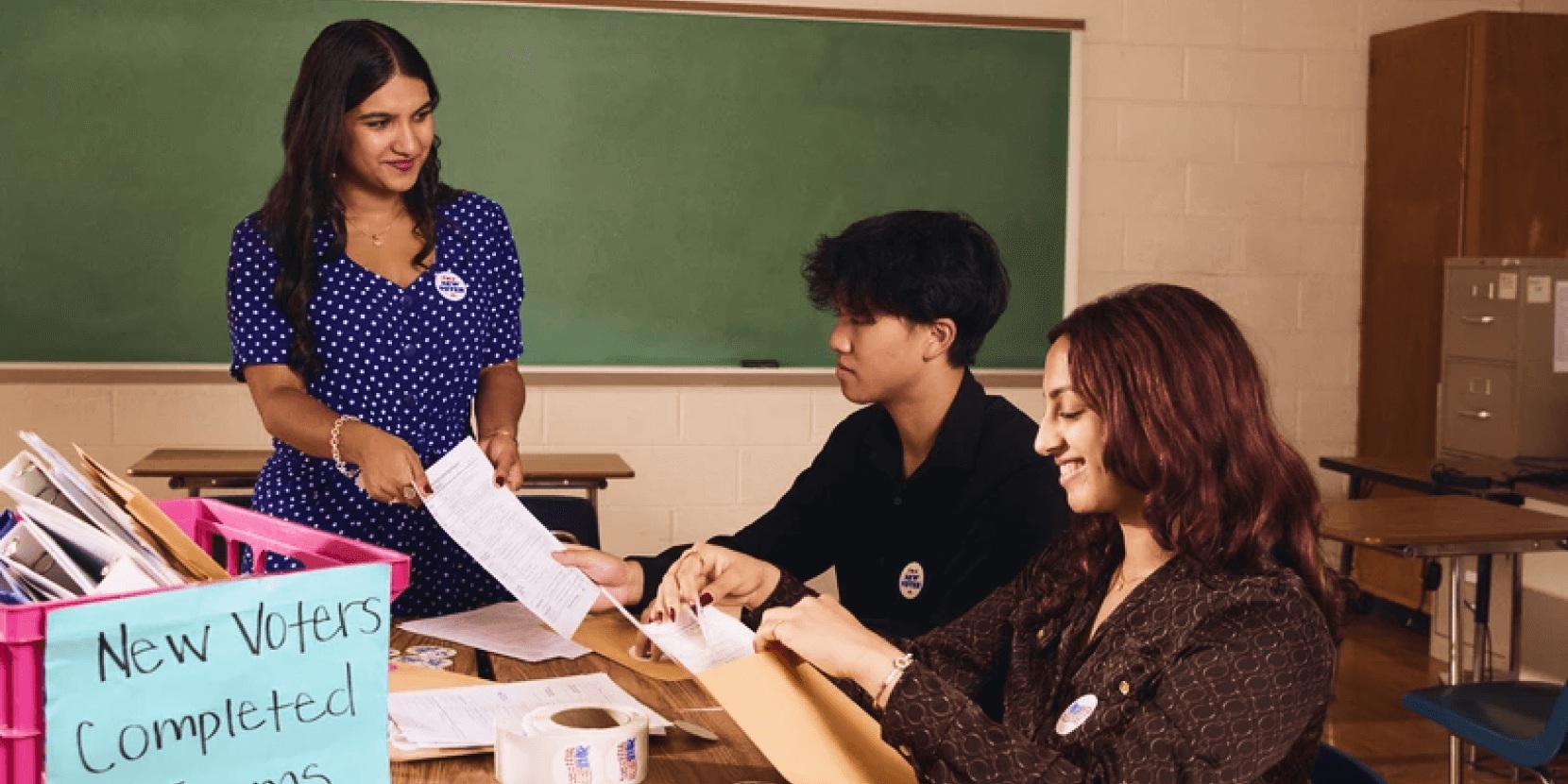
“Catchafire was like having a team of mentors on speed dial.”
Jahnavi Rao · Founder, New Voters
The revealing detail is the repetition. One assignment does not have to solve every organizational problem. Completing one can make the next request clearer. The practical lesson for another nonprofit is to build a sequence: settle the message, prepare the materials, improve the system that keeps those materials useful. Progress can arrive in pieces small enough to finish.
Read the big number carefully
Company announcement · September 2026
Catchafire’s September 2026 announcement reports more than 15,000 organizations supported and over 1.6 million donated hours. Its dollar figure describes estimated professional expertise, rather than money transferred into nonprofit accounts. The valuation methodology includes volunteer time, project scoping, and talent sourcing. Those distinctions matter when somebody puts the number on a slide.
A completed website and cash in the bank solve different problems. And the estimated price of professional help does not, by itself, tell us how many more people a nonprofit served. Read the metric as an account of resources made available. Then ask the next question: what changed because the work got done?
The helper needed help
Catchafire has faced its own operating test. In a February 2026 account, chairman Niko Canner described missed profitability plans, customer attrition, and dwindling cash runway in late 2024. He became interim CEO that December. Team cuts followed; established internal leaders took greater responsibility. He subsequently reported a full year of profitability and $8 million in revenue.
That history gives the company’s pitch some bite. Useful work still needs a sustainable business behind it. In September 2026, Catchafire named Brian Fitzgerald CEO, with Canner remaining chairman. Fitzgerald’s background includes co-founding Tinkergarten. His stated direction includes helping nonprofit teams use AI alongside human expertise. That is a direction to watch, rather than a reason to assume every promised capability already exists.

For someone deciding where to begin, the most useful idea remains pleasantly ordinary. Name one task. Find someone who knows how to do it. Make enough room to work together. Catchafire has built a business around those steps, and a nonprofit does not need to solve its whole future before taking the first one.
Put your skills on the list
Visit Catchafire ↗ · Request nonprofit access ↗ · Read the blog ↗
LinkedIn · X · Instagram · Facebook
Watch: how Catchafire works