Bonterra was not born in a garage. It was assembled in a boardroom. In 2021, funds advised by Apax agreed to combine EveryAction, Social Solutions and CyberGrants in a transaction valuing the new business at $2 billion. One company knew donor databases and digital campaigns. Another tracked casework and human-services outcomes. The third ran corporate grants and employee giving. In March 2022, the collection got a name made from the French word for good and the Latin word for earth. The pitch was soil, but the business was plumbing.
The pipes of philanthropy rarely meet. A fundraiser knows who clicked an appeal. A grantmaker knows which application was approved. A caseworker knows whether a family found housing. A corporate team knows which employee volunteered. Those facts tend to sit in different systems, owned by different departments, expressed in different formats. Bonterra's central bet is that connecting them can make money and effort move with less friction.

A roll-up with a thesis
The formation price bought scale immediately. The original combination was expected to produce more than $200 million in annual revenue and reach a large web of nonprofits, donors, volunteers, companies and foundations. Network for Good joined the family around the public launch. DonorDrive arrived in 2024, adding peer-to-peer events. OneCause followed in 2025 with auctions, ticketing and mobile bidding. Deed came in March 2026, bringing a polished employee engagement layer to corporate philanthropy.
This is not one monolithic application. It is a product family serving several jobs. Network for Good gives small nonprofits donor management, communications and coaching. EveryAction handles more complex CRM, fundraising, advocacy and marketing. DonorDrive and OneCause cover participant-led campaigns and events. Mobilize coordinates volunteers. Apricot and ETO help human-services organizations manage cases, record services and demonstrate outcomes. Grantmaking tools handle applications, approvals, compliance and payments. Deed puts employee giving and volunteering in front of corporate workforces.
Find and engage supporters
Raise or grant money
Deliver services
Measure outcomes
The difference from a conventional nonprofit CRM is breadth. Blackbaud is the obvious broad incumbent. Salesforce Nonprofit Cloud, Bloomerang, Virtuous, Givebutter, Classy, Submittable, Benevity and a long tail of specialists compete at individual layers. The cheaper alternative is familiar: a spreadsheet, an email platform, a payment form and several heroic employees who know where the missing columns are buried.
“The math is simple. The coordination is not.”Bonterra's 2026 Impact Report
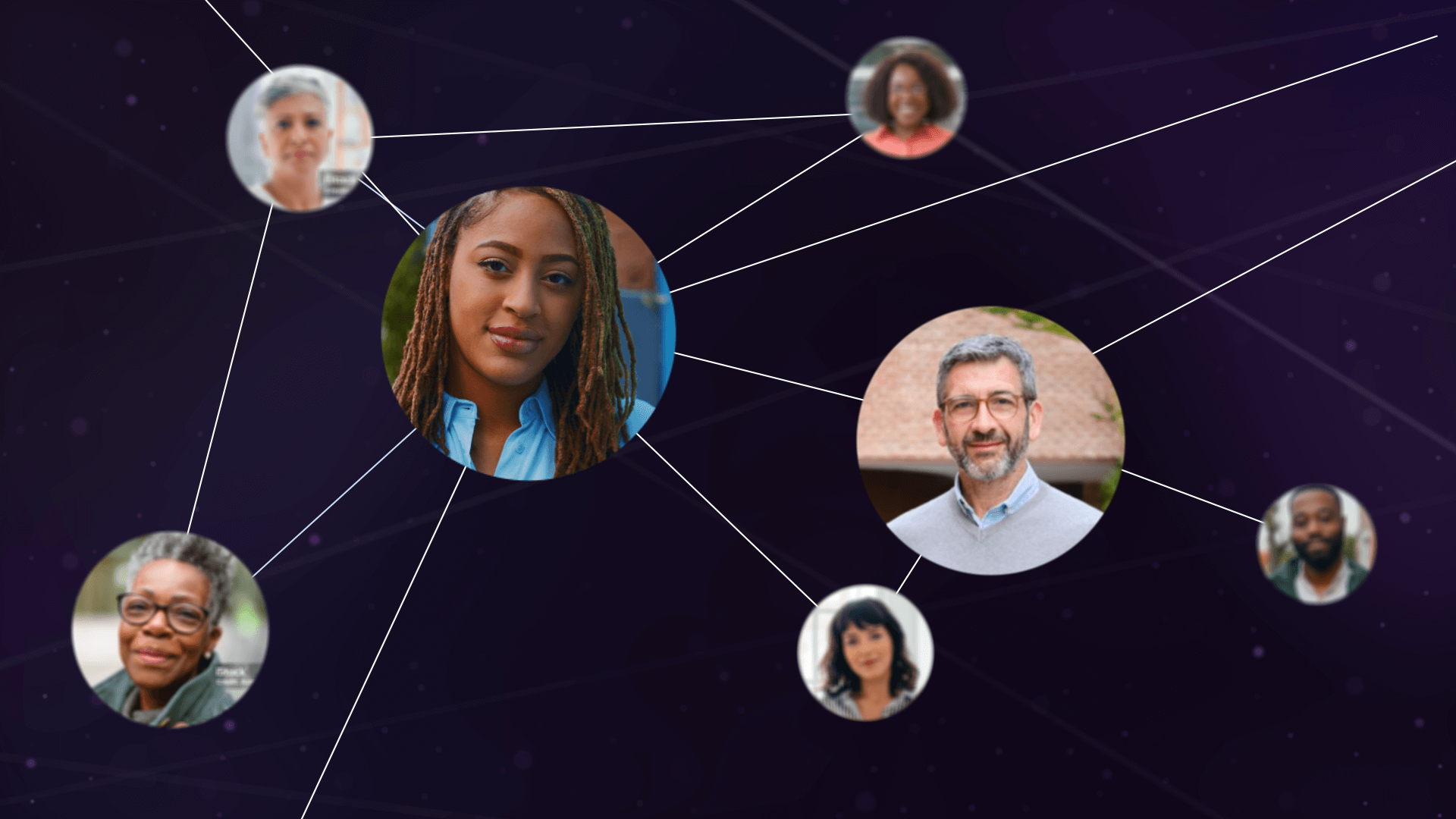
The network is the product hiding behind the products
Bonterra now describes a network of more than 216,000 organizations, including nonprofits that receive funds as well as paying customers. Its 2026 materials put the operating footprint at roughly 18,000 mission-driven customers, 13,000 nonprofits and 50 Fortune 100 companies. The network powers about $22 billion in giving a year and 21 million individual donations. Those numbers are more useful than a logo parade because they explain the data advantage Bonterra is chasing.
With enough clean, permissioned history, the system can identify patterns a single charity cannot. Bonterra's donor analysis says only 19.4 percent of new donors are retained. It therefore emphasizes the second gift - the moment a first-time donor becomes a relationship. Its broader benchmarks say each email-link click generates an average of $39 in donations, and that mid-morning sends on Tuesdays and Thursdays tend to beat weekends and late evenings. These are modest, copyable moves: segment first-time donors, follow up quickly, ask again with context, and measure the second contribution rather than celebrating only the first.
The same logic powers Jumpstart, a program in which funders pay for software and coaching for smaller nonprofits. In 2025, 40 funder partners invested about $1.05 million across 214 nonprofits in 17 states. Bonterra reports those groups generated $7.8 million in increased revenue - a 7.4 times philanthropic return. The mechanism is worth copying even without Bonterra: fund capacity, not just projects; combine tools with coaching; and judge the program by incremental revenue rather than logins.
Que arrives with a clipboard, not a cape
Bonterra's newest connective tissue is Que, launched in October 2025 as an agentic AI system for social good. Inside Network for Good or EveryAction, a fundraiser can ask for a campaign plan, a donor segment, a giving form, an email draft or advice grounded in the organization's own history. In Nonprofit Hub, Que can match grants, parse an application and prepare a first draft. In DonorDrive, it compares a live event with historical pacing and points to participants who need attention.

The design principle is “AI assists. Humans decide.” That caveat matters in a sector holding donor identities, vulnerable-client records and grant decisions. Que can prepare an action, but a person is supposed to approve what gets used or sent. Bonterra runs the system on AWS, publishes responsible-AI commitments and frames auditability as part of the product. A cautious customer quoted by the company said the ethical approach changed her mind enough to try it. That is a more credible adoption story than pretending nonprofit leaders have no reservations.
The early utility is mundane in the best way. One user said an hour with Que could replace a day of work. Another used it for strategy, a timeline, audience segments, messages and initiatives in one sitting. The product is not replacing a development director's judgment. It is attacking the blank page and the recurring chore, the work small organizations often postpone because the person doing it is also planning the gala and fixing the printer. That distinction matters: a generated draft is capacity only when someone can review, edit and send it.
Start with one bounded workflow. Give the assistant approved data, ask for an editable output, require a human checkpoint, and measure time saved or revenue changed. “Use AI” is not an operating plan.
The buyer's test is integration, not ambition
Bonterra sells mostly through customized SaaS contracts. Pricing varies by organization size, record count and features. Some integrations and modules cost extra, and payment processing can add transaction fees. Nonprofit Hub offers a free entry point, but buyers evaluating the full portfolio should expect a sales conversation rather than a tidy public price card. The formation cost is known - $2 billion in enterprise value - while later acquisition prices and current consolidated revenue are not public. Apax said in 2026 that annual EBITDA had grown fourfold to more than $100 million.
The model works best when an organization has enough complexity to benefit from connected workflows: many supporters, several campaigns, regulated case records, a real grants program or employees giving across countries. It also assumes decent data, executive ownership and staff time for migration. Without those conditions, breadth turns into shelfware. A five-person charity that needs one donation page and transparent monthly pricing may be happier with a narrower tool. A sophisticated agency that cannot standardize definitions across departments will not get network intelligence merely by buying software.
The first thing that failed in this market was not a Bonterra feature. It was the handoff. Spreadsheets did not speak to CRMs; fundraising totals did not explain program outcomes; service records did not become reimbursement claims. Bonterra's January 2026 partnership with Health Roads makes the argument concrete: Apricot case notes can flow into a system that validates documentation, codes eligible services and creates Medicaid claims. That can shorten the distance between good work and sustainable funding, but only where services are eligible, records are complete and local reimbursement rules are configured correctly.
Bonterra has attached this product strategy to a public target: lift U.S. charitable giving toward 3 percent of GDP by 2033. Its latest report estimates the gap at about $155 billion per year. No software company can produce that shift alone, and Bonterra says as much. The practical contribution is smaller and more believable: make a grant easier to find, a second gift easier to earn, a volunteer easier to activate and an outcome easier to prove.
That is also the standard by which the roll-up should be judged. Acquisitions can buy distribution, domain expertise and a long product menu. They cannot buy coherence. Bonterra becomes distinctive when a donor interaction improves the next appeal, when a case outcome strengthens the next grant application, or when a corporate volunteer finds a vetted local organization without another spreadsheet changing hands. If those connections become routine, the boardroom assembly story fades into the background. The plumbing simply works.
Keep exploring