Company Profile / Nonprofit Technology
The Minnesota Software Company That Bet Nonprofits Would Pay for a Partner, Not a Product
Two guys who met on a governor's campaign built one of the first cloud databases for nonprofits, then rewrote their own corporate charter to prove they meant it. Nearly 30 years later they are betting the same customers on AI.
In 1998, if you told a nonprofit director you wanted to keep their donor list on someone else's computer and let them reach it through a web browser, you would have gotten a blank stare. The word "cloud" meant weather. "Software as a service" read like a typo. And yet that is exactly the pitch Chris Hanson and Mark Paquette walked into Minnesota nonprofit offices with - a hosted database, built for organizations that counted supporters instead of shareholders.
Nearly three decades later, thedatabank, gbc is still in Saint Paul, still independent, still selling database software to the same unglamorous, underfunded slice of the market almost everyone else in tech treats as an afterthought. The company has fewer than ten employees. It has never taken a splashy venture round. And it has quietly outlasted a long list of better-capitalized competitors that were acquired, merged, repriced, or shut down.
The through-line is a bet the two founders made early and never abandoned: that nonprofits do not want to buy software. They want to buy a partner who will keep the software working.
01Two founders, one campaign trail
The origin story
Hanson and Paquette met in 1993 working on a Minnesota gubernatorial campaign - the kind of environment where the database is held together with duct tape and volunteers, and everyone can see how much a good one would help. Five years later they founded thedatabank around a single idea: create positive social change through technology.
Their resumes do not read like a typical software startup. Hanson had already founded or co-founded five businesses, including Sanus, once the largest US maker of audio/video furniture, plus three nonprofits. He holds a PhD in Organization Development from the University of Minnesota, where he studied how formal training improves performance in small businesses. Paquette spent more than 30 years building nonprofit and educational software - including work on The Oregon Trail, the classic that taught a generation of kids to die of dysentery. Earlier in his career he did research and development on guidance systems for nuclear weapons platforms, work he left on moral grounds to build technology for activists instead.


That combination - a social scientist who studies how organizations actually work, paired with an engineer who has seen both ends of what technology can be pointed at - shows up in the product. thedatabank was one of the first companies to sell nonprofits a true SaaS CRM, and the first to build advocacy tools directly into an online constituent database. When action alerts and donor records live in the same place, mobilizing supporters stops being a separate chore.
At thedatabank, I am allied with our clients to create the just and sustainable world we all need.
Mark Paquette, CTO & Co-founder02The company that rewrote its own charter
Mission, in writing
Plenty of companies put a mission on the wall. On January 2, 2015, thedatabank did something less common: it reincorporated as a general benefit corporation - the "gbc" in its name - legally binding the business to pursue a social benefit alongside profit, with higher standards of accountability and transparency baked into its charter. It is also a Certified B Corporation, and at one point was described as one of only two Minnesota businesses holding both statuses at once.
The company's stated mission is blunt for a software firm: "to provide technology and expertise to make the world safe, sustainable, and just." That framing does real work. It filters who wants to work there, and it explains why a company this small keeps winning culture awards - a multiple-time B Corp "Best For The World" honoree and a three-time "Best Company to Work For."
It also shapes the sales philosophy. thedatabank describes itself as a partner rather than a vendor, and it has the receipts: some client relationships have run past twenty years, an eternity in a market where switching CRMs is practically a rite of passage.
03What you can actually do with it
Products & services
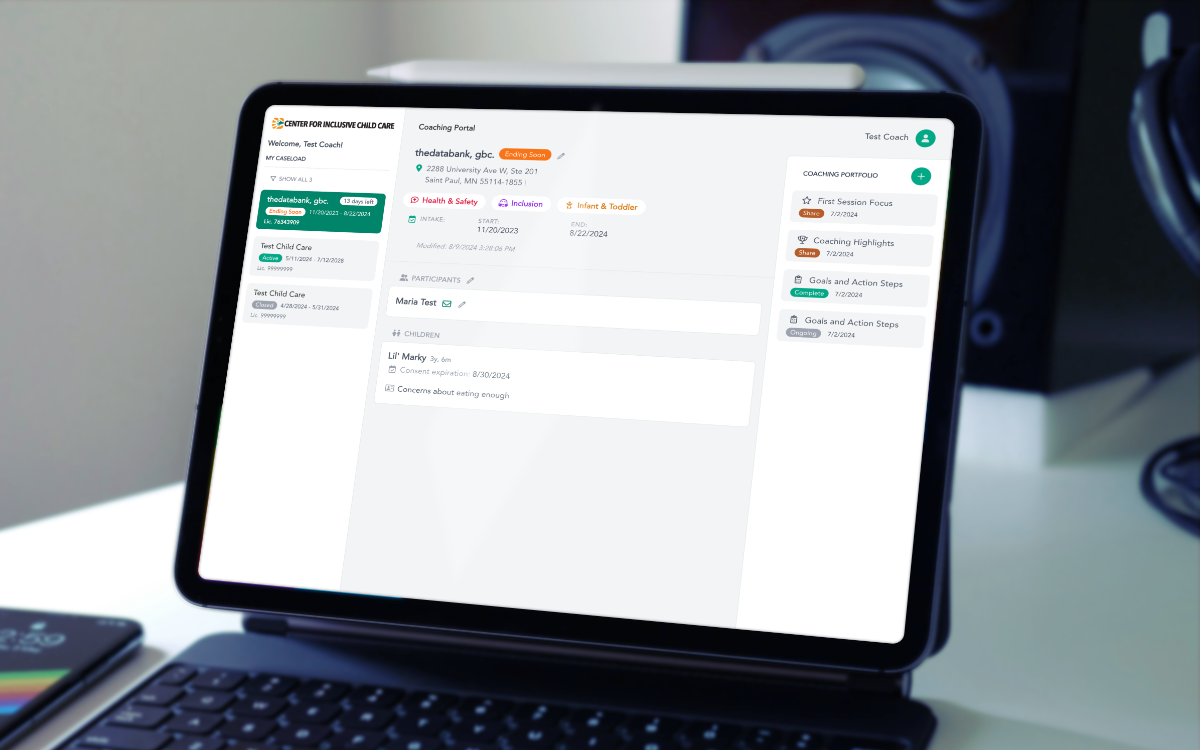
Strip away the mission language and thedatabank is a working toolkit for the day-to-day of running a mission-driven organization. The core is a configurable cloud CRM for nonprofits and government agencies. Around it sit fundraising and donor management, multi-channel communications (email, SMS, and direct mail run off the same records), advocacy tools powered by The SoftEdge, and a data-services arm that handles the unglamorous but essential work: change-of-address processing, district appends, email verification, duplicate cleanup, migration, and training.

Pricing is refreshingly legible for enterprise-adjacent software. Databank Essentials starts at $99 a month for up to 10,000 contacts, with a 14-day trial and no long-term contract. Step up to Databank Fundraising for advanced relationship tracking and a form builder, or Databank Advocacy for legislator form-fill and automatic district matching. A standalone website chatbot, trained on an organization's own content, runs about $20 a month.
Essentials
AI-powered CRM, fundraising, bulk email and donor management for up to 10,000 contacts. No contract.
Fundraising
Advanced relationships, bundled data entry and a Form Builder for organizations running real campaigns.
Advocacy
Award-winning advocacy tools: legislator form-fill, district append and representative matching.
04The AI turn
Latest chapter
In October 2024, thedatabank launched dBot, an AI assistant built directly into the CRM. It drafts email, social, text, and direct-mail content, runs data analysis and pattern recognition, generates images, and lets staff search records by typing or talking in plain language. A second product followed: a website chatbot, powered by OpenAI models but with a privacy safeguard that a client's data is not used to train those models, giving small nonprofits 24/7 multilingual support on their own sites.
By harnessing the power of artificial intelligence, dBot empowers nonprofits to revolutionize their engagement strategies and drive greater impact in their communities.
Chris Hanson, CEO & Co-founderThe strategic logic mirrors 1998. A generation ago, thedatabank brought cloud software to a sector that could not afford its own servers. Now it is bringing AI tooling to organizations that cannot afford a data team. Same customer, same bet, new technology.

05How it stays different
Market position
The nonprofit CRM market is crowded and consolidating. Bloomerang, DonorPerfect, Neon One, Little Green Light and LiveImpact all court the same small and mid-sized organizations, while Blackbaud and Salesforce Nonprofit Cloud loom over the enterprise end. thedatabank's answer is not to out-feature them. It is to out-configure them - building the database around the client's workflow rather than forcing the client into a template, and staying small enough to answer the phone.
That is a deliberate ceiling on growth. A custom-first, partnership-heavy model does not scale like a self-serve SaaS product, and a nine-person shop will never blanket the market. But it produces something the churn-and-burn end of the industry struggles to buy: clients who stay for decades, and institutional memory of their data that survives their own staff turnover.
06The short version, in dates
Timeline
There is a version of the tech story where a company like this is a cautionary tale - too small, too niche, too slow to scale. thedatabank keeps stubbornly telling a different one. It picked a customer almost nobody fights for, promised to stick around, and then did. In an industry that treats churn as a law of physics, that is the part worth studying.
Follow thedatabank, gbc
- Website - thedatabank.com
- LinkedIn - /company/thedatabank
- X / Twitter - @thedatabank
- Facebook - /thedatabank
- Chris Hanson - LinkedIn
- Mark Paquette - LinkedIn
- About - Company & mission
- Contact - chris@thedatabank.com