In 1998, a database could feel like a room you had to enter alone. It lived on a machine, demanded a specialist and tended to know more about its own logic than the people it was supposed to help. Chris Hanson and Mark Paquette had a simpler proposition: put the thing on the web. Let a nonprofit reach its supporter records from anywhere. Spread the infrastructure cost across many organizations. Make relationship management available to the groups least likely to have an IT department.
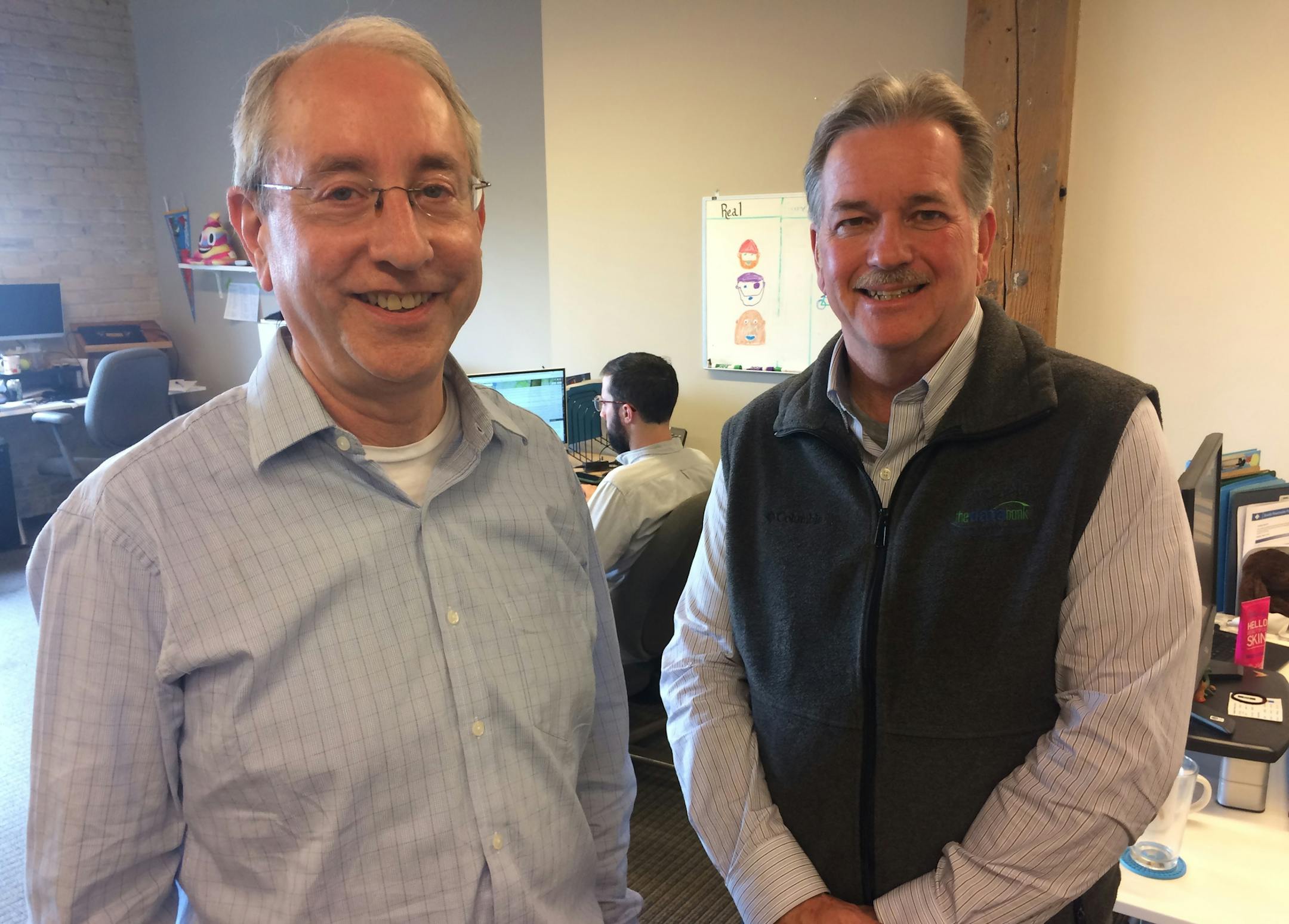
This was before anyone at a conference could say “SaaS” and expect a nod. Hanson came to the problem through business development, fundraising and direct marketing. Paquette came through engineering and software, with credits that included educational programs such as The Oregon Trail. Together, they founded thedatabank in Minnesota and began building what Hanson describes as the first online CRM made for nonprofit relationships.
The pairing makes sense once you notice what a CRM actually contains. It may present as software, but its raw material is human memory: who donated, who volunteered, who signed an action alert, who came to the meeting, who needs a reply. The hard part is not storing another address. It is preserving the shape of a relationship after staff change, campaigns end and the inbox fills again.
The useful thing behind the fashionable thing
Hanson's path to software was agreeably indirect. In 1984 he co-founded SANUS, which grew into a national maker of audio and video furniture and accessories. In 1987 he started Response Group, a consulting practice working across marketing, fund development and technology. By 1993 he was leading Direct Expressions, a direct-marketing agency for national nonprofits. Five years later, the habits of that work met Paquette's technical experience inside thedatabank.
Direct marketing gave Hanson a view that pure software training might miss. A mailing list is not merely a list. It is an audience with a history. A contribution is not merely an amount. It is a choice made by someone who expects the organization to remember. The same is true of an advocacy click, a volunteer shift and a conversation at an event. Put the fragments together and the nonprofit can see a constituency. Leave them scattered and every campaign begins with an archaeological dig.
His academic work sharpened the organizational side. Hanson earned a doctorate in Organization Development at the University of Minnesota, researching whether formal training improves performance in small businesses. He published and presented on small-business development, social-network analysis and social entrepreneurship. Later he taught MBA, Ph.D., DBA and leadership students part time at Capella University. The common concern is capacity: how a small institution learns, retains knowledge and performs without pretending to possess infinite people or money.
A mission with a balance sheet
The company did not treat social purpose as an ornament reserved for the About page. It used the B Lab assessment from 2009 and later organized as a Minnesota general benefit corporation. Its public-benefit reports described donated software and services, employee development, community work and hundreds of social-sector clients. Hanson has framed the model without incense: make a sustainable profit while maximizing beneficial social impact.
There is an operator's realism in that sentence. Sustainable comes before romantic. A company that cannot pay people or maintain the product eventually offers very little benefit. Yet profit alone is not permitted to settle the argument. The second half asks what the company helps its customers accomplish, what sort of workplace it maintains and where its attention goes when an easier customer would pay more.
The small-organization memory loop
Purpose also shapes who walks through the door. Hanson has said the fun of a social-impact company comes from the people attracted to it, an advantage the founders did not anticipate. That sounds almost suspiciously pleasant until he follows it with a founder's most credible culture metric: years into the job, he still looked forward to going to the office.
Refusing the cheap seats
Longevity does not mean the original model remained untouched. The company once did substantial political campaign work. That business accounted for about 30 percent of revenue and, by the founders' reckoning, 65 percent of the effort. They let most of it go. Later, inexpensive off-the-shelf fundraising products crowded the market. Thedatabank had roughly 350 continuing nonprofit customers, but its general product risked becoming another line in a price comparison.
The escape route was not a louder discount. Hanson and the team leaned toward the work generic products handled poorly: custom configuration, data analysis, migration, training and program measurement. Projects with Ramsey County and Minnesota workforce initiatives connected schools, training organizations and employers, then helped officials evaluate what moved people toward high-demand work. The database became less like a cabinet and more like an instrument panel.
The move worth stealing
When a market commoditizes the visible feature, look for the unresolved work around it. For thedatabank, the durable value lived in configuration, support, training and measurement - the parts that make a system fit an actual organization.
That decision reveals something unflashy and valuable about Hanson as an executive. He is willing to count effort. Revenue is easy to celebrate because it arrives with a number attached. Exhaustion hides inside calendars, support queues and exceptions. Measuring both can expose a customer segment that looks healthier from the street than it feels inside the building.
From the modem to the prompt box
In October 2024, thedatabank introduced dBot, an AI assistant inside its nonprofit CRM. It can draft emails, texts, letters and social posts; create images; and answer natural-language questions about contact and contribution data. Hanson later described it as the first of several planned AI tools. In a 2025 podcast conversation, he placed the feature in a longer sequence that began with dial-up databases and moved through web software, cloud delivery and now generative systems.
The sequence matters because every technical wave arrives dressed as destiny. Hanson has already watched a few wash through. The useful test is smaller: what can a resource-constrained organization do on Tuesday that it could not do on Monday? If a staff member can ask a plain-language question instead of assembling a multi-step query, an afternoon returns to the mission. If a draft gives a fundraiser a decent first page, the blank screen loses some of its tax.
Co-founds SANUS and learns the mechanics of building a national product business.
Starts Response Group, joining marketing, fund development and technology consulting.
Co-founds thedatabank and puts nonprofit relationship management on the web.
The company documents its public-benefit work while shifting toward measurement and custom solutions.
dBot brings natural-language assistance into the nonprofit CRM workflow.
There are obvious cautions. Nonprofit data includes relationships that deserve privacy, accuracy and human judgment. A fluent answer is not automatically a responsible one. Hanson's more credible advantage may be less about owning an AI button than about knowing the environment where that button must behave. The company has spent decades around donor histories, staff turnover, custom fields and anxious migrations. Context is the part no demo can improvise.
The founder in the Shire
Hanson's public biography offers relief from the database. Born and raised in Minnesota, he has played Monday-night hockey on a 50-plus team called the Gerihatricks. He reads and writes to relax, plays golf during what he calls Minnesota's three months of spring, summer and fall, and has loved fantasy since reading The Hobbit in junior high in 1971. Asked which fictional place he would visit, he chose the Shire, then compared it to a weekend in the Cotswolds.
His imaginary dinner table is stranger and more revealing: Francis of Assisi, John Lennon and Minnesota senator Paul Wellstone, perhaps followed by poker. Hanson named truth, justice and compassion as the thread connecting them. It is a tidy explanation for the company he built. Business sits at the table, but it does not get every chair.
Thedatabank's story is not a clean ascent. It includes a market that cheapened, customers that demanded too much effort, growth plans that took longer than expected and technology cycles that rewrote the vocabulary. That is precisely why it is useful. Hanson and Paquette kept adjusting the machinery without abandoning the people the machinery was built to serve.
After twenty-eight years, the product has moved from dial-up access to an AI prompt. The basic assignment remains charmingly stubborn: remember the relationship, make the work easier, and give the organization a little more room to act. Somewhere between a hockey rink and the Shire, Chris Hanson is still working on it.