At the WEND Foundation, the difficulty was not deciding whether philanthropy mattered. It was getting the machinery of philanthropy to behave. Reporting depended on Google Forms and spreadsheets. The grants system lived with the family office. Meanwhile, the work kept acquiring new shapes: contracts, emergency funding, experiments that refused to fit a conventional grants database. A worthy cause can survive a great deal. Its administrator still needs to know which number is correct.
- ImagineCRM configures Salesforce for nonprofits and foundations.
- Its specialty is translating grantmaking procedures into usable workflows.
- Implementation is followed by training, enhancements and ongoing support.
ImagineCRM entered this situation with something more specific than a promise to modernize. It brought an accelerator, a configurable starting point, and adapted it with screen flows, forms and budgeting tools. WEND’s funding requests could move through Salesforce; its dashboards could sit within reach of the people making decisions. The interesting achievement was a system that accommodated the foundation’s habits without preserving every awkward workaround.
The buyer who became the builder
That distinction helps explain the company’s origin. Daisy Sayre Garcia had worked at Oracle and technology startups before joining The Broad Center. There, a custom .NET portal demanded time and money, prompting her to explore Salesforce. According to ImagineCRM’s account, she studied the platform while raising two children and earned her Dev 401 certification.
She was also selecting implementation vendors. From the buyer’s chair, she saw an uncomfortable split: some partners understood nonprofit work but lacked technical depth; others knew the technology but needed the organization’s world explained to them. This was an opening for someone who had occupied both sides of the conversation.
Garcia initially wanted independent consulting work and more flexibility. At Dreamforce, her business cards said “Independent Consultant.” Her first lead was a small assignment for an Arizona high school football team. ImagineCRM began in 2015. The opening act was modest; the eventual specialty was unusually precise.
A grant has a life after the announcement
In the company’s telling, its team includes people with experience at the Chan Zuckerberg Initiative, Tides Foundation and Arnold Ventures. That background matters because grantmaking has its own sequence of approvals, payments, reporting obligations and exceptions. Knowing Salesforce does not automatically tell a consultant how a foundation’s board operates.
The service menu includes donor and grant management implementations, migrations, dashboards, CRM health checks, integrations and managed services. Its stated design order is sensible: begin with Salesforce’s standard functionality, use declarative configuration where appropriate, consider third-party tools, and write custom code when needed. Every additional customization creates something somebody must understand later.
Request02
Review03
Approve04
Pay05
Report
This places ImagineCRM in a particular corner of the market. It sells implementation expertise and continuing support around another company’s platform. A foundation choosing it is choosing both Salesforce’s flexibility and the responsibility of running a configured system. A purpose-built grants application or another Salesforce partner remains an alternative. The decision turns on the work being done, the exceptions it contains and the staff available to maintain it.
What gave way first
WEND’s account describes reporting and scattered information becoming obstacles before its philanthropic model stopped evolving. Ravi Shah wanted the replacement implemented within a year. The accelerator supplied a beginning; customized guided forms supplied the fit. The company-published story says even less technical colleagues found those forms approachable. That is a revealing test. A database that impresses its architect but defeats its users has an expensive audience of one.
“We were in a time crunch; we needed something implemented within a year.”Ravi Shah, WEND Foundation
Co-Impact offers a different version of the same problem. Its case study describes a team growing from six to more than 40 people across five continents. Spreadsheets required constant updating and checking. ImagineCRM built Salesforce workflows for grants and contracts, alongside contact management and a funding-opportunity pipeline. Integrations included Outlook, Slack, Box and Mailchimp; affiliations and conflicts of interest also entered the system.
Those are accounts published by ImagineCRM, with customer testimony, rather than controlled evaluations. Still, the concrete design choices are useful. Access, approvals and policies were treated as parts of one operating problem. The software purchase followed recognition that maintaining a shared picture through scattered files had become too laborious.
The price of one less manual task
The Candid Connector makes the proposition especially tangible. Foundation staff need nonprofit information for diligence and funding decisions. ImagineCRM’s integration brings Candid data into Salesforce, with scheduled synchronization and account enrichment. Its case study describes the previous alternatives: transferring information manually or commissioning a custom interface with its own maintenance burden.
One-time Candid Connector fee in an archived 2022 sheet.
Candid API licensing was a separate purchase.
That historical figure is not a current quote or the price of a complete CRM implementation. It illustrates how to read a technology proposal: distinguish the integration from access to the underlying data. For a buyer, the relevant calculation includes licensing, configuration and upkeep, alongside the manual work removed. A connector is valuable only when the information it supplies serves an actual decision.
Keep the people in the specification
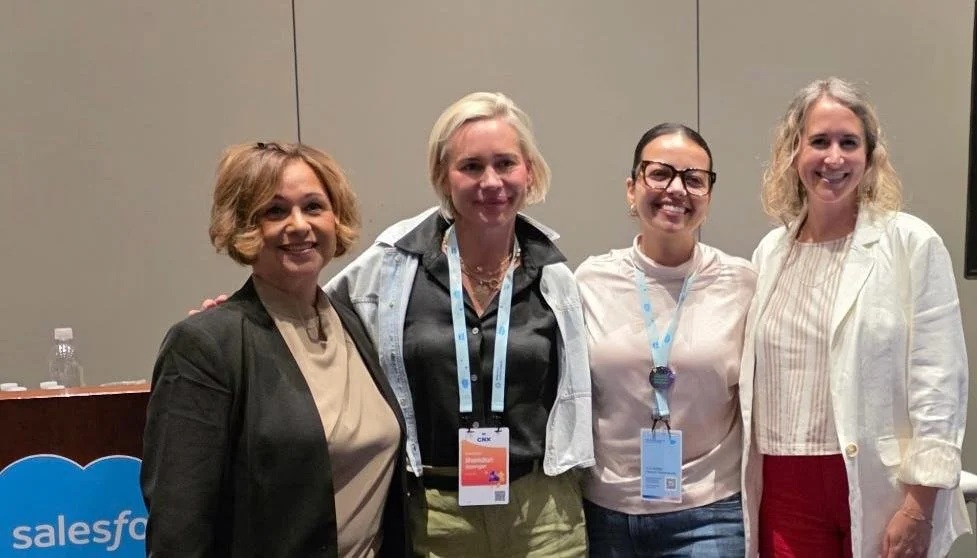
ImagineCRM’s workplace policies include paid certification paths, mentorship and family flexibility. In 2025, the Digital Revolution Awards named it the global winner for Best Salesforce Partner to Work For. In July 2026, the company described a Salesforce co-presented AI discussion covering governance, data security and human oversight. The tools change; the need for people who understand the work persists.
The lesson readers can borrow is practical. Start with a troublesome process, identify its users and exceptions, and decide who will own it after launch. A small organization with straightforward needs may find Salesforce configuration disproportionate to the problem. Teams without capacity for adoption and maintenance should count that work before buying. WEND’s story is compelling because the forms fit the people expected to use them. The mission supplied the purpose; the details made Monday morning manageable.
Website · Services · Customer stories · Company blog · LinkedIn · X