Daisy Sayre Garcia went to Dreamforce with business cards that read “Independent Consultant.” There was no elaborate company manifesto tucked behind those two words. She was looking for consulting work, and for a way of working that would leave more room for her children. Her first lead was a small assignment for an Arizona high school football team. A business that would later serve foundations and nonprofits began with a considerably smaller field of play.
Her route there passed through Oracle, technology startups, and The Broad Center, where she worked as an associate director. A custom .NET portal was expensive and time-consuming to maintain. Salesforce offered another approach, including the possibility of building without writing code. She studied at night and on weekends while raising two children, earning the platform’s Dev 401 certification.
Choosing implementation vendors exposed a problem: nonprofit understanding and technical depth did not always arrive in the same package. Garcia had experience on both sides of that gap. Remote work in the Salesforce ecosystem also made consulting appealing. The opportunity fitted a practical ambition: use what she knew, do work she cared about, and have a different relationship with the clock.
The kitchen table grows up
ImagineCRM began as a solo practice in 2015. Its early team worked around a kitchen table, making plans and learning together. By its tenth anniversary in February 2025, the company reported more than 200 projects for over 100 customers. Those numbers describe work accumulated over a decade, rather than a sudden overnight arrival. A kitchen table offers limited seating; fortunately, it imposes no limit on what people can learn there.
The anniversary account returns to that table as a reminder of how the team started. Retreats became occasions to reconnect with the same sense of collaboration. Growth brought more colleagues and more customers, but the company continued to describe close service and knowledge of its clients’ work as central to its purpose. Its beginnings remained useful as a reference point for the business it was becoming.
Garcia’s own explanation in spring 2023 put the ambition in personal terms. She wanted to do her work well and be present for her family and community without continually sacrificing one to the other. Consulting had given her a route to combine technology with declarative building. Eight years into ImagineCRM, she was still describing expansion through the difficult problems clients brought to the team.
“We don’t shy away from difficult projects,” she said. There is something pleasantly unromantic about that promise. It gives the business a job to do. The point of another product or another Salesforce capability is whether it makes the customer’s daily work easier. Her description of the company’s future was grounded in that work, rather than in a grand prediction about where software might take everyone.
Reported at the company’s tenth anniversary, February 2025.
Knowing what a grantmaker means
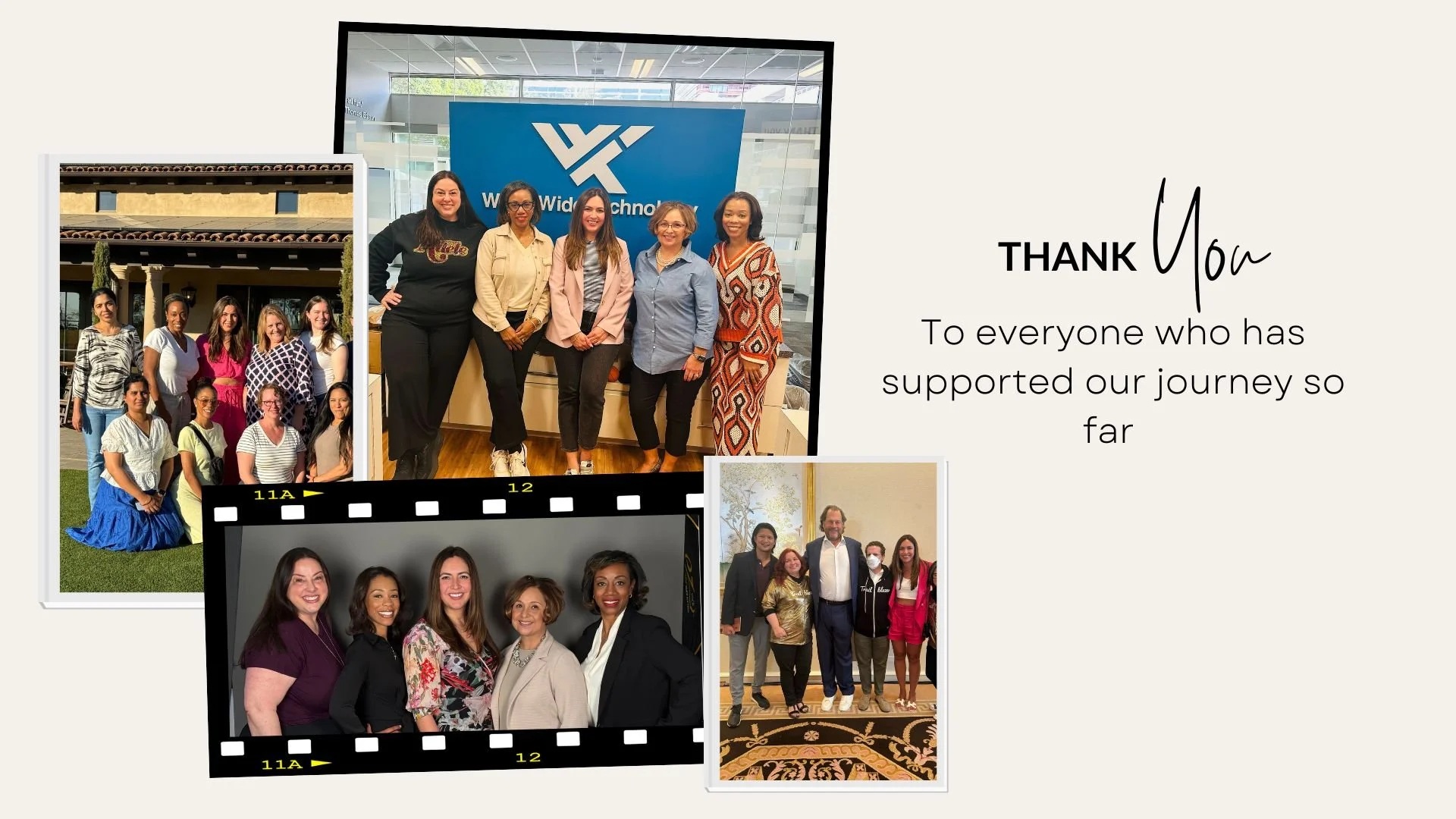
Garcia has assembled a team that includes people with experience at the Chan Zuckerberg Initiative, Tides Foundation, and Arnold Ventures. That choice gives her technical practice a working memory of philanthropy. Foundation staff bring questions about approvals, payments, governance, and reporting. A consultant who already understands the setting can spend less of a project being introduced to it.
One example she gives is a request to sequence disbursement payments. The team had dealt with a similar requirement for another client only weeks earlier. Previous work could become a starting point for the next implementation. The value was specific: there was already something to demonstrate, adapt, and build upon. Familiarity with a sector had produced reusable experience.
She also describes a consulting style that presents options and explains tradeoffs. Customers should not have to invent an answer to every small configuration question. “We bring options,” she says. Her team adjusts its approach for foundations that prefer consensus, experimentation, or a recommendation with a delivery plan. That is a fairly good antidote to the meeting in which everyone receives homework and nobody receives help.
- 01 Understand the grantmaking
- 02 Explain the options
- 03 Adapt the system
The people behind the grant application
The GreenLatinos project shows what this understanding looks like in use. The national network of Latino environmental and conservation leaders needed to bring grants, communications, and compliance into a more coherent system. As its work expanded, separate platforms and manual processes made administration harder. Its Justicia y Equidad Fund was part of that growing responsibility.
GreenLatinos had received a $25 million USDA grant, with $20 million intended for regranting to municipalities and community organizations. The work concerned urban tree planting and maintenance. Those amounts belonged to the client’s grant program. ImagineCRM’s role was to build the supporting Salesforce system, including applications and review, compliance tools, and integration with QuickBooks.
Joe Toolan of GreenLatinos described Garcia’s understanding of the organization’s mission as a reason the partnership made sense. Her Latina identity mattered to that connection, alongside the practical scope of the solution. The project put financial tracking and grant administration together. The anticipated benefits included less manual work and clearer oversight; the promise rested on making the organization’s operations easier to manage.
A company people can stay in
In 2025, ImagineCRM was named the global winner of Best Salesforce Partner to Work For at the Digital Revolution Awards. It was also highly commended in Diversity & Inclusion Employer of the Year. For Garcia, the workplace began with a personal reference point: the conditions she would have wanted earlier in her career as a Hispanic woman in technology and a single mother.
The policies give that personal ambition some substance: paid certification paths, mentorship, family flexibility, extended leave, and summer Fridays off. The company also describes mentoring people from groups underrepresented in technology. Inclusion has a practical dimension when someone can gain a credential and take on a new responsibility.
Her account of leadership lingers on colleagues earning certifications, speaking at conferences, and leading projects. Those are observable steps in a career. A workplace award can sit on a shelf; the more consequential result is that another person can do something they could not do when they joined. Garcia’s interest in those steps also connects the employer to the consultancy: learning within the team supplies expertise for customers.
“I wanted to build the company I needed when I was starting out.”Daisy Sayre Garcia
Keep the conversation going
Garcia appeared with Hannah Kahn, then ImagineCRM’s chief revenue officer, on Gearset’s DevOps Diaries in July 2024. Their conversation covered women in technology, networking, mentorship, and creating opportunities for one another. It also addressed authenticity and the difficulties of leadership. The episode’s advice for WITness Success attendees treated a conference as a place to build relationships deliberately.
That idea returned in her video after Dreamforce 2025. Her first takeaway was to maintain the connections made there: add people on LinkedIn and continue talking after the event. Her second was to choose two or three things to act on. She mentioned AI agents, experimenting with vibe coding, and Slack agents as areas the team was exploring. A conference can produce enough information to fill a suitcase. Choosing a few useful actions makes the trip easier to carry home.
Her third point concerned ideas and acting on them. Together, the takeaways reveal a measured response to a crowded technology agenda: stay connected, select a manageable number of experiments, and do something with them. It is advice that leaves space for judgment. Nobody needs to return from a conference with an entirely new business by Monday morning.
In a 2024 team introduction, she described herself as a lifelong learner who turns to audiobooks, podcasts, and experience. She also named database structure as a strength in building a scalable foundation for Salesforce. Colleagues described her strategic perspective; she described growing the business as an exercise in becoming flexible and creative. The personal and technical sides meet in a willingness to keep learning while the job changes.
New tools, familiar questions
By March 2026, the team’s growth was visible in new responsibilities. Paula Whitfield became chief operating officer, and Garcia publicly welcomed Rebecca Newton’s leadership of new solutions initiatives and AI strategy. She also reported that most of the delivery team had earned Agentforce Specialist certifications by the end of 2025. The next stage of the business was accompanied by investment in people who could deliver it.
ImagineCRM’s inclusion in the 2026 Inc. Regionals: Pacific list added another measure of progress. Garcia credited the nonprofits and foundations that trusted the company with their work. The regional ranking measures revenue growth over two years. It offered recognition of the business’s expansion while her response brought attention back to the relationships that supplied the work.
In June 2026, she joined a Salesforce-presented conversation about AI for grantmaking organizations with Rebecca Newton, Salesforce’s Ursula Stewart, and Logan Appel of GEAPP. The discussion included an ImagineCRM framework covering governance, data security, and human oversight. It approached adoption through people, processes, and individual workflows. Those subjects are less theatrical than a sweeping prediction, and considerably more useful to someone responsible for a foundation’s systems.
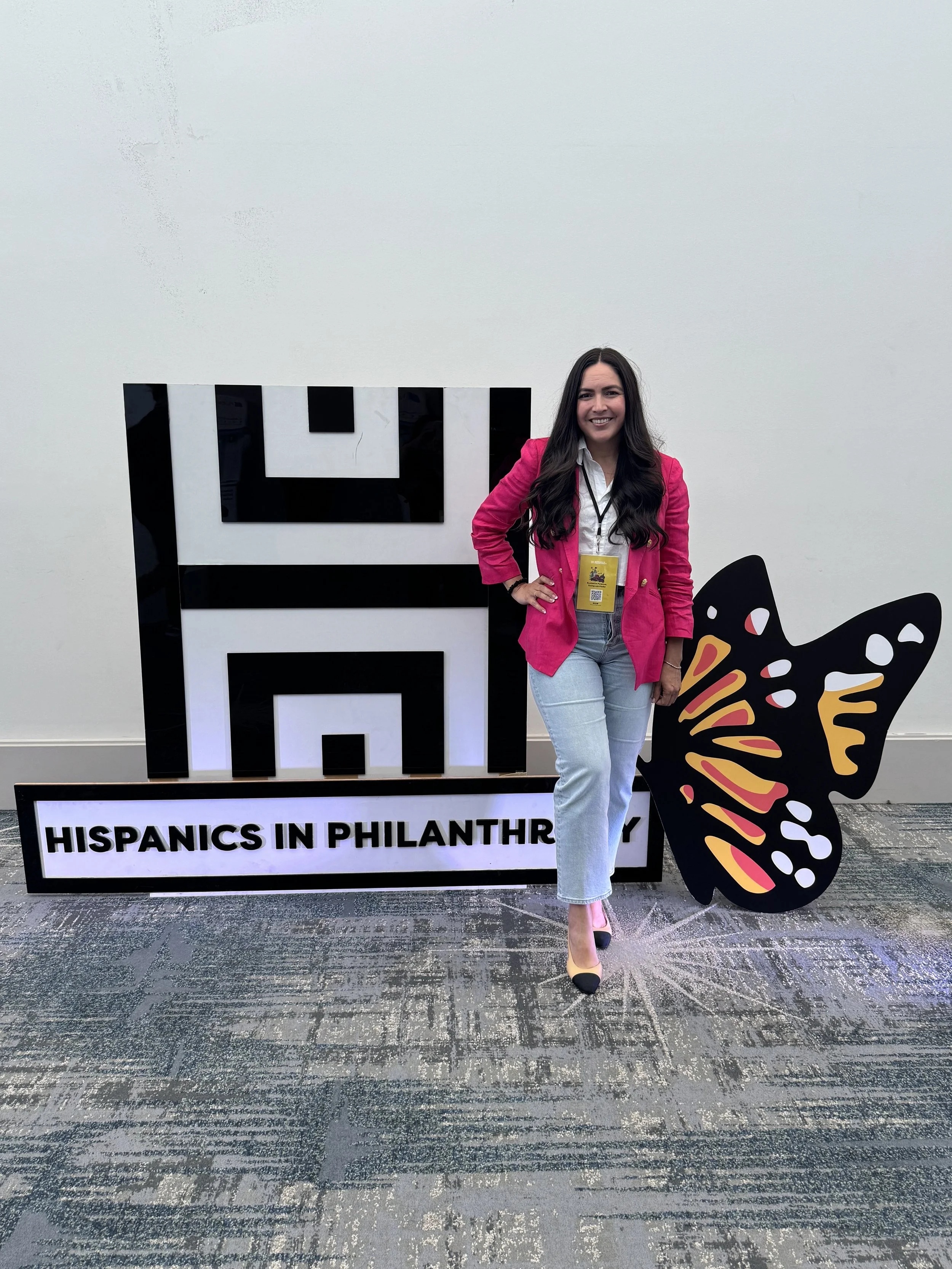
That June also took Garcia to the Hispanics in Philanthropy annual conference. More than 1,000 Latino leaders, funders, and organizers attended. The gathering connected her to a community whose work extends beyond the software platform. In the accompanying reflection, technology’s purpose remained supporting people and their missions. The conference photograph catches her beside the event’s lettering, wearing a bright pink jacket: a human presence in a story otherwise full of systems.
Her September 30, 2026 update described two new colleagues, Kat and Erica, joining ImagineCRM, along with continued work on AI agents for nonprofit and grantmaking clients. She looked ahead to the TAG conference in Chicago. Growth, learning, and conversations with the sector were still the recurring subjects. The tools had changed since the independent-consultant cards; the interest in how people actually work had remained.
Garcia’s story gives those modest cards a satisfying afterlife. They preceded an organization with colleagues, customers, and a body of specialist work. Her original wish for a workable life became something she could build into a workplace for others. The next conversation might concern a grant payment, a data model, or an AI workflow. Each gives her another opportunity to make technology fit the people who have to use it.