At HCA Healthcare, a national giving campaign had a local problem. A hospital is a workplace with its own name, colleagues, and nearby causes. A corporate portal asking everyone to behave as one enormous office risked missing the point. The company needed the reach of a large system and the familiarity of a small one.
- YourCause sells employers tools for giving, volunteering, grants, and reporting.
- Its early consumer fundraising model gave way to an enterprise business.
- The useful trick: centralize the records while keeping participation local.
HCA’s published YourCause case study describes 176 platform segments. Locations could retain their branding, highlight nearby organizations, and appoint campaign leaders. Headquarters could pilot Dollars for Doers, which rewards volunteering with charitable funds, before considering a wider rollout. In the ten most engaged segments, participation reached 45%. That is a selected group, not a company-wide average. The distinction matters.
There is a lesson here for anyone managing distributed people: make the system consistent, then give the invitation a local address. YourCause from Blackbaud has built a business around that tension.
01 / The cause came before the customer
Founder Matthew Combs traces the idea to a television report about a boy in Uganda. He wanted to help and encountered inadequate fundraising tools. In his account to Dallas Innovates, he raised $2,500 in two days. The irritation became a product: an online platform for people raising money for causes.
“my passion and enthusiasm is there, yet my tools are missing.”
Matthew Combs · founder, speaking to Dallas Innovates
YourCause was founded in 2008. The consumer model proved unsustainable; in 2009, the concept shifted toward enterprise employee engagement. The change identified a different buyer. Employers already had giving programs to administer, employees to reach, and reports to produce. They could pay for the machinery.
In November 2014, YourCause announced a $4 million Series A led by Vocap Investment Partners. The release said the business was profitable and had grown clients, revenue, and employees roughly 80% annually since 2010. Those were company-reported figures. Its stated expansion plans covered sales, products, and geography.
Blackbaud bought YourCause in January 2019 for approximately $157 million. The deal put a corporate giving business inside a company already selling software to nonprofits. In theory, both ends of the charitable transaction could become easier to connect. Making that connection practical remains the work.
02 / Generosity has three desks
CSRconnect is where employees give, request matching gifts, find volunteer events, and record hours. Administrators can run seasonal campaigns or year-round programs, configure incentives, and support employee resource groups. Payroll giving and card donations are among its payment options. The attraction is fewer separate places to visit and maintain.
GrantsConnect serves the people distributing corporate grants. It handles application forms, pre-qualification, reviewer scoring, permissions, reminders, and workflows. A nonprofit applying for support, a committee considering applications, and an administrator managing budgets need different views of the same process. The product makes those roles explicit.
Giving + volunteering
Applications + awards
Dashboards + narratives
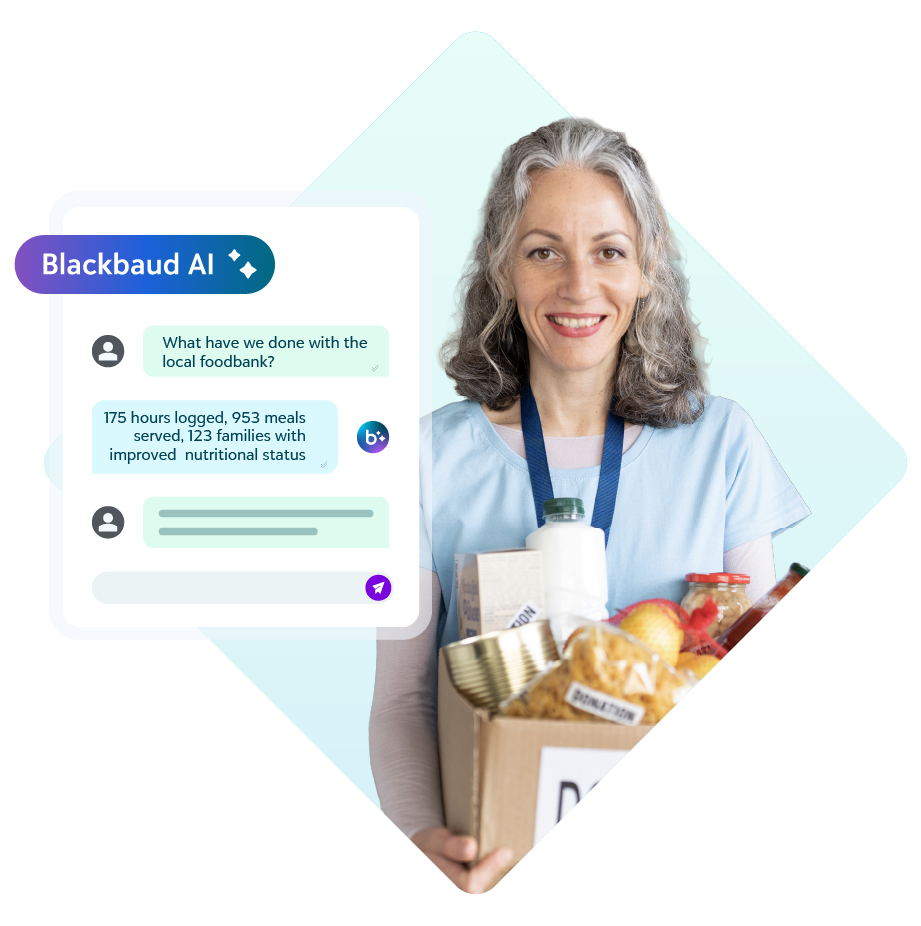
Impact Edge assembles the reporting view. Dashboards are included for customers using CSRconnect or GrantsConnect; Blackbaud AI adds conversational questions and narrative generation. The product describes responses with cited sources and partitioned customer data. A communications team can draft an account of its programs; an administrator can investigate a stakeholder’s question.
The distinction between an activity and an outcome deserves to survive the drafting process. Logging volunteer hours establishes participation. Showing what changed for a community requires further evidence. YourCause’s partnership with True Impact points toward that measurement problem; its product page still labels the integration as coming soon.
03 / The spreadsheet meets ten states
Busey Bank’s customer story supplies a less abstract test. As its footprint grew from five states to ten, administrators wrestled with spreadsheets, and associates struggled to see their volunteer history. YourCause brought opportunities, giving, and records into one place. The bank reported more than 59,000 volunteer hours recorded since launch.
Corinne Dungan, its client and community relations manager, estimated that a five-person team saved over 500 hours in the previous year. That is a customer estimate, not an independently audited saving. Still, it identifies the work being removed: chasing history, coordinating sign-ups, and reconciling totals.
YourCause’s customer network includes organizations such as Crowe, Capgemini, and the Mary Kay Ash Foundation. Support includes dedicated customer success managers, administrator help, and assistance for employees and nonprofits. Product discovery sessions and customer idea voting also give administrators a route into development. Software arrives with people who help run it.
04 / The donation has to arrive
In May 2026, Blackbaud described an Expedited Giving pilot that reduced disbursement timelines by 95% across $2 million sent to more than 650 charities. It is a defined pilot result, not a universal delivery promise. The free Blackbaud Verified Network, formerly NPOconnect, lets nonprofits maintain profiles, complete vetting, and enable digital disbursements. Payment readiness determines who can benefit.
Blackbaud’s May 2026 pilot report
$2 million · more than 650 charities
The competitive neighborhood includes Benevity, Bonterra, and Deed. YourCause’s case rests on connecting employee programs, grant administration, reporting, and Blackbaud’s nonprofit infrastructure. Its integrations page lists HR systems such as Workday and ADP, plus volunteer connections with Idealist and Goodera. That connected workflow is the practical proposition to evaluate.
The company sells through demos and tailored quotes. Buyers should price the full program: selected modules, implementation, processing arrangements, and AI additions. A team running one modest volunteering event may gain little from this much apparatus. A distributed employer managing many campaigns has more handoffs to simplify.
Copy the HCA pilot. Give employees useful records. Check the route a donation takes before admiring the dashboard. YourCause’s history suggests that generosity becomes easier to repeat when someone attends to the ordinary details. Even a noble intention benefits from a decent filing system.
Follow the work
Explore YourCause, its customer stories and product updates. Follow LinkedIn, X, or Facebook.