The price of admission to Anthropia’s startup factory is an unusual one: founders must turn up, work on the business and keep their promises. Their shares stay theirs. In Duisburg, the nonprofit behind the Impact Factory has built a support program around a question that social entrepreneurs cannot afford to duck: who will pay for the useful thing you want to put into the world?
The setting is Villa Anthropia on the Haniel campus in Duisburg-Ruhrort. The language is impact, community and a better economy. The practical work includes customer interviews, business planning and finding the right people to call. The combination has attracted a community the organization now puts at roughly 375 startups and more than 700 members. Those are participation figures, not a tally of businesses saved. Still, they suggest that the offer has found an audience.
0% equity taken
Program participation leaves the cap table alone. Founders contribute time, effort and travel.
The first problem was the program itself
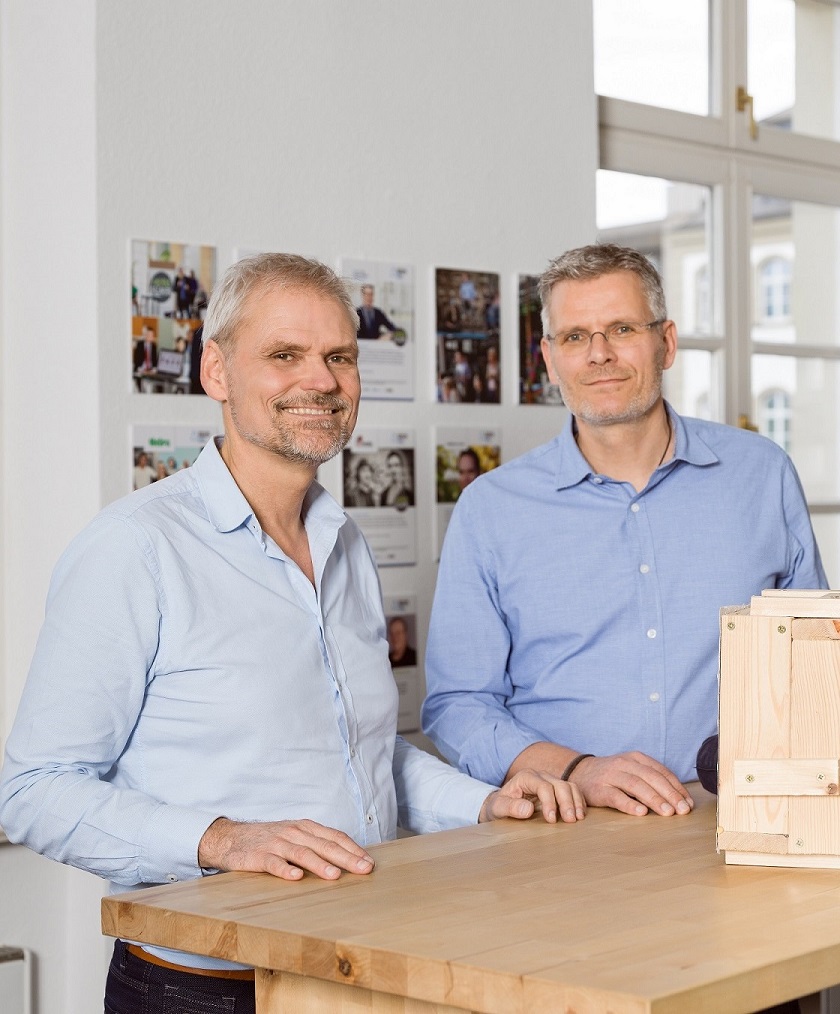
Anthropia’s origin contains a useful admission. Duisburg already had a social-enterprise incubator. In a 2023 interview, co-founder Oliver Kuschel explained that the Social Impact Lab had operated locally for three years. Its principal backers wanted entrepreneurship and social impact tied more closely together. They did not think the existing format made that connection strongly enough.
That dissatisfaction helped produce Anthropia, founded by Kuschel and Dirk Sander in 2018, and the Impact Factory, launched in 2019. It was a change in design prompted by the sponsors’ priorities. Kuschel described an approach that pushed founders to investigate the problem and potential customers’ willingness to pay before arriving at market with a product nobody would buy.
The partners had something concrete to contribute. Haniel brought a corporate presence and a physical base; Beisheim Stiftung and KfW Stiftung helped establish the initiative, alongside program partners including Der Paritätische NRW and Wilo-Foundation. The launch announcement counted 17 teams across its initial support tracks. Their ideas ranged from bee health to accessible family leisure. A single industry would have been too narrow a frame.
A free place, with a calendar attached
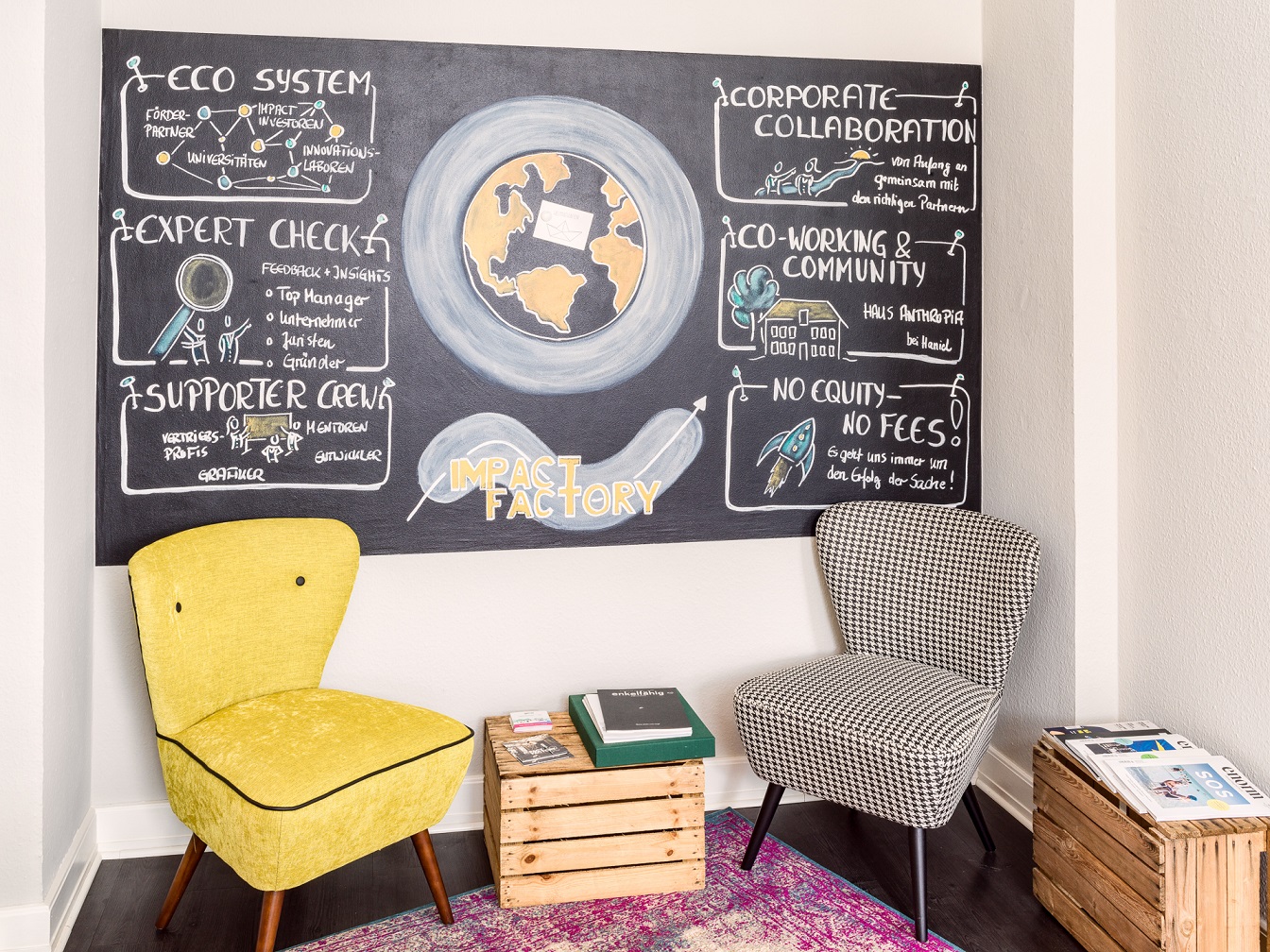
The early-stage offer has been described as four to six months of hybrid support. Its published program combines individual coaching with industry mentors and a more experienced startup peer. Founders can work on prototypes, pitches, sales and impact measurement; founder mental health also appears among the modules. The aim is to choose help around the team’s needs, rather than send everybody through identical homework.
The arrangement makes room for a founder who has a plausible solution but has not yet formed a company. It also makes room for a team with a prototype approaching its first customers. The common requirement is a social or environmental purpose with the potential to support an enduring organization. Public-benefit status is welcome, but it does not exempt a team from thinking about how the work will be financed.
Free still needs unpacking. Anthropia’s program FAQ values the support at approximately €20,000 to €30,000. That is its estimate of the package’s equivalent value, not cash deposited in a founder’s account. The same terms say travel is not reimbursed. For required sessions, a limited room allocation and meals are provided; larger traveling teams can face additional accommodation costs.
Time is the other contribution. The program expects attendance, reliability and willingness to revise an idea as the market teaches its lessons. A founder seeking purely remote support will find the physical meetings inconvenient. Someone determined never to change the business concept will find the coaching more inconvenient still.
The growth program asks for breathing room
The newer Impact Factory Accelerator draws a sharper line around its audience. Its current entry conditions include a product already in the market, initial customers, at least three team members and six months of runway. Approximately ten places are offered per cohort, with applicants from across the German-speaking DACH region and a share reserved for North Rhine-Westphalia.
The implication is practical: this is growth assistance for a team with enough resources to use it. Coaches cannot make an empty bank account disappear. The roughly six-month program works across business readiness, financing, growth and sales, impact, and communications. It also offers AI expertise and tools. The useful question for an applicant is which specific business task that assistance will improve.
North Rhine-Westphalia selected Anthropia as one of six startup accelerator hubs in 2025. The state-backed project carries approximately €1.2 million over three years. That figure describes public support for running the accelerator. It should not be mistaken for an investment round in Anthropia or money promised to each startup.
Sander brought experience to the assignment: before Anthropia, he had helped build Social Impact Labs in Bonn and Duisburg, following more than 17 years in leadership roles at Citibank. Knowing how established organizations work is relevant when the job involves getting young companies through their doors.
What a network does after the introductions
Startup communities are easy to describe in large numbers. Individual accounts reveal more about the work. Organifarms, which joined in July 2020, described five months of workshops on pitching, storytelling, problem-and-solution interviews and business planning. It also received coworking access and continued as a fellow after completing the program.
“Especially the exchange with other founders and our mentors was very valuable for us.”Organifarms, December 2020
That account makes the value fairly tangible. Founders were practicing conversations, testing assumptions and getting help from people outside their own team. The villa supplied a place to do it. Fellowship supplied a reason for those relationships to continue after the scheduled workshops ended.
Other participants show how wide the work can run. Sustamize describes the fellowship as support for developing and scaling its carbon-data solutions, including contact with experts, mentors and peers. Sym’s account of joining in 2024 identifies business development and scaling as the intended focus. These are different businesses using shared commercial skills.
On Anthropia’s current application page, Solarhub founder David Wolf describes gaining access to cities and districts. Another testimonial, from go Ava’s Jan Schellenberger, says meeting different kinds of investors prompted the team to reconsider what it wanted and how much. Introductions can alter a financing decision, not simply add names to an address book.
Three audiences, different transactions
Anthropia serves founders, but they are not its only audience. Foundations, sponsors and public institutions fund work they want to see happen. Established businesses can use Anthropia Business Services for innovation advice, startup collaboration and workshops. The company names Zurich Versicherung and consultancy MACC among its clients.
Those corporate services extend methods developed through startup coaching into established organizations. A business can bring a practical challenge, meet relevant startups or use the villa as a place to work outside familiar routines. For Anthropia, the relationship adds another route between the people developing solutions and organizations that may have a use for them.
There is a separate investment story. Anthropia describes Anthropia Ventures as its associated impact fund, while the venture website names Anthropia Ventures GmbH. Its 2024 launch messaging proposed pre-seed and seed investing in both exit-oriented and non-exit-oriented businesses in Germany and Europe. Admission to a nonprofit support program and a negotiated investment are different transactions. A founder should evaluate each on its own terms.
The distinction explains Anthropia’s place in the market. It sits among founder-support organizations, with connections into corporate innovation and investment. A regional incubator, university entrepreneurship center or industry accelerator may address parts of the same need. Anthropia’s particular combination is a social-and-environmental selection focus, sponsor-funded participation and a continuing community.
Copy the questions, then build the support
There is a usable lesson here for anyone building a support program: start with a business problem specific enough to work on. A founder needing a first customer interview and a founder negotiating growth capital need different help. Anthropia’s separation of incubation and acceleration gives that difference an organizational form.
Its model also depends on contributions that cannot be summoned by announcing a community. The founding partnership combines space, advisory support and connections with organizations able to sustain the initiative. Replicating the free offer requires someone to fund delivery. Replicating the useful introductions requires relationships with people who can act.
Beyond startups, Change Clubs encourage small groups to make practical sustainability changes, while the founders’ Aufwind Zukunft podcast opens the conversation to a wider audience. These activities reflect the company’s ambition to influence how people participate in the economy, including those who will never submit a pitch deck.
For founders, the immediate next step is more modest. As of September 10, 2026, the application site is collecting interest for subsequent rounds, including incubation from November and acceleration in early 2027. A useful preparation would be to write down the customer problem, the evidence collected so far and the decision the team needs help making. That gives a coach something to work with on the first day.