In 2012, students at the Technical University of Crete began meeting to talk about innovation and entrepreneurship. They called the initiative TUC Venture. Greece was living through an economic crisis; the students believed universities could help create a different future. The proposed intervention was modest enough to fit inside a campus: get interested people together, and give them something useful to discuss.
- A nonprofit connecting Greeks in tech through learning, events and introductions.
- Free community access, paid memberships and a separate early-stage investment syndicate.
- Online programmes extend the network beyond Greece; funding still depends on selection and investor decisions.
That circle became Youth Entrepreneurship Club, then Startup Greece. Its offer now includes founder interviews, university talks, international delegations, ecosystem mapping and an investment syndicate. The names suggest a sprawling organisation. The underlying problem is rather specific: having a promising idea does not mean knowing whom to ask about it.
When the room lost its walls
Startup Greece’s origin matters because it began with proximity. A university supplies people who can meet repeatedly, compare ambitions and discover that someone else has a skill they lack. Expansion meant finding ways to reproduce that contact elsewhere. The organisation registered as a legal entity in 2015, ran events across Crete and established local hubs.
Then came 2020. Its own history describes activities moving online, including a seven-day Startup Greece Week with 21 workshops and 14 sessions. The physical gathering had been disrupted. The replacement could reach people beyond the original rooms. By 2021, the organisation was concentrating on tech startups, with SG Talks and Greek Startup Universe as new projects.
The first Greek Startup Universe round supported 430 founders, according to the organisers. Their account says that experience prompted an expansion across Europe. The subsequent European programmes reported more than 1,500 founders and 600 startups participating across eight countries. These are participation figures; they do not mean every founder raised money. They do show why a campus-based identity had become too small.
A door for the not-yet-founder
For someone considering entrepreneurship, the first useful service may be a conversation rather than an application for investment. SG at Universities offers talks with free registration. Its predecessor, YEC Unidays, recorded more than 15 events and 2,000 attendees since 2016, the organisation says. SG Talks lets viewers hear founders describe their journeys before attempting one themselves.
The map supplies another kind of orientation: which startups exist, and in which sectors? SG Map covers Greece-based and Greek-founded companies worldwide. Its public landing page still references the 2022-2023 edition, so readers should check the edition before treating it as a current directory. Even a useful map needs a date.
“We are Open. We are Doers.”
Startup Greece / published values
There are also internships and volunteer opportunities. The careers page emphasises practical projects, skills and leadership experience. That fits the organisation’s stated preference for teamwork and learning through action. For students, it creates a way to participate before they have a venture to pitch. For the organisation, participation can begin well before someone becomes an investor or a founder.

The price of getting closer
Community access has a free tier. The published annual membership prices are €200 for individuals and €1,000 for investors, with discounts offered under specified conditions. A startup tier is priced as a percentage of equity, without a percentage stated publicly. Benefits vary: programme access, event discounts, visibility, deal flow and other opportunities belong to different membership packages.
The investment syndicate is more explicit. It targets pre-seed and seed companies based in Greece, without a stated sector restriction. Startup Greece prepares opportunities for backers, who decide deal by deal. Several investors can participate through a vehicle represented by one entry on the startup’s cap table. The convenience is easy to understand: fewer separate investor entries for the founder.
No management fee. No participation fee for the startup. Carry is a share of investment profit.
Startup Greece says syndicate proceeds are reinvested into free community initiatives. That creates a connection between the investment activity and the wider nonprofit work. The arrangement also makes the audience distinction important: someone seeking a workshop, an investor reviewing a deal and a founder raising capital are entering different processes, with different costs and expectations.
Davos is a beginning, too
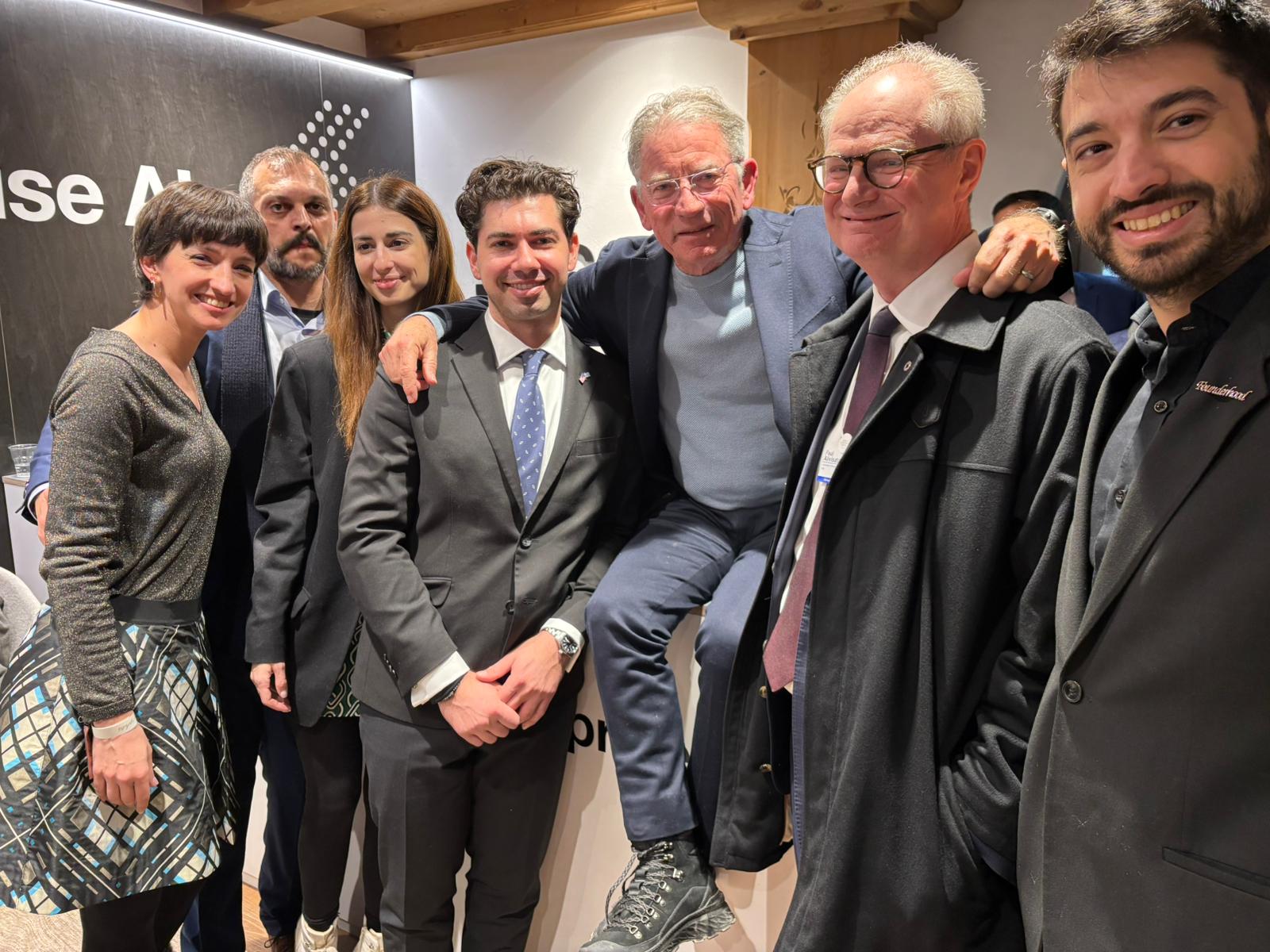
International delegations take the same introduction-making idea abroad. Startup Greece’s January 2025 Davos recap describes meetings in the World Economic Forum environment, including conversations with AI entrepreneur Tom Siebel and University of Chicago president Paul Alivisatos. The photograph is tangible. A meeting’s eventual commercial value takes longer to establish.
Its connections also support less glamorous, more concrete subjects. On 22 May 2026, the Erasmus+ From Waste to Worth programme hosted online startup pitches and a roundtable. Participants included Wasty, working on food-waste reduction, and PHEE, using plant residues and dead seagrass leaves in materials. Partners included A.B.A.T. Balkania and Permacultura Cantabria. Sustainability here had businesses attached.
The mix is deliberate in its public mission: promote, connect and advance entrepreneurship for Greeks in tech. Universities bring people near the beginning of that journey; corporate and institutional relationships bring other perspectives. Its listed partners include Deloitte, Diageo, the European Commission and embassies. Those names describe the network’s range. They do not establish that any particular founder will receive a contract, a grant or an investment.
Borrow the sequence
Startup Greece sits between education, community organising and early-stage finance. A founder might also approach an accelerator, an angel directly or another ecosystem organisation. Its distinctive proposition is the sequence: encounter entrepreneurship, meet practitioners, join a network, then potentially seek capital. The earlier relationships give the later introduction some context.
That sequence is worth copying. Start with repeatable contact, offer a useful reason to return, and publish the terms when money enters the room. It depends on relevant people participating and following through. An introduction cannot create customer demand; programme attendance cannot guarantee investment. For the founder who knows what help to ask for, however, a well-chosen conversation can be a practical next step.