At Draper University, the promise to fail is written down. “I will fail and fail again until I succeed,” declares its public pledge. This is an unusual sentence for a school to put in front of its students. An investor can tolerate several mistakes because one successful investment may pay for the others. A student has a smaller portfolio: time, savings and whatever confidence survived the last attempt.
- The offer: residential entrepreneurship training, mentorship and investor pitch practice.
- The distinction: Hero Training accepts people without an idea; specialist accelerators recruit startup teams.
- The trade: proximity and feedback, with costs and investment terms that depend on the program.
Founded by venture capitalist Tim Draper in 2012, the San Mateo company applies an investor’s appetite for experiments to education. Its five-week Hero Training is a pre-accelerator. The assignment is to develop a business and become better at presenting it. But the more revealing question is what happens when the business deserves to be abandoned.
The useful business that never happened
Tam Pham attended in fall 2015. In his published review, he described working on an idea that did not survive 50 customer interviews. He left without launching that business or raising money. He also concluded that he did not need to hurry into another startup. The program had helped him reconsider the very ambition that brought him there.
That is one participant’s retrospective, with a disclosed referral incentive, rather than a representative outcome. Still, it identifies a concrete educational result: questions changed a decision. The idea failed before it could consume a larger commitment. A school selling entrepreneurial confidence had, in this instance, helped someone exercise restraint.
The detail is useful because startup training can become a pageant of certainty. Every presentation needs a market, a moat and a suitably enormous number. Customer interviews have a less flattering purpose. They can expose the difference between a problem someone describes politely and a problem someone will pay to remove.
A venture capitalist’s answer to school

In a 2013 interview, Draper argued that conventional education rewarded avoiding mistakes. His proposed correction included team scores, unfamiliar challenges and a presentation to venture capitalists. He described a curriculum that changed with each program. Behind the superhero language was a recognizable concern: academic competence and willingness to act under uncertainty are different skills.
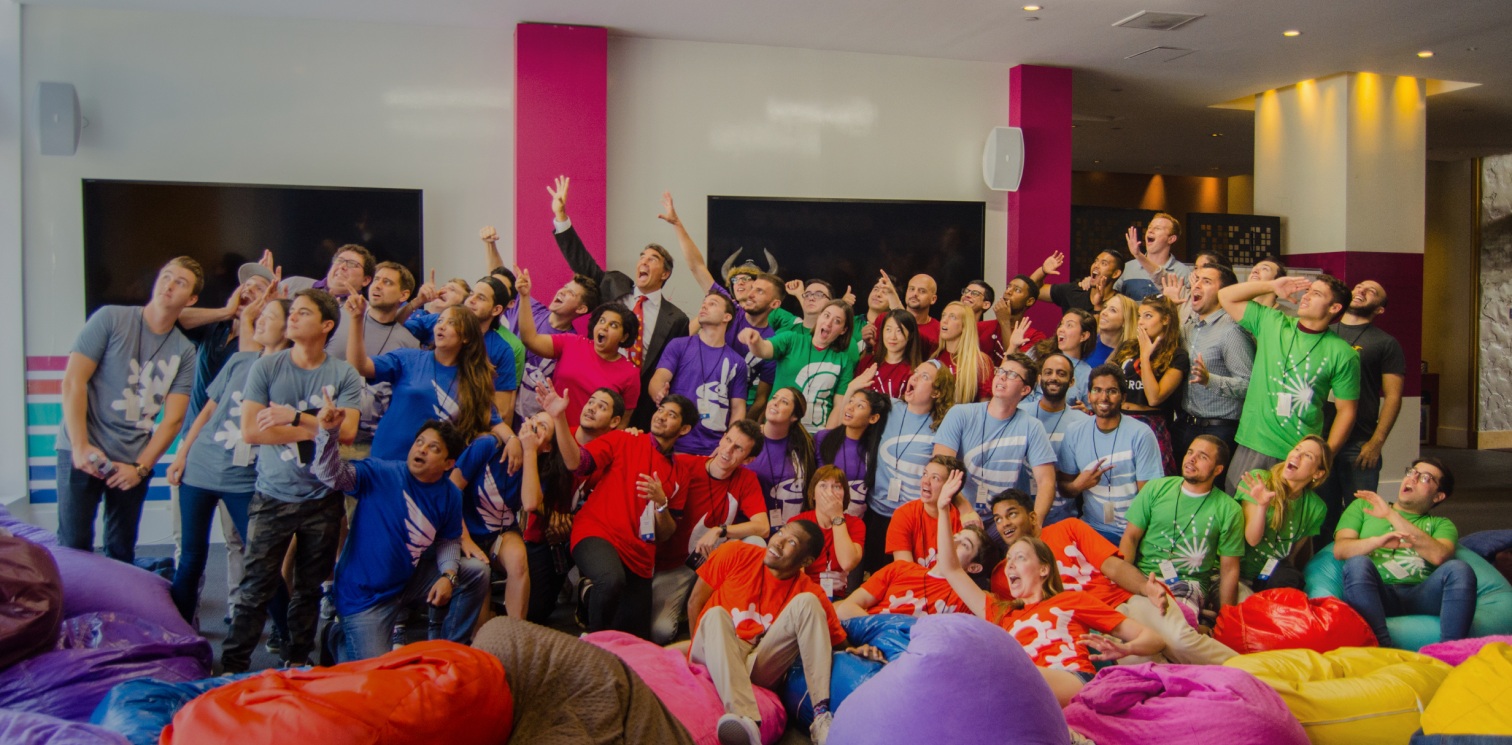
Today, the residential format remains part of the proposition. Hero Training’s FAQ says roommates are assigned. It welcomes applicants with a company, an idea or neither. Workshops introduce business subjects; the school expressly says it is not a coding program. A founder seeking intensive technical instruction should read that distinction carefully.
“Go ahead, take the chance, and don’t be afraid to fail.”
Tim Draper, in his 2013 education interview
The expertise being sold is exposure to company building and venture finance, organized into a short, social experience. There are limits to guest expertise. Pham found that visiting speakers could offer useful advice without knowing where his own business stood. His account also credited individual mentors with improving accountability. A celebrated visitor and a continuing adviser perform different jobs.
The school has another customer
The obvious customer is an aspiring founder. Draper University also serves organizations that want more founders in their own ecosystems. Its government program page reports relationships with more than 20 agencies. Its blockchain programs pair entrepreneurial development with a particular network’s desire for applications, companies and adoption.
This helps explain the business model. There is paid education, customized partner programming and investment activity around selected startups. The public virtual Fundamentals course supplies another route into learning, although its listed session dates are historical. The offer occupies several markets at once: founder education, startup acceleration and the business of developing an entrepreneurial ecosystem.
For someone comparing options, the relevant alternative changes with the problem. A university course may suit someone seeking sustained academic instruction. A startup accelerator may suit an existing team seeking investment and growth support. Draper’s distinctive combination is a residential introduction to entrepreneurial life beside programs aimed at already formed companies.
Propose02
Test03
Revise04
Pitch
Read the deal, then admire the dollar sign
In 2026, the Cardano Genesis pre-accelerator advertised a four-week residency and up to $20,000 investment for a target 2% equity. Apex, designed for investor-ready startups, advertised ten weeks and up to $70,000 for a target 3.5%. These are published targets, not a substitute for the agreement an accepted company signs.
4-week residency
10-week residency
Genesis states there is no participation fee and provides accommodation, while founders cover transportation and meals except occasional provided meals. Residence also requires being able to attend in person in the United States. Those conditions matter to a founder with a day job, a family or limited travel flexibility.
The Stellar programs show why the word “funding” needs unpacking. The Builder Residency page describes a $20,000 equity-free grant. The 2025 Embark accelerator advertised $50,000 investment paid in tranches tied to milestones. Its expense details capped flight coverage at $2,000 and left daily meals and local transportation with participants. Similar surroundings can house quite different financial arrangements.
The numbers need their proper owners
Draper University’s Hero page reports more than 3,300 alumni, over 700 companies and more than $950 million raised. These are the school’s cumulative claims about alumni. They measure the scale of its network; they do not establish how much the training caused, or what a typical participant receives.
A separate figure belongs to the Cardano and Draper Dragon Orion ecosystem fund: $80 million. The Cardano Foundation describes Draper University as a founder development platform supporting that pipeline. The money is associated with an investment initiative, rather than revenue or a financing round for the school.
There are narrower, recent results too. The Foundation’s September 2026 update reported 13 Genesis teams presenting, with Agentic Dynamics and ChatterPay subsequently winning an industry hackathon. As of October 8, Apex was scheduled to begin October 12. Those observations are more useful than treating every announced opportunity as an accomplished outcome.
The lesson travels without the suitcase
A reader can copy the underlying routine: name the assumption, ask customers questions that might disprove it, revise the offer and practise explaining the evidence. Protect time to build between conversations. A crowded calendar of impressive people can still leave a product untouched.
The residential model makes most sense when access, feedback and peers address an actual bottleneck. It fits less comfortably when a founder needs uninterrupted engineering time, cannot relocate or wants a guaranteed investment. The useful test is whether the experience changes decisions. Pham’s abandoned idea offers a modest, persuasive answer: sometimes the value of a school appears in the company you decide not to start.
Beyond the pitch
Draper University · Cardano programs · Campus dispatches
LinkedIn · X · Instagram · Facebook
Watch: Tim Draper on Startup Sounds
Watch: The Startup Hero conversation
DraperTV