An accelerator can teach you how to price a product. In September 2017, Parallel18 had to work out how to feed its founders. Hurricane Maria had interrupted the Puerto Rican program. Business coaching gave way to finding water, arranging relocation, and getting a generator working. The staff cooked pasta for 40 to 50 people. For a while, the coworking office became somewhere entrepreneurs could spend their nights.
- The offer: P18 now invests $100,000 per selected startup through a SAFE.
- The premise: build connections in Puerto Rico and sell into larger markets.
- The machinery: acceleration, life sciences incubation, growth support, and corporate introductions.
That episode offers a useful way into this organization. A founder’s obstacle changes. A program that wants to remain useful has to notice. Parallel18 has spent a decade adjusting its answer, from an international accelerator offering grants to a platform that also invests. The continuity is the location: Puerto Rico should be a place where a company can begin without deciding that success requires leaving.
The island was part of the product
The original proposition grew out of an unlikely recruitment. Lucy Crespo, leading the Puerto Rico Science, Technology and Research Trust, wanted entrepreneurship to help reshape the island’s economy. Sebastián Vidal had run Start-Up Chile. In 2015, he moved from Santiago to San Juan to help build a similar experiment. The Trust created Parallel18; its name borrowed Puerto Rico’s place near the 18th parallel north.
Its location supplied a particular advantage. A Latin American founder trying to enter the United States faces more than distance: unfamiliar buyers, unfamiliar pricing, and an address book with the wrong addresses. Puerto Rico offered a bilingual setting and connections across those markets. Parallel18 packaged that access with mentoring and money. The first cohort in 2016 comprised 36 startups, each receiving $40,000.
That makes its place in the market fairly clear. Founders shopping for acceleration can consider international programs such as Techstars or Y Combinator. Parallel18 makes Puerto Rico itself part of the proposition. The local economy is also a beneficiary: visiting entrepreneurs meet local talent, while Puerto Rican founders encounter peers whose ambitions extend beyond the island.
Before the pitch, the power socket
Maria exposed the assumptions underneath the curriculum. Electricity and communications had to work before a sales workshop could be useful. Parallel18 postponed the program, and international companies departed. Vidal later said the companies returned when acceleration resumed in January 2018. The team also developed Pre18 for local early-stage businesses; more than 300 applied and 40 were selected.
“If you don’t have power, you cannot load your computer.”
Sebastián Vidal, speaking in 2018
The recovery changed the task in front of the team. Local entrepreneurs needed a route into business support during an emergency. By 2020, another interruption required another response: P18’s eighth generation became its first entirely Puerto Rican cohort and used virtual mentoring. The organization could recruit expertise without flying every mentor to San Juan. Circumstances changed the delivery.
The check got bigger. The deal changed.
The early grant offer remains prominent in old coverage. Today’s P18 applicant is considering a different transaction. The current program offers $100,000 through a Simple Agreement for Future Equity, or SAFE. There is a four-week virtual evaluation before a 16-week curriculum in Puerto Rico. The check carries a potential future ownership cost; its economics belong in the founder’s decision alongside the size of the payment.
More capital, a different instrument. Bar lengths compare check amounts only.
The fourteenth generation makes the change tangible. Announced in June 2026, it brought together 16 startups from nine countries with $1.6 million in investment. Among them were BioLeap graduates Cultimar Technologies and Diversia Health, working in aquaculture and clinical research respectively. A scientific venture could move from incubation into the broader accelerator.
The fit is deliberately selective: P18 asks for at least two full-time founders, three years of operations or less, fundraising readiness, and a team leader able to participate on the island. Weekly progress reviews connect business metrics to mentoring. A solo founder unable to relocate, or a business uninterested in venture funding, has a different problem from the one this program is organized to solve.
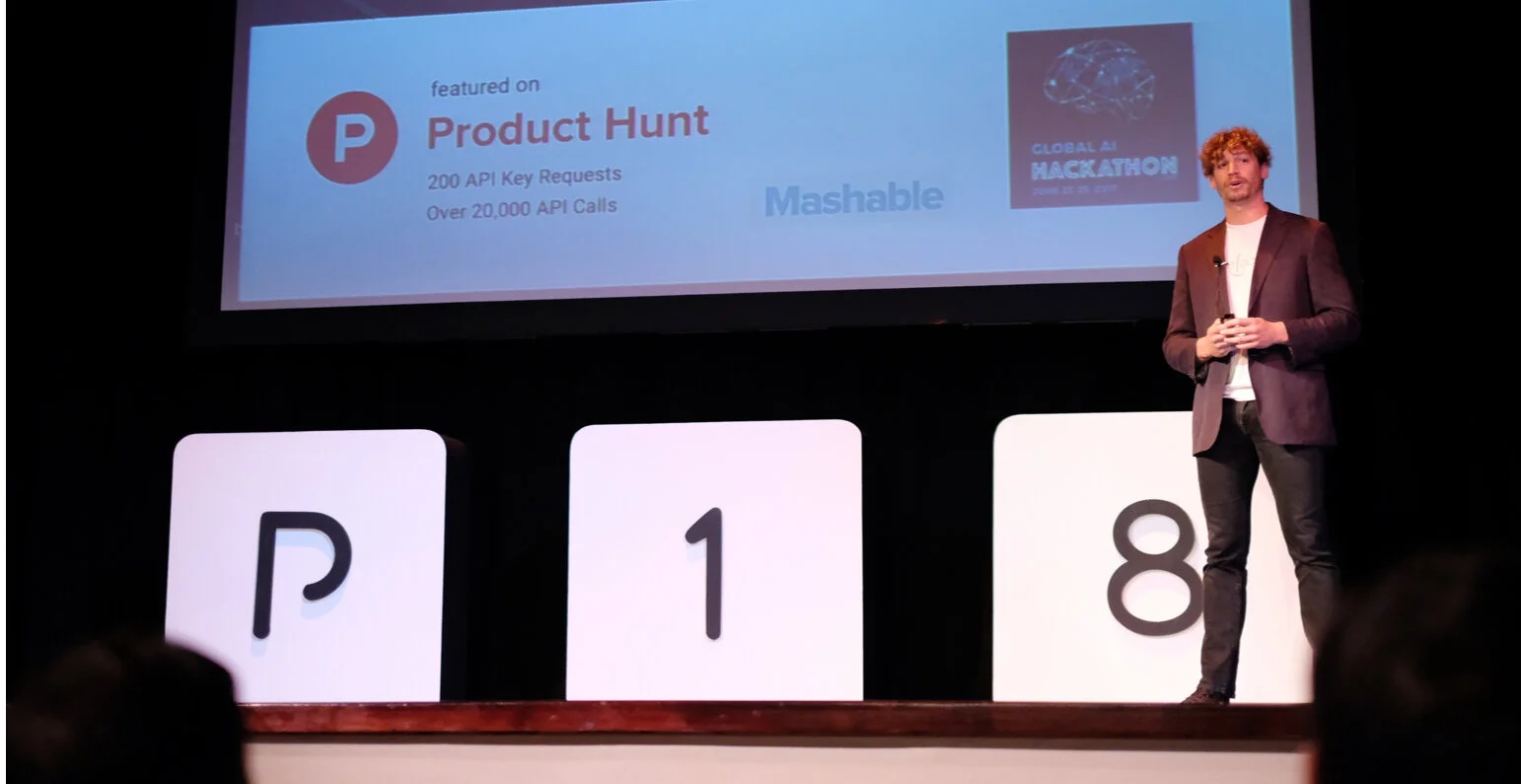
A lab, a buyer, a second act
BioLeap addresses another bottleneck. A life sciences prototype needs a route toward commercialization, along with somewhere to continue experimental work. Its offer includes a 12-week curriculum, 14 weeks of technical assistance, and access to the Confluence Center laboratory in Science City. Projects need a functional prototype, experimental proof of concept, or platform technology. An idea alone does not qualify.
Xpand serves businesses further along. Subsidized by Banco Popular, it offers selected participants free support with strategy, operations, finance, and expansion. Its published thresholds include three or more years in operation and at least $250,000 in annual sales. Founder roundtables give those companies somewhere to discuss challenges after the accelerator photograph has been taken.
Connect introduces startups to established businesses that might use their products. Ventures helps with fundraising and follow-on capital. Parallel18 also supports Puerto Rico’s VCAP, implemented by the Economic Development Bank, which co-invests alongside private investors. These arrangements reveal the business model: nonprofit economic-development support, corporate sponsorship, and investment mechanisms serving different stages.
The range of expertise is visible in its leadership. Executive director Héctor Jirau has training in cell and molecular biology, financial engineering, and biochemistry, as well as investment experience. That combination suits an organization trying to connect scientific work with capital. A promising experiment and an investable company require different kinds of judgment; Parallel18 has made room for both.
Copy the useful part
The practical lesson is to identify the missing resource precisely. A researcher may need laboratory access. A software founder may need a buyer. A growing company may need a credible investment round. Weekly metrics, targeted introductions, and support after graduation are habits other programs can copy. Their usefulness depends on having mentors, customers, and investors who can act.
Parallel18’s parent reported that Gen.13 added approximately 3,000 customers and made more than 90 industry, investor, and corporate connections. Those are cohort outcomes, rather than proof of what acceleration caused. But they point toward a sensible question for any founder considering a program: who will I be able to reach from here? At Parallel18, the answer begins on an island and is meant to keep going.