A desk is easy to understand. You pay, sit down and open a laptop. Capital Factory built a more interesting proposition around what happens when you look up: an investor, a potential customer, or somebody who has already made the mistake you are about to make. In Austin, that somebody might also work for the military.
The organization began in 2009 with five startups. Today, its investment identity runs through the Texas Fund and its All Access founder network. Robotics, space, energy and healthcare sit alongside its software roots. The firm describes a historical network of more than 1,000 companies, a broad measure of reach rather than a head count of tenants.
In March 2026, Capital Factory added a consequential distinction: STATION Austin, a separate nonprofit carrying its community programs forward. The question for a founder is now quite specific. Do you need a check, an introduction, or a place to become part of the conversation? Those needs overlap. Their price tags do not.
A summer program discovers the rest of the year
The original proposition was admirably legible. Capital Factory offered up to $20,000 and a ten-week mentoring program in exchange for 5% equity. Contemporary accounts identify Joshua Baer, Sam Decker and Bryan Menell as its founders. Entrepreneurs with experience starting and selling businesses would help the next group get moving.
This was recession-era company building, with an emphasis on keeping the experiment affordable. Baer’s 2009 announcement argued that falling barriers to entry made it possible to start businesses cheaply. Applications were supposed to be concise and compelling. Elaborate financial projections were less interesting than persuasive answers about the business.
Then the physical gathering place acquired a logic of its own. The Austin Chronicle reported that Baer leased the Omni’s 16th floor in May 2012 after seeing coworking gain traction. By its October 2013 account, Capital Factory had 400 coworkers, 150 companies and roughly 30 meetups and events a month. A summer accelerator had become a regular address.
“It’s all just kind of a break-even business.”
Joshua Baer on coworking, Austin Chronicle, 2013
That remark explains the economics better than a photograph of an attractive office. Baer said the space created an environment where experienced entrepreneurs could mentor, invest and help companies grow. Read that as a business design: rent supported the gathering place; ownership in successful companies offered a different kind of upside. The useful asset was the repeated encounter.
Texas, with the distance turned down
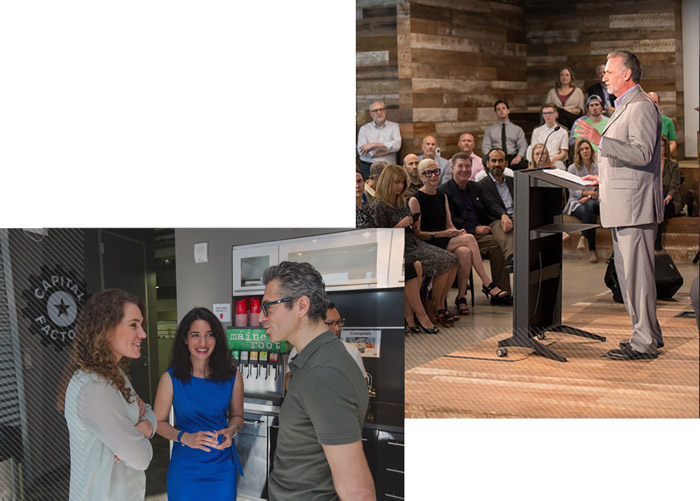
Capital Factory’s 2017 Texas Startup Manifesto proposed treating Austin, Dallas, Houston and San Antonio as a connected startup economy. The practical version was refreshingly unglamorous: chartered buses, office hours, lunches and happy hours. Its road-show pages directed Austin participants toward Station Houston and San Antonio’s Geekdom; Dallas had a coworking relationship with The DEC.
A map does not create an investment network. Somebody has to organize the trip, bring the right people and make the introduction worth accepting. The statewide thesis made that labor part of Capital Factory’s identity. It also widened the pool of people who might supply a customer, an employee or the next investment round.
That history helps explain its place in the market. A founder shopping for office space can compare desks and meeting rooms. A founder shopping for venture capital can compare investors. Capital Factory asks the founder to value the connections between those services. Its geographic depth is central to the offer: the more relevant Texas relationships a company needs, the more coherent the proposition becomes.
The customer down the hall wears a different badge
The government connection gives that argument substance. By 2019, the Army Applications Laboratory had established itself inside Capital Factory to help innovators navigate Army acquisition. AFWERX and the Defense Innovation Unit also became part of the local concentration of government innovation organizations.
The problem was more specific than a shortage of networking events. Defense News reported small businesses’ concerns about slow contract awards and complex procurement. Bringing an innovation office closer to startups created somewhere to begin those conversations. For a founder, discovering who understands the problem can precede discovering who has authority to buy a solution.
One Army Innovation Day at Capital Factory in February 2020 makes the process tangible. More than 700 white-paper entries were narrowed to 38 pitches. Twelve concepts would advance for refinement and possible accelerated contracting. The subjects included sensors, autonomy, predictive maintenance and electronic warfare.
The room is only the beginning.
Army Innovation Day at Capital Factory. Advancement meant refinement and possible contracting, not twelve awarded contracts. Stages not to scale.
The distinction matters. Hosting the event did not make Capital Factory the buyer, and reaching the next stage did not mean receiving a contract. Its contribution was a setting in which commercial technology and military needs could meet. The Army still had to decide which ideas deserved further work.
DARPA gave Capital Factory a more formal commercialization role in August 2024, selecting it as one of five regional commercial accelerators. The remit included connecting agency-funded teams with entrepreneurial talent, investors and corporations, alongside coaching and market analysis. Here was a public agency turning to the same general thesis: technical achievement needs people who can help turn it into a business.
What broke was the gathering
A business built around getting people together had an obvious exposure when SXSW was canceled in 2020. Capital Factory’s government history identifies that cancellation as the spur for the first Fed Supernova, held virtually. A disrupted event calendar produced another way to convene the same constituencies.
That is a more useful episode to copy than a vague injunction to adapt. Identify the purpose of the gathering, then rebuild the format around it. In this case, entrepreneurs, government representatives and industry still needed a place to compare problems and possible solutions even when the familiar festival disappeared.
The event endured. In August 2024, SpaceWERX announced STRATFI selections at Fed Supernova in Austin. Its official account described a panel bringing companies already in the program together to discuss their experiences. For an entrepreneur trying to understand a difficult customer, hearing from somebody who has already entered the process is a practical form of help.
Three doors, three different conversations
The current Texas Fund describes cash investments from seed through Series C in deep and frontier technology. Its portfolio includes Apptronik, Saronic and Paradromics. The company’s history dates the first Texas Fund to 2021 and the opening of Fund II to 2026. This is the route for a conversation about investment in the business itself.
All Access describes a network for experienced founders looking for customers, talent, advice and investors. Its pitch is especially relevant when a company can name the missing person: a prospective co-founder, an enterprise buyer or an investor suited to the next round. Capital Factory also presents All Access to limited partners as a way to gain exposure to its broader network.
STATION Austin takes responsibility for community programming, mentorship and collaborative space. At its March 2026 launch, membership started at $250 per month for access to an invitation-only app and in-person events. Around-the-clock coworking and dedicated offices carried an additional charge. That distinction belongs near the price, where a founder can actually use it.
App access + in-person events.
Coworking and dedicated offices cost extra.
Illustrative membership cost, before extras.
The separation gives community activity its own institutional home while Capital Factory retains its venture identity. Baer’s launch announcement described the nonprofit as a way to expand access. It carries events including Fed Supernova, Health Supernova and Austin Tech Week, as well as the Center for Dual-Use Innovation. A recurring membership payment should be evaluated on those benefits, separately from any investment discussion.
Bring an obstacle, not a vague ambition
The most practical way to use this collection of services is to arrive with a specific question. If the problem is investor fit, identify the stage and expertise required. If it is customer discovery, describe who buys, who uses the product and what remains uncertain. An introduction becomes easier to make when its purpose can fit into a short email.
This is an inference from the offer, not a promise about outcomes. The published member guide points newcomers toward orientation, mentor office hours and a monthly Launch Pad event. The organization provides entry points; the founder still has to prepare, participate and follow up. Paying a bill cannot do that work.
Corporate participants approach the same network from another direction. Capital Factory offers sponsored programming, startup scouting, recruiting and pilots matched to strategic priorities. Founders want buyers; established companies want a manageable way to discover useful technology. The value depends on whether those intentions survive beyond the introduction.
For a business needing only inexpensive workspace, the broader bundle may add little. For a founder whose customers and investors sit outside the network, a more specialized community may be a better fit. And for a company pursuing government work, proximity cannot substitute for a relevant product or patience with the customer’s process. The right room reduces a search problem; it does not eliminate the business problem.
A network has to outlive its connector
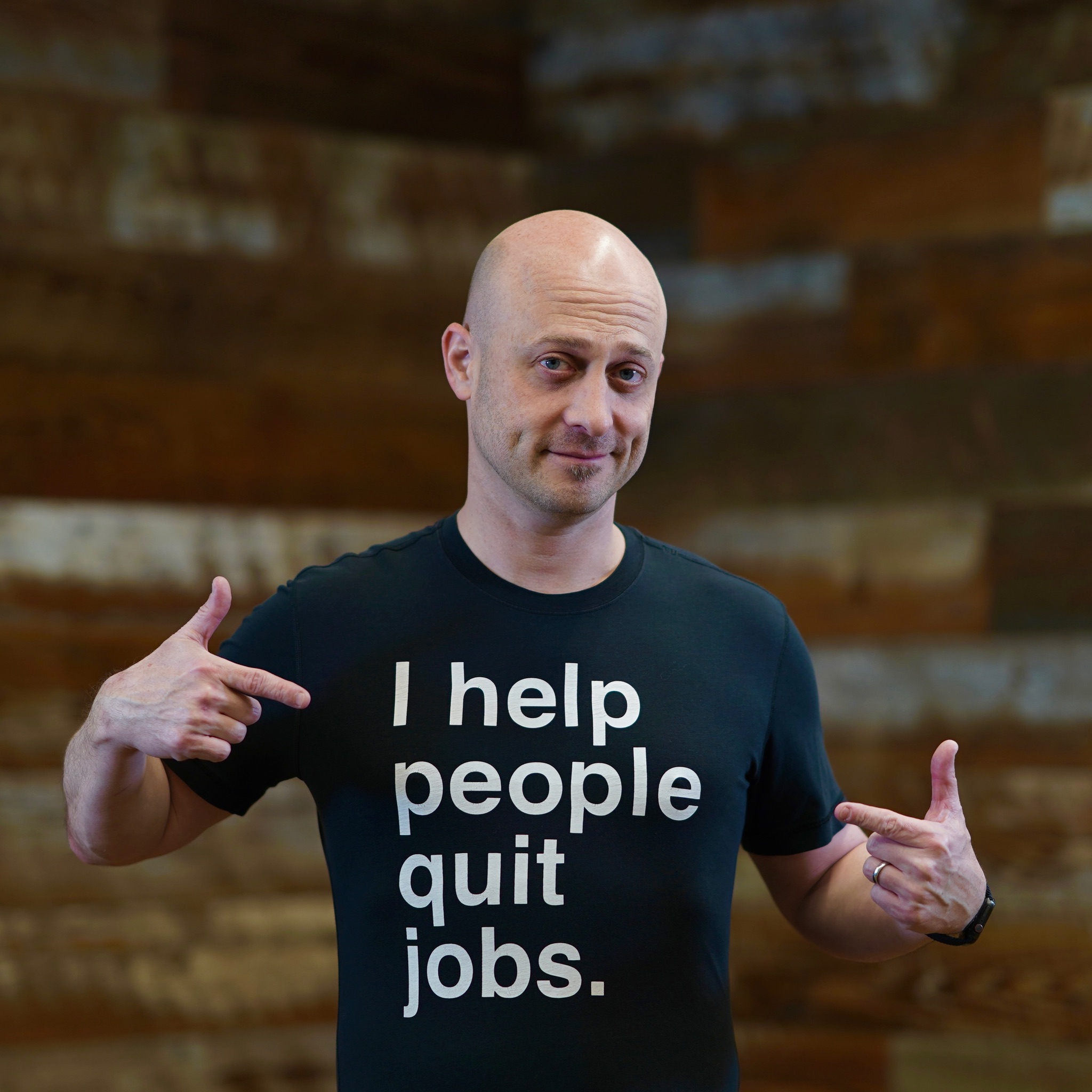
Baer died in a plane crash near Laredo on June 16, 2026. Capital Factory president Bryan Chambers said the organization remained fully operational. The loss adds weight to the institutional question raised by STATION Austin’s launch three months earlier: how does a community preserve relationships that a particular person helped create?
Capital Factory’s answer must now be demonstrated through its team and daily work. Its distinctive contribution has been to make introductions an organized activity, with places, programs and investment vehicles attached. For the founder considering it, the test remains wonderfully concrete: identify the next obstacle, find the person who understands it, and see whether the conversation produces a useful next step.