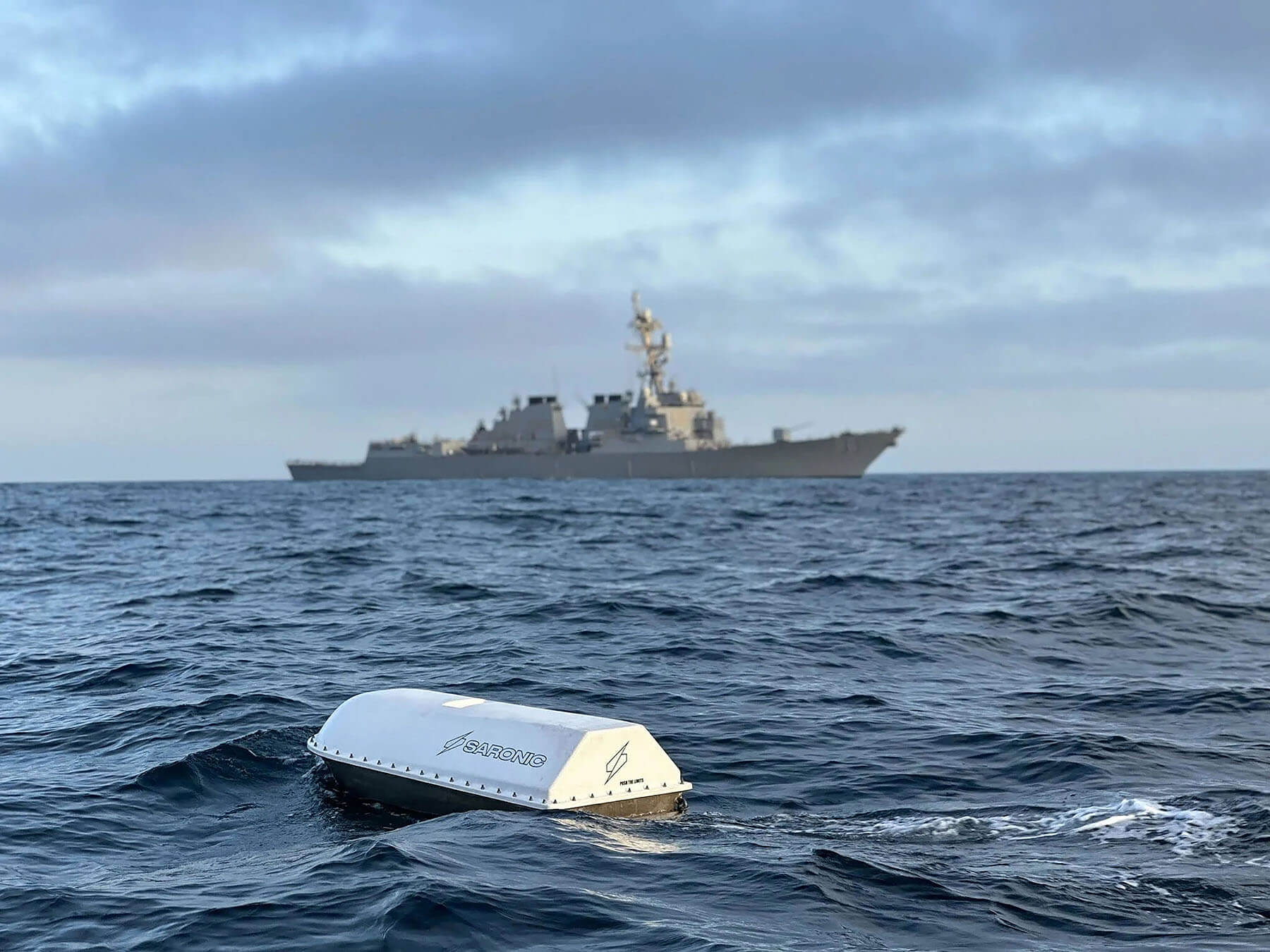
Dino Mavrookas had a useful qualification for a venture capitalist’s thought experiment: he had spent eight combat tours as a Navy SEAL. When he joined 8VC as a defense entrepreneur-in-residence, the assignment was to examine national security needs. The company came afterward. Working with 8VC’s defense team, he developed the concepts behind Saronic, which builds autonomous surface vessels. Before there was a startup to evaluate, there was an operator with a reason to care.
- 8VC invests in startups and helps create them through its Build program.
- Its territory includes software, life sciences, logistics and defense.
- The method depends on expert founders, technical talent and patient capital.
That sequence explains something about 8VC. Venture capital usually enters the public imagination at the pitch meeting: founder presents, investor decides. Here, the investor can arrive before the founding team is complete. The question becomes whether a missing business can be assembled from people, technical capabilities and an industry’s accumulated frustrations.
Start with the missing piece
Founded in 2015, 8VC is an Austin-based technology investment firm led by Joe Lonsdale, a co-founder of Palantir, Addepar and OpenGov. Its customers, broadly speaking, sit on two sides of the table. Limited partners supply investment capital. Founders receive financing and help turning companies into businesses. Engineers and students enter through recruiting and fellowship programs.
Its expertise spans infrastructure software, healthcare, biology, logistics, and government and defense. That collection looks eclectic until you notice the shared irritation: important work trapped inside cumbersome systems. Jake Medwell, an 8VC co-founder, leads logistics and transportation investing. Founding partner Drew Oetting’s interests include vertical software, health delivery and biomanufacturing. The specialties give the general thesis somewhere concrete to land.
The Build program formalizes the process. An idea may originate inside the firm or arrive with an entrepreneur-in-residence. Partners help develop the thesis and assemble talent. Saronic’s early team drew experience from military service and companies including Anduril, Northrop Grumman and Tesla. In this model, recruiting belongs inside investment work.
The firm’s name carries a clue to its culture. Its account invokes the eight engineers who left Shockley Semiconductor to form Fairchild. Published values include stewardship, principled contrarianism and patriotism. This is a firm with explicit institutional and political convictions; founders can judge whether those convictions suit the company they want to build.
A bigger fund. A different kind of bill.
The money has grown. Fund V brought $880 million in 2023. Fund VI added $998 million in 2025. In July 2026, fund counsel Gunderson Dettmer announced a $1.5 billion seventh fund. These figures describe pools of investment capital. Reading them as annual revenue would produce a wonderfully large accounting error.
Selected flagship fund closes. Capital raised is not investment performance.
The commercial logic follows private venture investing: own stakes in companies whose value may rise, and manage capital for limited partners. Management fees and a share of profits are the industry’s usual compensation mechanisms. Building companies adds earlier involvement and more work: finding executives, recruiting engineers and shaping the initial business.
Saronic illustrates the scale this can reach. In March 2026, it announced a $1.75 billion Series D led by Kleiner Perkins, valuing the business at $9.25 billion, with 8VC among returning investors. A financing valuation measures what investors agreed to pay at that moment. The boats still have to work, and the business still has to deliver.
The comparison with other investors is therefore about the starting point. A founder with a working product may chiefly need capital, introductions and help hiring. An entrepreneur with deep industry knowledge but no team may need a different partnership. Build is designed for that earlier stage of company formation. Neither arrangement eliminates the founder’s responsibility to establish that a buyer actually wants the result.
The factory problem
Consider another Build company, Resilience. Its ambition was to improve how complex medicines get manufactured. The need was real. Yet in June 2025, chief executive William Marth told customers that manufacturing capacity had expanded ahead of industry demand. Underused sites were being wound down while continuing operations remained active.
“Our capacity expansion has outpaced industry demand.”
William S. Marth / Resilience / June 2025
Existing institutional investors supplied $250 million in bridge financing to support consolidation. In October, Resilience announced long-term debt financing of up to $825 million from Oak Hill Advisors. This was an expensive adjustment to the footprint, not evidence that the original medical problem had disappeared.
The inference for builders is straightforward: a worthy mission cannot substitute for capacity utilization. Industrial ventures need demand, timing and financing to meet in the same place. If customers arrive slowly, equipment and facilities keep costing money. A software experiment can often shrink faster than a manufacturing network.
The demo is only the beginning
8VC’s software investments reveal a related timing problem. In its September 2026 account of backing Cognition, the firm acknowledged that cloud agents took longer to become useful than early demonstrations implied. Its argument centers on the application around the model: context, tools, coordination and verification that help convert intelligence into completed work.
On October 20, 2026, 8VC announced that Orchestra Bio was joining OpenAI. The firm said it had led Orchestra’s Series A the previous year. Orchestra’s focus was coordination across drug development, connecting people, information and decisions. The recurring interest is the work between specialist tasks, where organizational friction accumulates.
This is also a useful distinction for prospective customers of portfolio companies. An investment announcement says something about a backer’s confidence. Buying a product requires evidence about reliability, integration and the task at hand. The two decisions can happen years apart. 8VC’s own discussion of Cognition makes that interval visible, which is more instructive than treating the first demonstration as the finished business.
Copy the question
What can someone outside venture capital borrow? Start with 8VC’s published question about what became possible in the past five years. Then find the person who knows the operational problem firsthand. Test whether the proposed technology removes a bottleneck someone will pay to remove. Resilience supplies the next test: whether demand can support the capacity being built.
For founders, 8VC offers routes through investment or company building. Alternatives include Founders Fund, Andreessen Horowitz, Lux Capital and sector specialists; the relevant comparison is the help a particular team needs. Undergraduates can consider the three-month Fellowship. Everyone else can copy the order of operations: understand the problem, assemble the people, and make the company earn its existence.
8VC website ↗ Build program ↗ Fellowship ↗ Writing & news ↗ LinkedIn ↗ X ↗ Instagram ↗ Facebook ↗
Alex Moore on building and defense ↗Joe Lonsdale on the AI investment wave ↗