talent-development
(29)
The Talent Agency Where the Clients Pay Nothing
Young Voices found a peculiar gap in public life: plenty of young people had ideas, but almost none had an editor, an agent, or a newsroom contact. So it built all three - and made the service free.

Talent Is Built, Not Born
Daniel Coyle dismantles the myth of the lone genius and reveals the environments, mistakes and social sparks that turn ordinary practice into extraordinary skill.

PR Talent knows who belongs on the shortlist
A former publicist built a recruiting firm around people who know the work. Its most useful lesson comes when the first résumés arrive and the hiring manager has to explain what is missing.

Canada Invents the Medicine. adMare Wants It to Own the Company, Too.
Canada has no shortage of good science. Its leak is what happens next. adMare puts capital, commercial judgment, lab benches and trained operators around discoveries so the companies - and more of their value - can stay home.
BEYOND4’s startup bet begins before the startup
In Malaysia, BEYOND4 connects skills training, startup programmes and routes into new markets. Its Pahang experiment shows why building the people can come before building the company.

La Fábrica de Sevilla starts recruiting founders before they have a company
School competitions, subsidized incubation and introductions to working founders: Seville’s public-private startup initiative is building a route from the classroom to the first customer.

Imagine Creativity Center puts the brainstorm on a train
The Barcelona-Silicon Valley innovation company turns corporate challenges into working trips, prototypes and pitches. Its real test begins when the dreamers go home.

AgriNovus Indiana puts farm innovation on a longer clock
Seven-week contests gave young companies too little time. AgriNovus Indiana built a longer accelerator, linking farm problems, food science and the people who might turn an experiment into a business.

Tobi Tungl Makes Marketing Earn Its Place in the Room
The CTI chief marketing officer began by pulling cable and commissioning systems. Two decades later, he is still testing every message the same way: does it work in the real world?

Anju Abel Built a Career on the Part of Staffing Spreadsheets Miss
The LanceSoft CEO arrived in New York with optimism, built her way through the machinery of contingent work, and now argues that the industry’s most useful technology is still a human connection.

Most Leadership Training Fails. Droste Group Bet Its Business on the Fix.
A woman-owned firm in the shadow of Detroit's auto plants built its business on a blunt premise: most leadership training doesn't stick. Here is how Droste Group tries to make it stick anyway.

Ruth Harper
Ruth Harper began by teaching people how to read maps. Now she helps a global workforce company navigate the two forces redrawing work itself: artificial intelligence and the green transition.

Naveen Rajdev
After four years at AWS, Naveen Rajdev returned to enterprise services with a wider brief: connect brand, market development and the people living with technological change.

Visinema
Visinema is a Jakarta-based integrated entertainment and intellectual-property company founded in 2008 by director Angga Dwimas Sasongko and producer Anggia Kharisma. It produces award-winning Indonesian films, animated features and series, and builds long-lived IP franchises - including Keluarga Cemara, Filosofi Kopi, Nussa and the record-breaking animated hit Jumbo - across cinema, streaming, licensing and consumer experiences. The company positions itself as a storytelling powerhouse aiming to make Indonesian creative work competitive with Hollywood and Korea.

Leadr
Leadr is a Texas-based B2B SaaS company that builds continuous-performance software to help managers develop the people who report to them. Positioned as an operating system for managers, the platform brings 1-on-1 meetings, goal setting, feedback, engagement surveys, reviews and AI meeting tools into one place. Founded in 2019 by veterans of the church-tech unicorn Pushpay, Leadr raised a $10M Series A led by Bedrock and works toward a stated mission of developing one million leaders. Its customers span businesses, hospitals, nonprofits, churches and educational institutions.

Nestor
Nestor is an AI-powered, skills-based talent management platform - a self-described People Intelligence Platform - that helps HR leaders, managers, and employees map, activate, and deploy the skills inside an organization. Built around a market library of 20,000+ skills and an AI companion, Nestor connects performance management, employee engagement, and career development so companies can spot skill gaps, run an internal talent marketplace, and make workforce decisions based on capability rather than job titles.

Forte
Forte is a New York-based social enterprise that finances reskilling and workforce development at no cost to individuals or governments and without relying on philanthropy. Founded by Dr Nat Ware on an idea he developed during his economics PhD at Oxford, Forte (Financing Of Return To Employment) sits between funders of education and training and the providers who deliver it, so funders 'never fund failure' - they only pay when people are trained and placed into better jobs. Repayment is tied to the future income-tax uplift generated by newly employed workers. Forte has run programs across Australia, Colombia, Costa Rica, Puerto Rico, the United States and Peru, and its model has been endorsed by the World Economic Forum.

Mento
Mento is a performance-coaching platform that pairs leaders and teams with 1:1 executive coaches, adds a lighter layer of mentorship, and uses AI to connect what happens between sessions. Built on an 80/20 coaching-to-mentorship methodology and staffed by former C-suite, VP, and director-level coaches, Mento sells leadership development to companies that want to grow and keep their highest performers. Co-founded in 2019 by Jamie Albers and Alex Marcus, the Los Angeles company counts Anthropic, Dropbox, Brex, Gusto, and Vercel among its clients.

National Math Stars
National Math Stars is a U.S. nonprofit that finds mathematically extraordinary second- and third-graders from all communities and commits to supporting them for up to a decade - through high school graduation. Each selected student receives more than $100,000 in mentorship, advanced coursework, STEM summer experiences, family advising, and community, at no cost to families. Founded in 2023 by former Bain consultant Ilana Walder-Biesanz and seeded with $16.5 million from Carina Initiatives and the Polynera Fund, the organization aims to build a diverse pipeline of talent capable of reaching the frontiers of math and science.

Tenor
Tenor is a San Francisco AI platform that helps managers get better at the human part of the job. Through hyper-realistic voice AI role-play simulations trained on a company's own leadership approach, managers rehearse high-stakes conversations - performance reviews, layoffs, conflict, feedback - in a safe space and get instant, coaching-style feedback. Founded in 2023 by former Workday leaders Charlie Stigler and James Cross, Tenor raised a $5.4M seed round led by Base10 Partners in December 2024.

Chris DeAppolonio
Chris DeAppolonio is the CEO of Evil Geniuses, North America's oldest esports organization. A sports-business lifer who wrote his 2008 NYU master's thesis on the coming rise of professional gaming, he spent a decade in traditional sports marketing before crossing into esports as a team president and innovation chief. He now runs EG on a data-first, 'Moneyball' philosophy, pairing proprietary analytics and AI with player development to scout undervalued talent and chase championships.
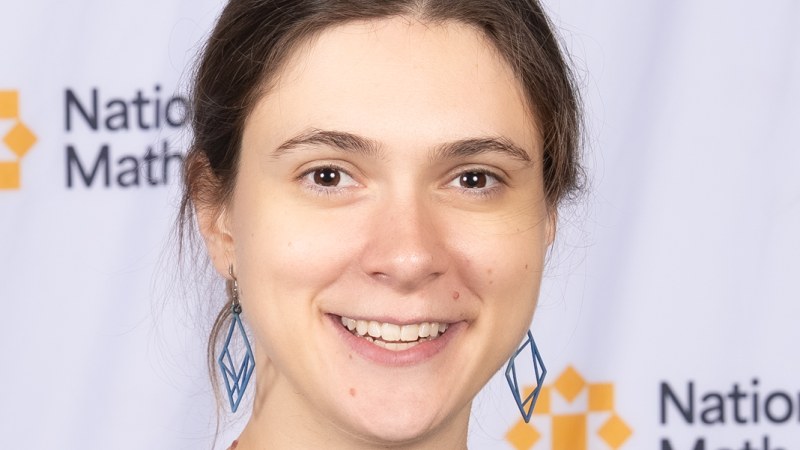
Ilana Walder-Biesanz
Ilana Walder-Biesanz is the founder and CEO of National Math Stars, a nonprofit that finds mathematically extraordinary children as early as second and third grade and gives each of them a decade of mentorship, advising, and funding worth more than $100,000. A child prodigy herself who took college courses at 13 and finished her undergraduate degree at 19, she pairs an engineer's rigor with a theater critic's flair. Before building National Math Stars she was a product manager at Yahoo, a Bain consultant, a Gates Cambridge Scholar, a Fulbright researcher of German opera staging, and a working opera critic. In December 2025, Jeff and Lauren Sanchez Bezos named her one of five recipients of a $5 million Courage & Civility Award.

OneRange
OneRange is a New York-based HR-tech company building a skills-first talent growth platform. It connects employees' career goals to in-demand skills, then uses AI to match them with the right learning resource from a marketplace of 22,000+ options - courses, books, conferences, certifications - while giving employers usage-based pricing, automated approvals, virtual payment cards, and real-time skill and spend analytics. The pitch: pay only for the learning people actually use, and put employees in the driver's seat of their own development.
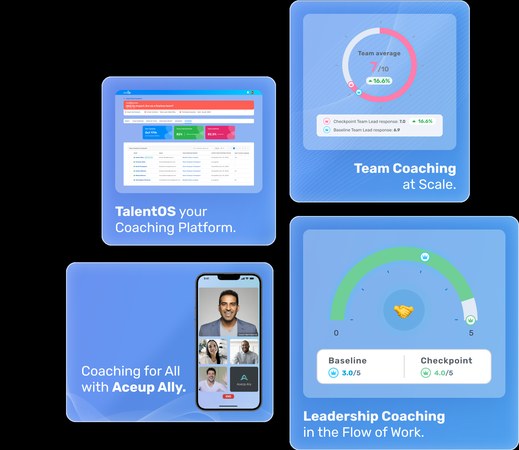
AceUp
AceUp is a Boston-based leadership development company that pairs human coaches with AI-powered people analytics to make executive and team coaching measurable and scalable. Through a network of thousands of ICF-certified coaches and a data platform it calls Ally, AceUp helps enterprises like IBM, L'Oreal and LVMH turn coaching - long treated as a perk for the C-suite - into a quantifiable driver of engagement, alignment and performance.
BetterUp
BetterUp is a San Francisco-founded human transformation company that pairs certified human coaches, behavioral science, and AI to deliver personalized professional and leadership development at enterprise scale. It coaches employees at hundreds of companies and government agencies, blending one-on-one coaching, assessments, and data-driven insights, and has increasingly moved toward AI-powered coaching that runs around the clock.

Alexi Robichaux
Alexi Robichaux is the CEO and Co-Founder of BetterUp, the human transformation platform he started in 2013 after a soul-searching walk along the Camino de Santiago. He built BetterUp from a two-person idea into a $5 billion company with 2,800 employees and over $628 million in total funding, pioneering digital professional coaching for enterprises including Google, Salesforce, and NASA. A former product executive at VMware who once struggled with imposter syndrome and public speaking anxiety, Robichaux turned his personal journey with coaching into a mission to make elite professional development accessible to everyone.

Heather Conklin
Heather Conklin is CEO of Torch, a San Francisco-based digital coaching platform that pairs leaders with expert coaches to drive measurable behavior change at scale. A Salesforce veteran who spent nine years there - culminating as SVP & GM of Trailhead - she joined Torch as COO in 2022 before being elevated to CEO in August 2024. Her philosophy blends behavioral science, data-driven measurement, and the radical idea that vulnerability is a leadership strength, not a weakness.

Bogdan Apostol
Bogdan Apostol is the co-founder and CEO of Nestor, a San Francisco-based AI-powered people intelligence platform that helps enterprises build skills-based organizations. A Romanian-born computer scientist with a PhD in Computer Vision from Gheorghe Asachi Technical University, he founded Nestor in 2018 after being accepted into Y Combinator's S18 batch. Before writing a single line of product code, he conducted over 400 customer discovery calls. Nestor has raised $6.07M in funding, serves 10,000+ employees worldwide across F500 companies, and has earned 67 G2 badges including a perfect 10/10 for quality of support.
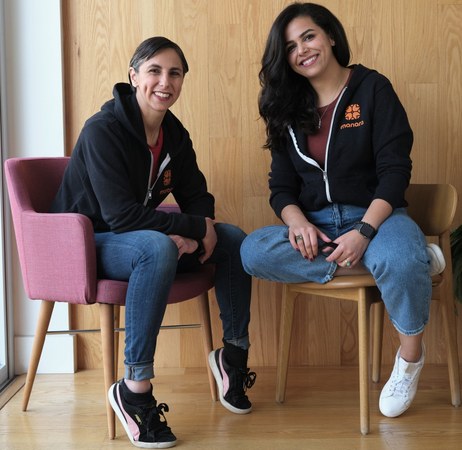
Iliana Montauk
Iliana Montauk is the Co-Founder and CEO of Manara, a social-impact edtech platform that connects software engineers from the Middle East and North Africa with global tech jobs at companies like Google, Meta, and Amazon. A Harvard grad and Fulbright Fellow who speaks five languages, she built Gaza's first startup accelerator before co-founding Manara with Laila Abudahi in 2020. Backed by Y Combinator, Stripe, Reid Hoffman, and Paul Graham, Manara has trained engineers who achieve 86% job placement within five months, and in 2025 inked a $3.6M AWS partnership to upskill 2,500 engineers in cloud and AI — on a mission to reach 1 million learners by 2027.