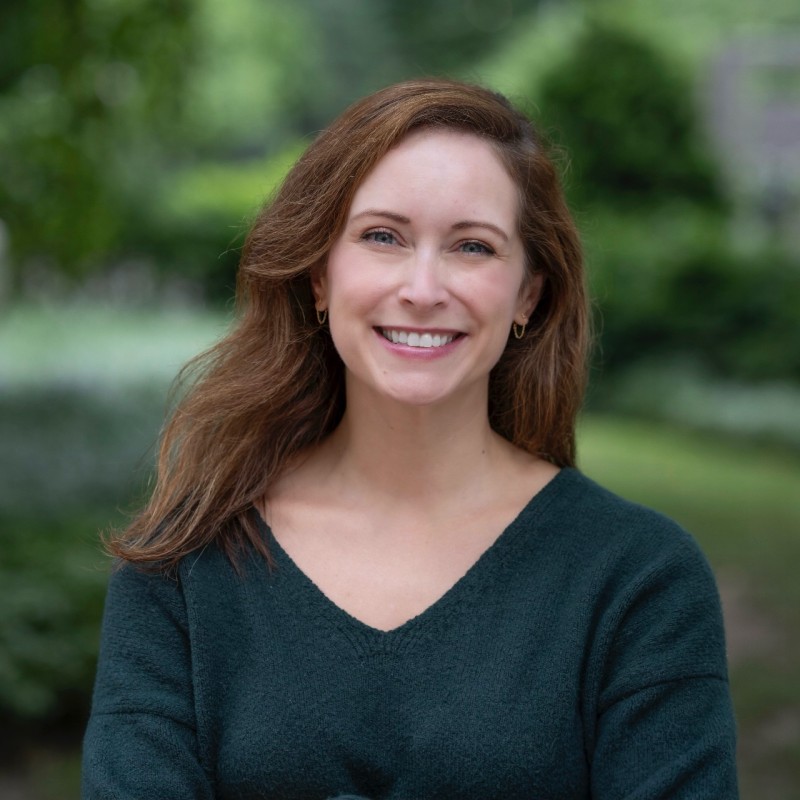
Mid-stride at Torch
Heather Conklin is CEO of Torch, a San Francisco-based platform that pairs leaders with expert coaches to produce measurable behavior change at enterprise scale. She took the job in August 2024, stepping up from COO — a transition that was, fittingly, itself a product of Torch's own coaching process.
Before Torch, there was nine years at Salesforce. That isn't a minor footnote — it's the whole foundation. She ran Trailhead, Salesforce's flagship learning platform, as Senior Vice President and General Manager. Product, engineering, marketing, go-to-market: all of it. And before Trailhead absorbed her attention, she co-created the Salesforce Associate Product Manager program in 2018, building it in partnership with Bret Taylor — the same Bret Taylor who later became Salesforce's co-CEO. The APM program was a 12-week internship followed by a two-year rotational role designed to develop the next generation of product talent from scratch.
That pattern — building the infrastructure for other people's growth — turned out to be the thread running through everything. Trailhead was about teaching skills at scale. The APM program was about cultivating potential before it was obvious. Torch is about coaching the leaders who are supposed to be doing that work inside their own organizations.
"Leaders really need to have a coach of their own if they are going to effectively coach others."- Heather Conklin
The philosophy is specific: Conklin doesn't think leadership coaching is a perk or a reward for high performers. She thinks it's infrastructure. The same way companies invest in engineering tooling or sales software, they need to invest in the development of the humans doing the work. Torch's platform — which combines vetted executive coaches with data science, behavioral science, and a digital delivery layer — is built to make that investment legible and measurable, not just warm and fuzzy.
Conklin joined Torch as COO in June 2022, months after the company closed a $40 million Series C led by 137 Ventures, with Initialized Capital, Norwest Venture Partners, and Obvious Ventures participating. Co-founder Cameron Yarbrough had been running the company since 2017. When it came time for a transition, the succession conversation was ongoing — started long before an exit date was set. "The mistake people make," Conklin has said, "is they only talk about succession when it's time for the leader to leave now." On August 1, 2024, she became CEO. Yarbrough moved to Executive Chair.
The leadership philosophy she brings to the role was partly forged during a 2019 maternity leave, when she encountered Brené Brown's work on vulnerability. The discovery was disorienting in the way useful discoveries tend to be: she realized that projecting expertise and certainty — the traditional leadership playbook — was actually building distance, not trust. Modeling uncertainty and admitting gaps worked better. She came back from leave with a different operating system.
"Your actions matter far more than your words."- Heather Conklin
In October 2025, Fortune published a piece featuring her take on why corporate AI investments are stalling. Her argument: companies have poured $30-40 billion into AI with minimal business results, and MIT research suggests 95% of generative AI pilots are failing. The culprit isn't the technology. It's leadership. Sixty-six percent of CEOs told Gartner their executive teams lack AI confidence. Conklin's position is that psychological safety, resistance management, and modeling risk-taking — the soft stuff — is exactly what determines whether an AI investment pays off or becomes a case study in expensive disappointment.
Her undergraduate degree is in Marketing and Logistics/Supply Chain Management, earned at the University of Maryland between 2002 and 2006. Not the obvious origin story for a coaching-platform CEO. But there's a logic to it: supply chain is about flow, bottlenecks, and optimization of complex systems. What she ended up building — at Salesforce and at Torch — is essentially that, except the nodes in the network are people.